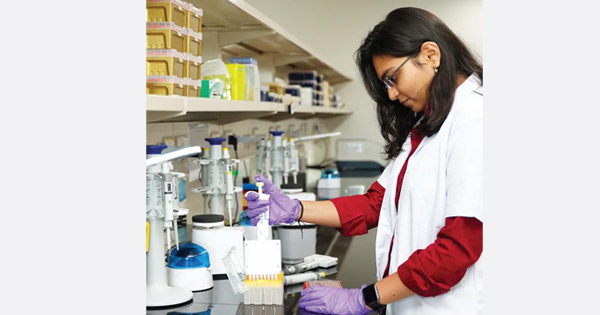
The Centre for Brain Research has set its mind and resources on understanding how dementia and its variants can be predicted and managed

Spotlight
That fading feeling
Dementia is the focus of a campaign that prioritises awareness, early detection and more to manage a condition that affects patients as much as their families.
It took a while for Karuna Guttikonda to have her now 85-year-old father, Sreeram Murthy, screened for dementia. Then, about seven years ago, the retired mechanical engineer began behaving ever more unusually: getting lost on his way home; becoming delusional and disoriented; and, eventually, failing to recognise his children. A screening was inevitable and Mr Murthy was diagnosed with Alzheimer’s disease.
“It took us a long time to spot the signs,” says Ms Guttikonda, who lives in Gurugram near New Delhi. “My mother lost her vision 20 years ago and my father had been taking care of her; he was such a high-functioning individual.” Ms Guttikonda brought her parents from Vijayawada to Gurugram and became their primary carer.
As her father’s mental decline progresses, Ms Guttikonda tries to ensure he follows a routine that keeps him from getting confused, and that he engages in what are known as cognitive stimulation exercises. “He is so normal it’s hard to tell he has Alzheimer’s,” adds Ms Guttikonda. “And then there are days when he believes the people he’s watching on TV are sitting in his living room.”
Ms Guttikonda knows that as her father’s brain deteriorates further, he will slowly withdraw into an inner world from which he may never emerge. That is the heartbreaking truth about dementia, an umbrella term for several neurocognitive conditions typically found in people above the age of 60, where progressive mental impairment leads to a general inability to function.
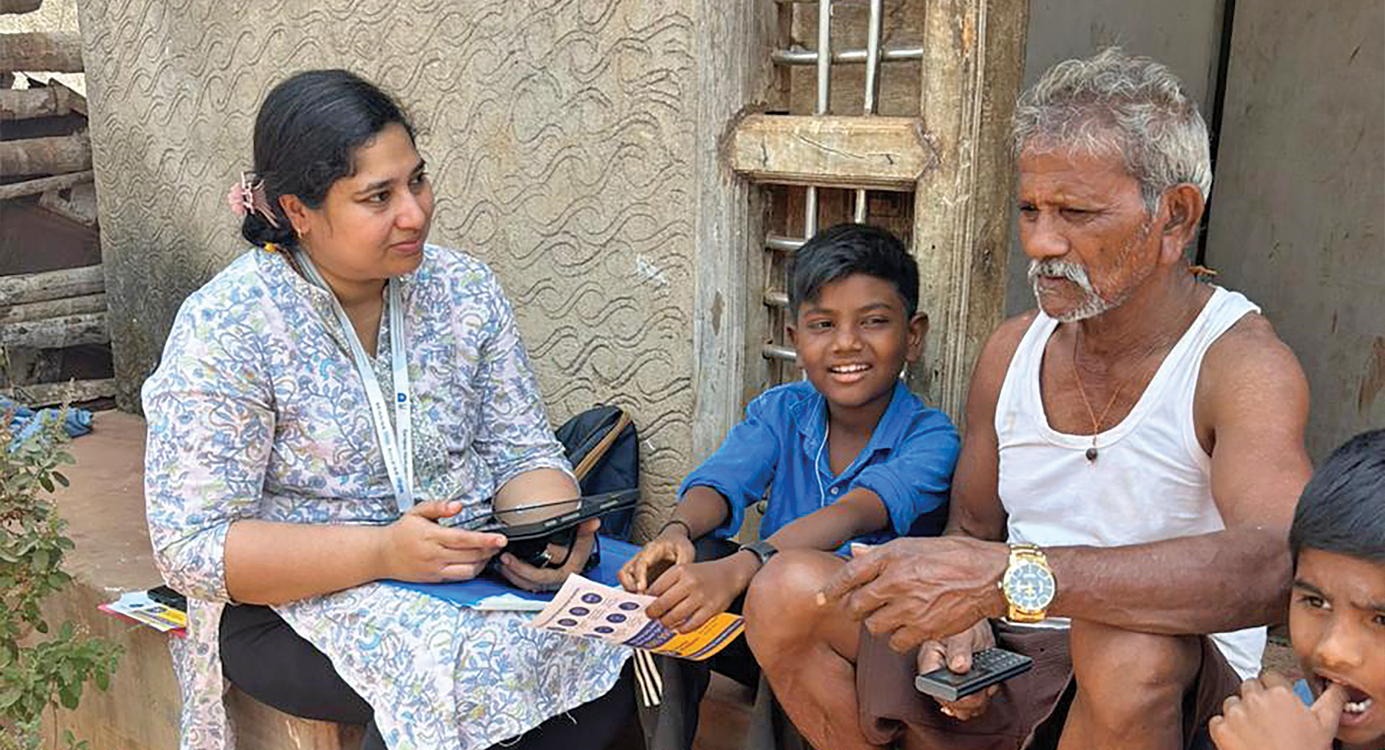
Click to enlarge
An enumerator during a survey of the elderly in Hodigere village in Karnataka’s Davanagere district
Alzheimer’s is among the most recognised of a clutch of conditions under the dementia rubric, which also includes Vascular dementia, Lewy Body dementia and Frontotemporal dementia. All of these together make dementia the seventh-leading cause of death in the world.
Dementia is a complex condition that is difficult to understand and eludes early diagnosis. It can remain invisible for years, typically being dismissed as an old-age issue. Families tend to seek help and treatment only when the affected person exhibits obviously disruptive and aberrant behaviour. By this time the condition would have progressed from moderate to severe, and the critical window for meaningful early intervention may have closed.
Delays in screening and treating dementia often lead to a burden of lifelong care for the families of patients. How, then, does one navigate past dismissal and denial to enable recognition, screening and timely diagnosis?
A recently launched Tata Trusts campaign, called Vajood Rahe Maujood (May Your Identity Live On) examines exactly this, advocating for early detection to slow down the inevitable neurocognitive degeneration that dementia causes. A study undertaken by the Trusts — based on interactions with experts, caregivers and patients — highlights the condition’s consequences: gradual erosion of identity, autonomy and relationships.
“There are three aspects to the campaign,” says Mrinalini Singh, manager with the health portfolio at the Trusts. “First, we want to foster awareness so that dementia is not misattributed to old age. Second, with increased awareness we are hoping for an uptick in screening. Finally, there’s caregiver sensitisation: attempting to build an ecosystem that will support caregivers who, in Indian families, are inevitably women.”
There are many government schemes for the welfare of the elderly but fewer for the caregiver, adds Ms Singh. “Capacity building for formal and informal family caregivers will ensure they are alert to the symptoms of dementia.”
Even though India has the highest number of young people in the world today, it also has a demographic chunk that is ageing rapidly. The number of elderly people in the country is currently 153 million, states a United Nations Population Fund study. By 2050, 20% of India’s population will be 60 years and above, accounting for a whopping 347 million.
According to a 2023 study published in The Lancet Public Health, an estimated 8.8 million Indians aged over 60 were living with dementia (a prevalence of about 7.4%. The estimate is likely affected by underdiagnosis and underreporting. A study published in 2023 in Alzheimer’s & Dementia indicates that, at the current prevalence, about 16.9 million Indians are projected to have dementia by 2036.

Click to enlarge
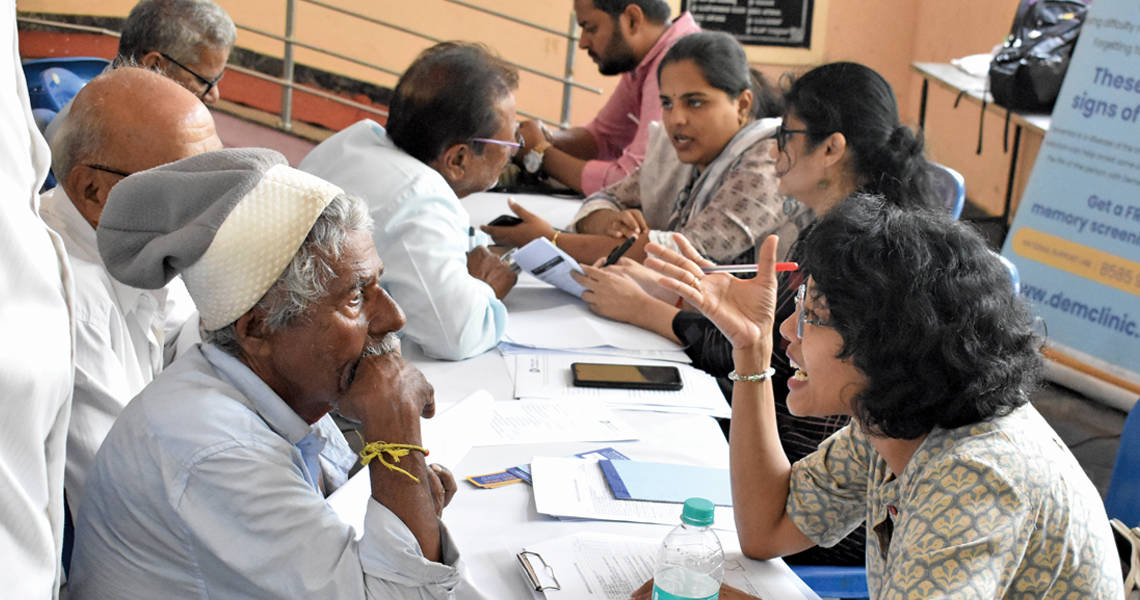
A senior citizen undergoes a dementia screening in Tavrekera, a village near Bengaluru
Says Ramani Sundaram, neuroscientist and executive director of Dementia India Alliance, a partner of the Trusts in the programme: “Indians don’t give the same importance to mental health as physical health. With a neurodegenerative condition, the person looks ‘normal’ so families don’t bother, until they are inconvenienced by the elder’s disruptive behaviour.”
The social stigma around mental health and a general apathy about geriatric conditions act as further barriers to early testing. Also, dementia diagnosis is complicated because it involves a multi-step process of elimination, adds Ms Sundaram.
Old and far from gold
The 60-plus portion of India’s population is growing fast, but the country is nowhere near ready to cope with the needs of this under-the-radar age group
READ MOREThe classic warning signs — loss of recent memory, difficulty in finding the right word, and repetitive questioning — should prompt clinical assessment, but can collectively be considered a cognitive disorder if exhibited over a minimum of six months. At the same time, untreated diabetes, hypertension, vitamin deficiency, thyroid issues, sleep apnoea, head injuries or even depression can present as cognitive decline.
“We have to rule all these things out to treat for dementia,” says Ms Sundaram. “We don’t have an app or algorithm that will immediately indicate this; it is still a clinician’s call.” And clinicians, like family, may also misdiagnose dementia symptoms as simply old age.
Studies have found that primary health centres are not equipped to detect cognitive decline, and referrals take place only when dementia is past the mild stage. Also, in a family situation where other members take over tasks previously handled by the elderly, their decline becomes less apparent.
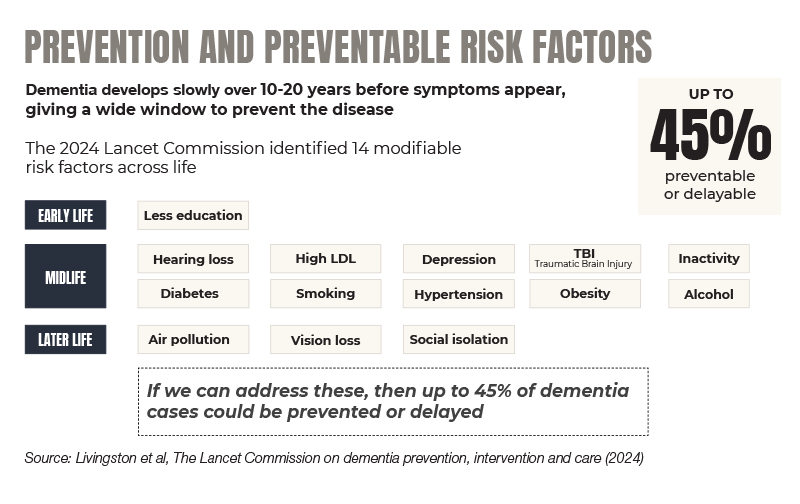
“According to the pathology of dementia, changes in the brain may start 15-20 years earlier,” explains Ms Sundaram. “But the human brain is so resilient it may take 10-12 years for symptoms to appear. Since dementia affects those in their 60s, people should seek assessment if they or their families notice persistent cognitive or functional changes.”
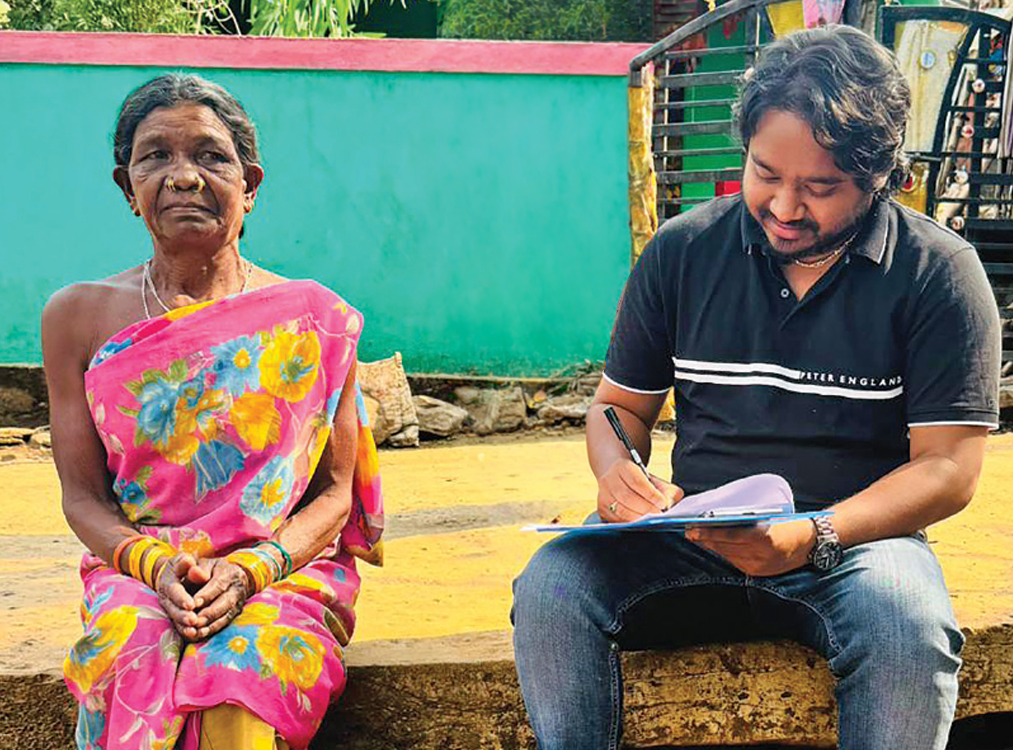
Click to enlarge
A dementia screening for the elderly in Seekari village in the Alluri Sitharama Raju district of Andhra Pradesh
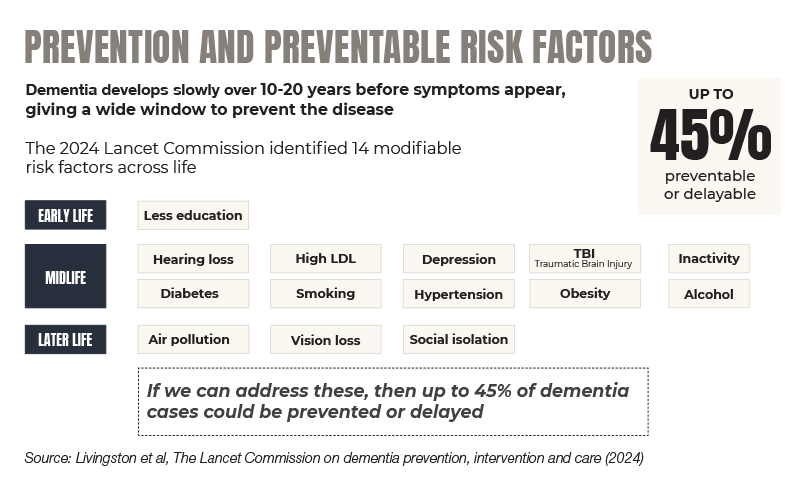
The Lancet Commission estimates that that around 45% of dementia cases can potentially be delayed or prevented. “It has identified 14 modifiable risk factors for dementia, categorised into early-, mid- and late-life risks,” says Ms Sundaram. “By rating yourself on these risk factors, you can assess your likelihood of getting dementia, and then make lifestyle changes to prevent it.”
Early testing remains the key. That’s the route Rashmi Sharma (name changed on request) took when she signed up her parents — her 76-year-old mother and her 81-year-old father — for dementia screening. The Ujjain resident discovered they both had the condition, in differing degrees.
“My mother could do only 30% of the assessment tests, while my father couldn’t do any,” says Ms Sharma. “We realised she was at a less advanced stage, but after my father died in 2024, her decline has accelerated. Today, she has regressed to her childhood and keeps asking to go home to her mother.”
Ms Sharma and her sister, their mother’s primary caregivers, are struggling with the responsibility. “This has has taken an emotional toll on us,” says Ms Sharma. “I wish there were proper daycare facilities for dementia or even trained caregiving professionals. If this were any other illness, we would’ve done everything under the sun to get them better. But with dementia we feel helpless and guilty.”
Training of caregivers is on the anvil in the initiative. Caregivers need — but rarely get — proper information; peer support; respite from their onerous responsibilities; or allowance to feel resentful, relieved and to grieve without shame.
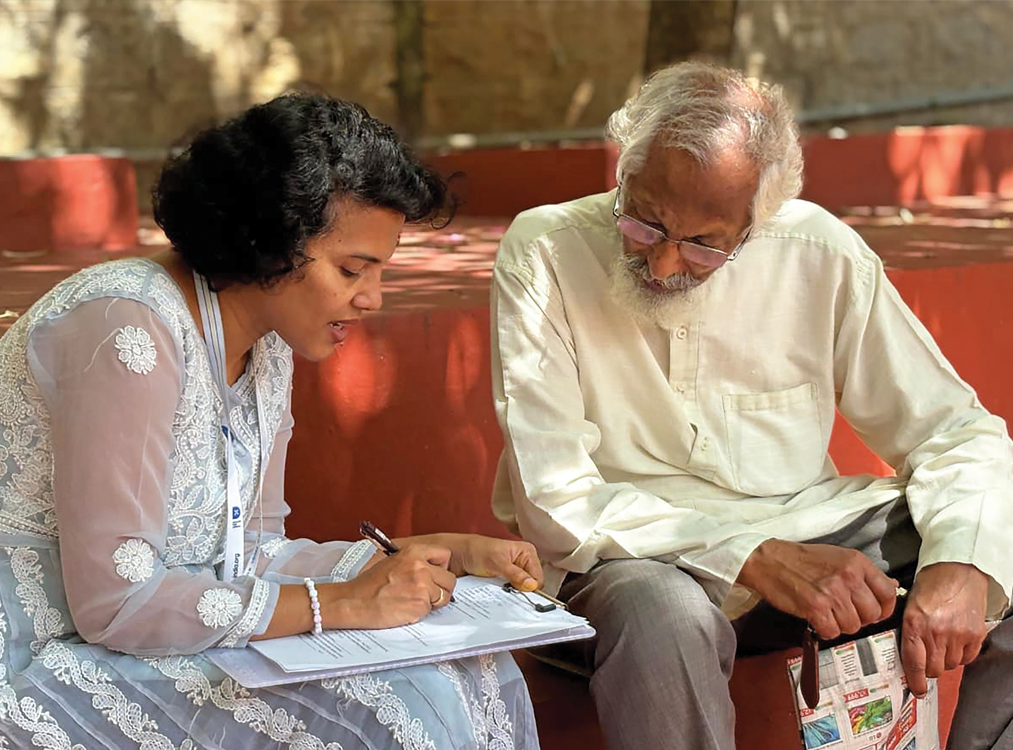
Click to enlarge
An elder takes a cognitive screening test at Bengaluru’s Koramangala Club
Dementia caregivers do not just look after their loved ones; they carry the slow heartbreak of watching them disappear, while often losing their own identity, wellbeing and sense of self in the process, says the Trusts study.
“We want to increase the orientation of health caregivers from families, as well as from hospitals, nursing homes and senior living facilities, so their understanding of dementia is sharpened,” says Ms Singh. “At the same time, we want to expand our work to include the training and employment of youth to become primary caregivers.”
There is a perception that caregiving is not a respectable profession. When that changes, it will bring relief to thousands of families across India who are struggling to help their loved ones — and themselves — cope with the inevitable fading away that dementia induces.
Related articles
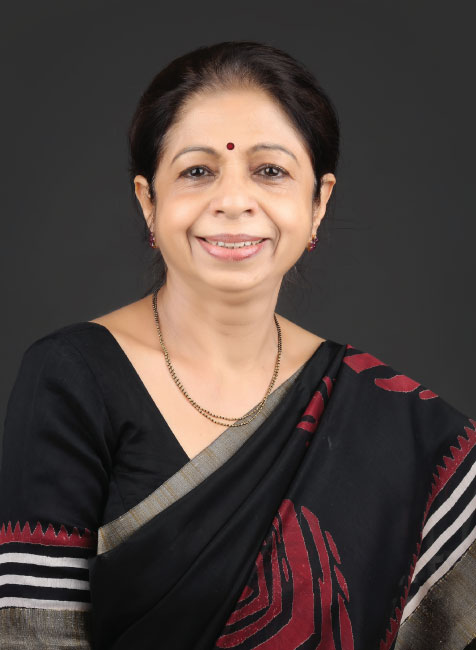
Neuroscientist Vijayalakshmi Ravindranath, founder director of the Centre for Brain Research at the Indian Institute of Science, decodes the mysteries underlying disorders such as Alzheimer’s and Parkinson’s

Healthcare initiatives : The Tata Trusts have multihued programmes in different segments of India's healthcare system.

Compassion and quality in the care and treatment of the mentally disabled underpin Udaan, a programme that places its faith in institutional reform and community awareness