Smooth skilling
A collaborative effort involving Tata STRIVE and Siemens India demonstrates how industry support for skills training leads to a win-win outcome for all
When Hemant Ingulkar stepped into the Industrial Training Institute (ITI) in Aundh near Pune in Maharashtra, he was hoping to learn a skill that would lead to a livelihood. He received far more than that when he became part of Dual Vocational Education and Training (Dual VET), a programme that strengthens India’s ITIs through industry-relevant training.
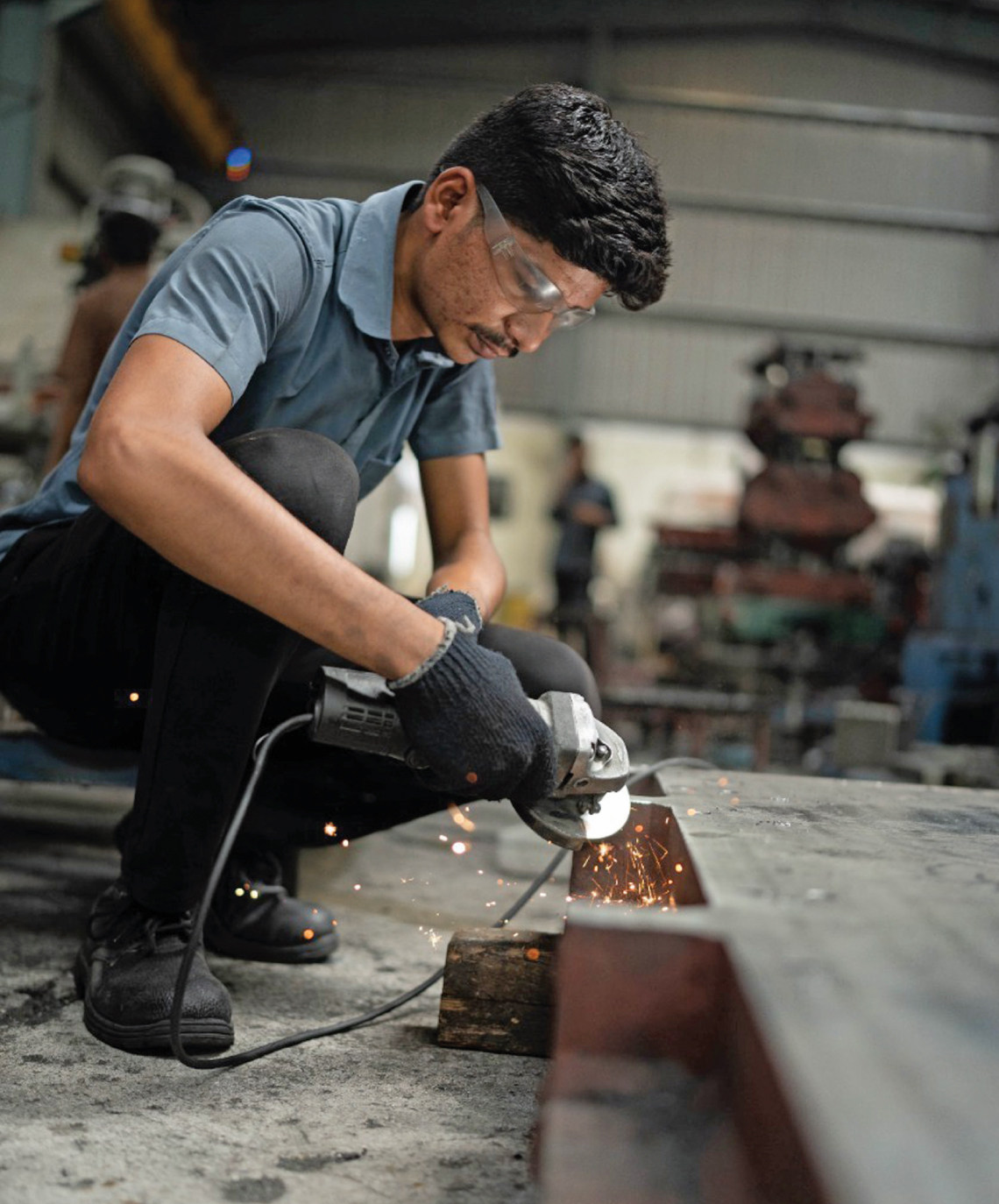
As part of Dual VET, Mr Ingulkar went to Sona Sales and Service for on-the-job training. The experience was an eye-opener. “The world of wires, circuits and electrical systems moved from the pages of textbooks into my hands,” he recalls. Soon thereafter, he and his peers participated in the programme’s innovation challenge, where ITI trainees have to think of solutions to challenges shared by industry.
The technical and soft skills he learned, combined with real-world experience, helped Mr Ingulkar secure a job as a technical executive at Talbot Force in Pune, earning around ₹360,000 a year.
Mr Ingulkar credits Dual VET with making him employable. He is among the 139,000 beneficiaries whose lives have been transformed by this initiative, launched in 2017 as a collaborative endeavour by Tata STRIVE and Siemens India.
Tata STRIVE is a skills development programme housed in the Tata Community Initiatives Trust. It has been focused on improving India’s skilling ecosystem since 2014, and has touched the lives of more than 2.5 million young people through a range of programmes.
Value in the vocational
Highlights of the Dual VET programme, which has worked to make India’s network of industrial training institutes (ITIs) more industry-relevant:
- Launched in 2017 as a partnership between Tata STRIVE and Siemens India
- Has enabled more than 139,000 trainees while enhancing skilling in 10 trades
- Covers 398 ITIs in Maharashtra, Uttarakhand, Andhra Pradesh, West Bengal, Gujarat and Punjab
- Has trained 1,500+ ITI instructors
- Connected with 2,600+ industries to promote on-the-job training)
Based on the German-origin model of skilling through apprenticeship, Dual VET seeks to bridge the gap between training institutes such as ITIs and the real-world requirements of different industries.
The model engages with industry and government-run ITIs, bringing them together to train electricians, mechanics, welders, and tool and die makers, along with other core engineering trades of the ITI craftsman training scheme. The programme covers 398 ITIs in Maharashtra, Uttarakhand, Andhra Pradesh, West Bengal, Punjab and Gujarat.
“India’s ITIs play a pivotal role in preparing young people for industry,” says Ameya Vanjari, chief operating officer of Tata STRIVE. “It is interesting to see how the small step of bringing ITIs closer to industry benefits trainees, enterprises and the nation at large. The Dual VET programme demonstrates our commitment to bringing about change in the ITI ecosystem.”
In urban and semi-urban India, ITIs provide a straightforward route to learning vocational skills. Take Hira Kisan Gavit, one of the few women who joined the electrician course at the ITI in Surgana, a town about 90km from Nashik in Maharashtra’s tribal belt.
Careers take centre stage
As part of her course, Ms Gavit underwent on-the-job training at the Hindustan Aeronautics facility in Nashik. Recognising her capabilities, Siemens then offered to train her on the latest machinery at its Nashik facility. Coming from a tribal village where early marriage is often the norm, Ms Gavit chose instead to pursue her training and build a career.
Her journey, marked by courage, persistence and a willingness to step beyond the traditional, has inspired many young women in her community to imagine new possibilities for themselves.
The Dual VET model focuses on industry relevance by addressing two key aspects of the skilling ecosystem: improving pedagogy and encouraging local industries to offer opportunities for on-the-job training. Tata STRIVE recognises that the quality of instructors directly influences the employability of young people.
Bijitha Joyce, head of ecosystem strengthening at Tata STRIVE, explains that pedagogy training for instructors plays a critical role. “Our master trainers work with ITI instructors to make vocational training more relevant and engaging,” she says. “We encourage project-based learning and enquiring minds. Young people are more motivated to work on real-world problems, and they learn about teamwork and critical thinking. This helps create a pipeline of competent job candidates.”
The pedagogical attention on sparking thinking and enquiry makes candidates more attractive to employers, says Mayank Agarwal, joint director at the Kumaon Mandal ITI in Uttarakhand. “Because this approach helps trainees develop stronger problem-solving abilities, we have been able to place about 70% of our trainees for on-the-job training,” he says. “We find that companies like Tata Motors are directly recruiting candidates who have completed their training.”
With on-the-ground learning as a core component of Dual VET, the Tata STRIVE team works to encourage more enterprises to come on board. The programme has already connected with about 2,600 large, medium and small enterprises, which have the option of participating in numerous ways, from offering on-the-job training to conducting subject-matter expert sessions, and providing apprenticeships and placement opportunities.
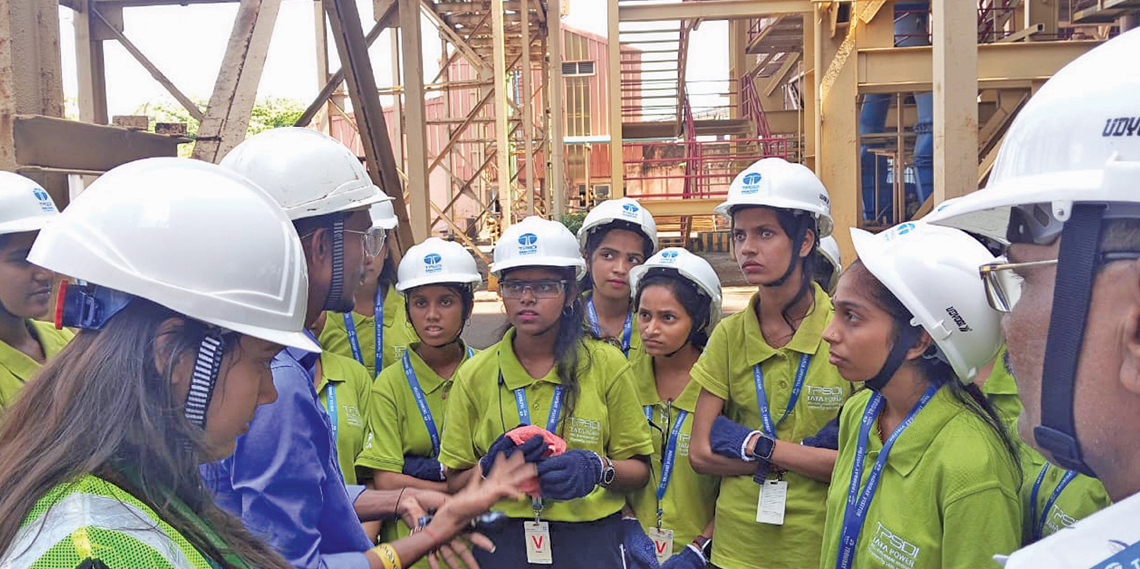
Opening doors through industry exposure visits and facilitating real-world innovation challenges are among the other measures through which the programme makes vocational training more relevant.
Yearning to succeed
Aniket Shingole: Despite having to live with a disability, Mr Shingole aspired to learn a trade and secure employment. He joined the electrician course at the ITI in Khalapur, Maharashtra, leading to an on-the-job training stint with Amptronics Techno, an engineering enterprise. Today, Mr Shingole is an apprentice with the Maharashtra State Road Transport Corporation.
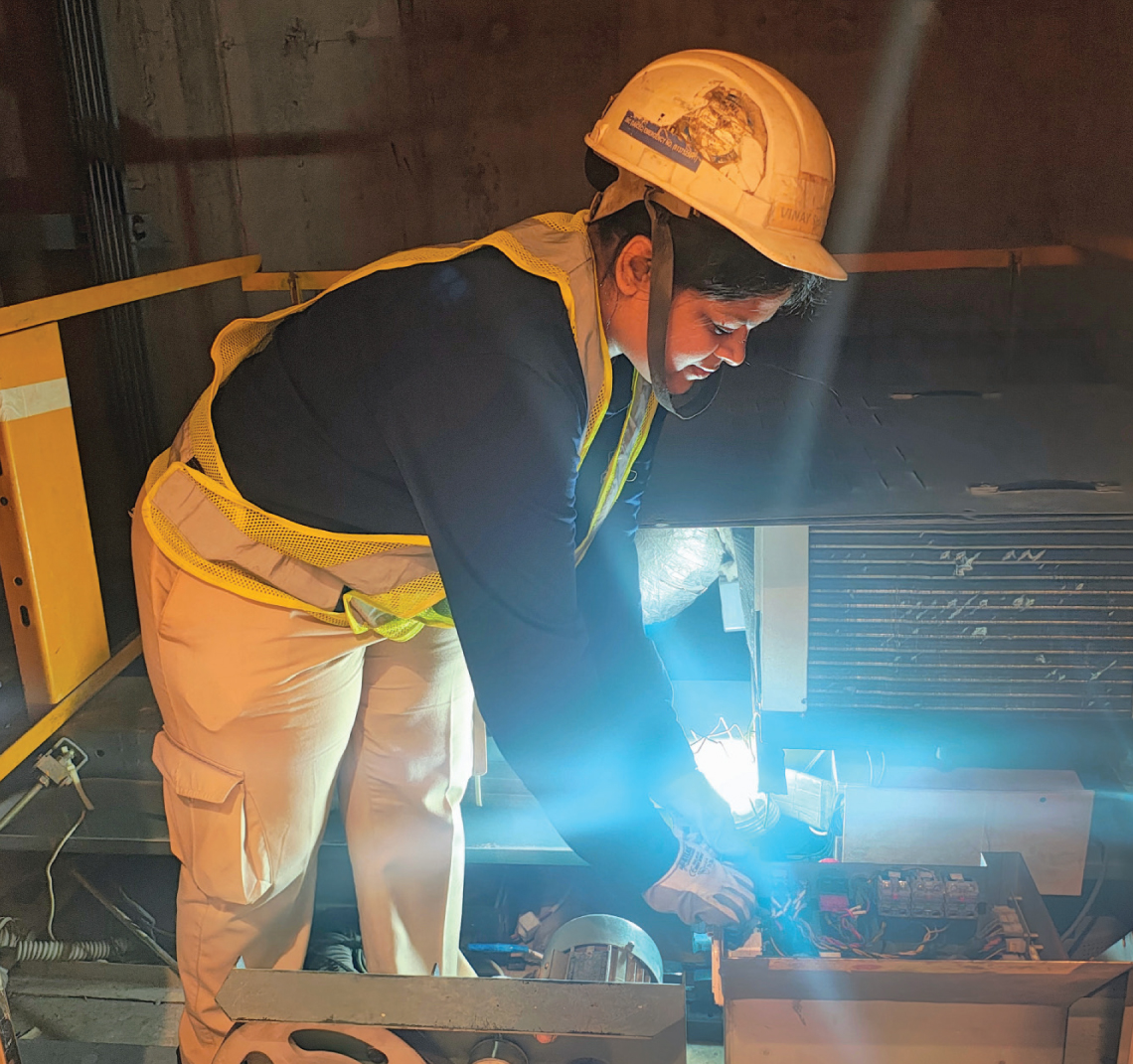
Purva Sakpal: Ms Sakpal joined the women-only ITI in Dadar in Mumbai as a trainee in electronic mechanics. After on-the-job training at Vinayak Electricals, she participated in an innovation challenge where her team excelled. Her skills led to a placement with Brihanmumbai Electric Supply & Transport (BEST) as a technician. Ms Sakpal has since joined the Jio World Centre in Mumbai as its first female elevator and escalator technician.
Y Balayogi: Hailing from a village near Kadapa in Andhra Pradesh, Mr Balayogi dreamed of a better life when he joined the machinist course at the Kadapa ITI and was placed with Rane (Madras) at its Hyderabad facility for training. Since then, he has learned 5S theory, a Japanese methodology to improve workplace efficiency and cleanliness. He now has hands-on experience in operating machines and handling industrial tools, which should help him find employment opportunities.
Employment avenues
Says Manoj Naigaonkar, plant head at Gogate Electrosystems, an industry partner in Nashik: “We look for Dual VET trainees who are sound in basics such as soldering, assembly of printed circuit boards, testing and fault-finding. We also consider soft skills like teamwork, communication, punctuality and workplace discipline.” The company takes in around 100–120 trainees for on-the-job training every year, of which around 30–40% are absorbed as employees.
Vijeta Switchgear, based in Sangli in Maharashtra, is a Dual VET partner offering training for fitters and electricians. As part of its association with Dual VET, the company has aligned its training approach with the programme’s emphasis on job-role relevance and practical exposure.
“Our training is structured around core mechanical and electrical competencies,” says the company’s human resources representative, Prajawal Jadhav. “It begins with a skill-mapping exercise aligned to job roles, followed by hands-on training under supervision. Typically, more than half the trainees are offered full-time employment.”
In the eight years since its rollout, Dual VET has garnered recognition not only from industry but also from government agencies. In the academic year 2023–24, the central government made on-the-job training compulsory for all ITI trainees across India, a measure that gives trainees the opportunity for real-world skilling.
Says Anantharaman Subramaniyan, head of strategy, sustainability and corporate social responsibility at Siemens India: “Essentially, what we have created is a systemic change. More ITIs, even those that are not covered by us, are now onboarding industries to provide on-the-job training.”
Industry collaboration is a significant pillar of Dual VET’s success. Mahesh Kumar Sidam, the vocational education officer for Palghar district in Maharashtra, says the programme is a win-win for both industry and the ITI ecosystem. “Industry meets have played a vital role in bringing industry associations closer to the ITIs,” he says. “There is better alignment of training with industry needs.”
Working closely with the government is critical for programmes that operate at scale. The Dual VET team drives advocacy with state directorates to ensure buy-in. “It is heartening to see how the state is supportive of improvements in the ecosystem,” explains Ms Joyce.
Sustainability in sight
With so much working in its favour, Dual VET is now focused on sustainability. Says Ajita Karve, head of design, quality and communications at Tata STRIVE: “We will be enabling ITIs and industries to sustain the programme without our handholding. ITIs will be categorised as elementary, intermediate and mature, based on outcomes in training and industry connect. Once an ITI reaches the mature stage, we will plan our exit.”
Meanwhile, Siemens and Tata STRIVE intend to introduce Dual VET to ITIs in Karnataka, Uttar Pradesh, Bihar and Himachal Pradesh. Also, more ITIs will be brought on board in Maharashtra, Andhra Pradesh and Uttarakhand.
As a solution that addresses youth unemployment — an issue India has grappled with for long — the country’s need for a skilled workforce, and industry hiring requirements, Dual VET hits all the right notes.