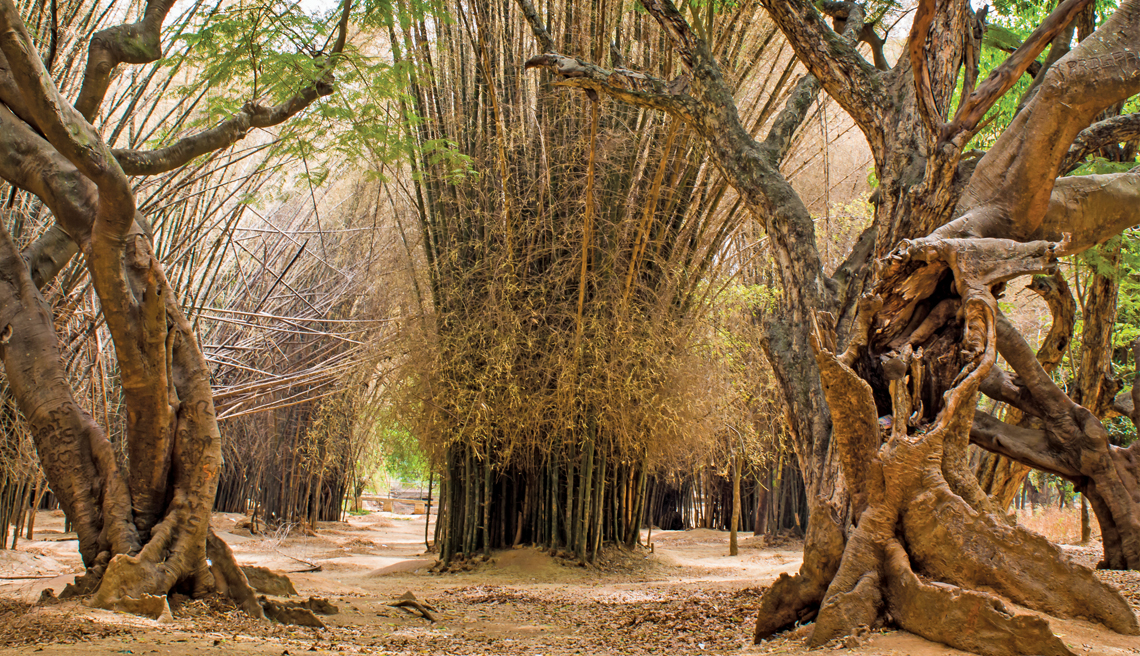
Grassy powerhouse
Community forests, diverse markets and policy convergence are fuelling the growth of India’s bamboo ecosystem — and that’s welcome news
Across India’s forested landscapes, a quiet yet consequential transformation is unfolding. Bamboo — abundant, regenerative and deeply interwoven with rural livelihoods — remains one of the country’s most underutilised natural assets. A significant portion of this resource is now part of ‘community forest resource’ (CFR) rights recognised under the Forest Rights Act, placing its stewardship and management in the hands of tribal communities.
Eastern Maharashtra offers a compelling illustration of the opportunities this opens up. Gadchiroli, traditionally known for its dense forests and tribal heartland, is emerging as a major ‘green steel’ manufacturing hub in Maharashtra, signalling the broader industrial transition underway in the region.
The adjacent districts of Gadchiroli and Chandrapur together account for over 90% of Maharashtra’s bamboo production, making them central to the state’s bamboo economy. With the third-largest bamboo area in India, Maharashtra occupies a strategically significant position within the national bamboo landscape.

Sanjeev Karpe, a sustainability entrepreneur and bamboo sector specialist, is the founder and director of the nonprofit, KONBAC (Konkan Bamboo and Cane Development Centre)
Unfolding here is a convergence of industrial transition, natural resource wealth and community-led governance, set against a global shift towards low-carbon development and presenting a rare and time-sensitive opportunity.
Bamboo today stands at the intersection of climate resilience, rural prosperity and sustainable industrial transformation, poised to evolve from minor forest produce into a cornerstone of India’s green growth strategy.
For decades, bamboo was viewed as minor forest produce — useful but peripheral to mainstream economic planning. That perception is changing rapidly. Globally, sectors such as shipping, aviation, steel, cement, thermal power and construction face mounting pressure to decarbonise. Biomass-based fuels, sustainable construction materials and bio-based industrial feedstocks are gaining strategic importance. With its rapid harvesting cycle (three-four years), high biomass productivity and ability to grow on degraded lands without competing with food crops, bamboo presents a scalable solution.
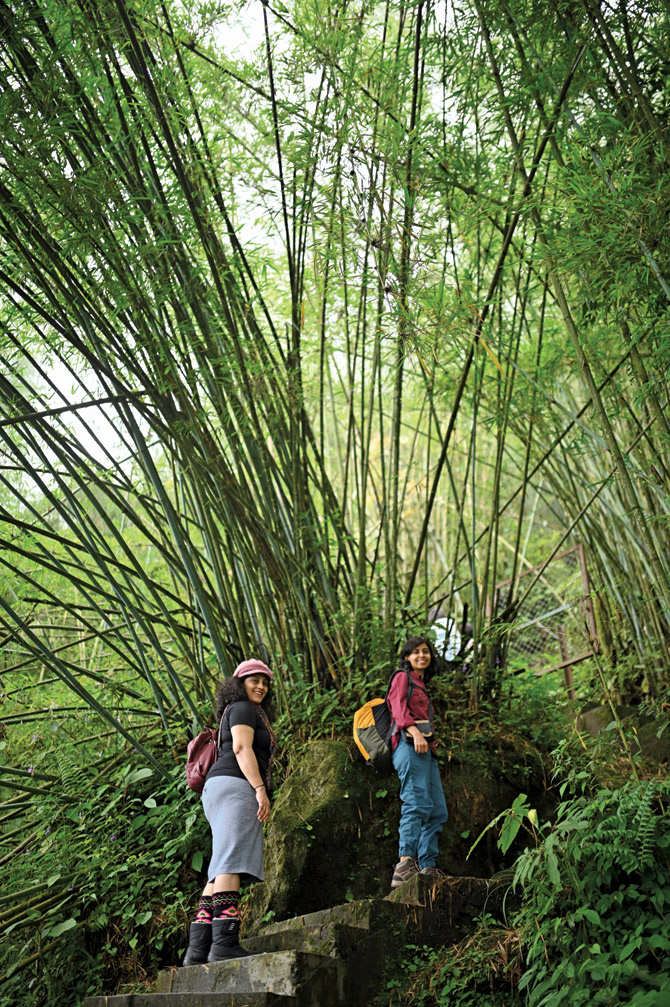
The four bamboo segments
Yet bamboo’s relevance extends far beyond energy. To understand its potential, the sector must be seen as an ecosystem spanning four interlinked segments.
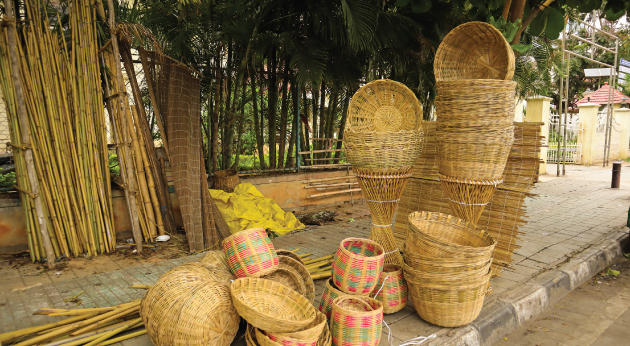
1. Traditional craft economy: Across tribal and rural India, bamboo has sustained artisan livelihoods for generations, being the preferred material for everything from baskets and mats to agricultural tools and household utilities. This labour-intensive, skill-based segment is deeply rooted in cultural traditions and supports thousands of households, particularly women. Though largely informal, it remains one of the most livelihood-dense components of the bamboo value chain.
2. Traditional structural applications: Bamboo is widely used for scaffolding, fencing, staking and temporary structures. While value addition per unit may be modest, this segment absorbs large volumes annually and provides steady, decentralised income across rural and peri-urban markets. In many regions, it forms the backbone of bulk bamboo consumption.
3. Modern interiors and lifestyle applications: Furniture, décor, engineered panels and architect-led structural applications represent a high-growth, design-driven segment. This domain combines material innovation, aesthetics, branding and sustainability positioning, making bamboo increasingly relevant to urban and premium markets.
Landmark projects have demonstrated bamboo’s modern potential, including installations at the Kempegowda International Airport in Bengaluru, the Lokpriya Gopinath Bordoloi International Airport in Guwahati, and within the new Parliament building in New Delhi.
Scaling up the bamboo segment requires systematic investment in skill upgrades, product development, scientific seasoning and treatment infrastructure, integration with architects and developers, and rigorous quality standardisation that’s aligned with national and international benchmarks.
4. Industrial and energy applications: Large-scale industrial applications — including bioethanol, biomethanol, compressed biogas, pulp and paper, textiles, engineered bamboo lumber, briquettes and activated carbon — have the capacity to absorb substantial volumes of raw material while attracting significant long-term capital investment. This segment represents the scale-intensive pillar of the bamboo economy, linking forest resources with energy transition and green manufacturing.
Industrial-scale initiatives are already redefining bamboo’s role in India’s development landscape. Among these are the commercial bamboo-based ethanol production at Numaligarh Refinery in Morangi in Assam; bamboo lumber manufacturing in Agartala in Tripura; bamboo crash barrier manufacturing in Bemetara in Chhattisgarh; high-end bamboo construction and furniture manufacturing in Sindhudurg in Maharashtra; bamboo-based personal care product manufacturing in Kolkata; and engineered strand-woven bamboo lumber production units in Jagiroad in Assam.
Investment magnet
These pioneering efforts are now catalysing a new wave of investments, including a proposed bamboo-based methanol project in Gadchiroli; bamboo lumber manufacturing in Khowai in Tripura; a bamboo glued-board manufacturing unit in Gadchiroli; high-technology briquette production facilities in Sindhudurg; and bamboo-derived activated carbon manufacturing in Sambhajinagar (Maharashtra).
Together, these developments underscore a growing industrial confidence in bamboo as a scalable and renewable feedstock. They signal a structural transition towards bamboo-led green industrial growth, positioning bamboo not merely as a traditional forest product but as a strategic feedstock for India’s low-carbon and sustainable manufacturing future.
India has undertaken significant policy reforms to strengthen and formalise the bamboo ecosystem. The removal of regulatory barriers on bamboo grown outside forests has eased cultivation, transit and trade, encouraging farmer participation and private investment. Biomass pellet co-firing mandates in coal-based thermal power plants have opened new demand channels for renewable feedstocks. Additionally, the phased adoption of flex-fuel engines in vehicles is expected to significantly expand bioethanol demand, further reinforcing the strategic role of biomass in India’s energy transition.
Some Indian states are building on this national momentum. Maharashtra has articulated bamboo-focused industrial strategies aimed at developing processing clusters, strengthening value chains and attracting green investment. Assam has taken a progressive step by mandating that at least 5% of materials procured for its Public Works Department projects incorporate bamboo-based products.
The policies now in place reflect a growing recognition that bamboo is a strategic material in India’s decarbonisation and green industrial growth plans. But policy alone cannot unlock transformation.
Communities with CFR rights now control bamboo-rich landscapes. For many tribal regions, bamboo represents the most scalable renewable resource. But converting standing stock into sustainable livelihoods requires market intelligence, aggregation models, enterprise incubation, access to finance, product innovation and climate-linked advisory support.
Without institutional bridges, the sector risks remaining fragmented at the artisan level or becoming overly centralised in capital-intensive projects with limited local value capture.
With over half of India’s population dependent on rain-fed agriculture, climate volatility is increasing vulnerability. Bamboo offers an alternative pathway.
As a perennial crop, it provides recurring harvests without annual replanting, performs well on degraded land and contributes to soil stability and carbon sequestration.
For CFR communities and smallholders, bamboo can serve as a climate-resilient income stream, a buffer against crop failure, a raw material for local enterprises and a potential participant in emerging carbon markets. The optimal bamboo model will vary by region, though. Some areas may benefit from furniture clusters, others from industrial aggregation, still others from craft modernisation. Context-sensitive planning is essential.
India’s decarbonisation commitments, forest governance reforms, biofuel ambitions and growing demand for sustainable materials have converged at a defining moment. Bamboo has multiple facets: it is a climate-mitigation tool, a rural employment engine, a tool in regenerative land-use, and an input for green industry.
The opportunity is not merely to expand bamboo production but to design a balanced, multi-segment ecosystem that maximises environmental and social returns. If approached thoughtfully, bamboo can transition from an underutilised forest asset to a cornerstone of India’s inclusive green economy, placing tribal communities not at the margins of growth but at its centre.
