Editorial
Vocational education is on the cusp of getting its due as a subject in India’s schooling system, and not a moment too soon. For all the advantages it delivers — from hands-on learning and career clarity to original thinking, skills enhancement and more — vocational education has lagged in India due to limited access, inadequate tutoring and sociocultural biases. That is poised to change as the recommendations of the National Education Policy, 2020, get closer to being implemented in right earnest. Our cover story examines what is at stake.
Starting early with vocational education is crucial in realising its benefits. The intent is to have this in place for students from grade 6 to higher secondary, but that’s easier imagined than done. There are a host of challenges to be overcome before vocational education can become an integral part of India’s schooling system. Addressing these challenges by creating a template for execution — that’s the goal of two programmes being operationalised by the nonprofits Lend A Hand India and STARS Forum with support from the Tata Trusts.
This edition of Horizons also has a varied blend of articles that highlight the Trusts’ range of social development initiatives. Two of these are from Maharashtra: a long-running collaborative effort to provide a safety net for inmates in the state’s prison system, and a Pune-based endeavour that helps underprivileged children suffering from type-1 diabetes.
From Odisha, we have a unique fellowship programme that is building a high-quality workforce by tapping youth through skilling and entrepreneurship projects. And there’s Antaran, the crafts-based livelihoods programme, which is enabling more than 3,000 handloom weavers from about 250 villages in four states to become entrepreneurs by providing them with the tools and the technology to reach far-flung markets.
In our interview section, we speak to social entrepreneur and Ramon Magsaysay award winner Harish Hande, who has made it his life’s mission to deliver solar power to underserved communities and to fuel social uplift through the use of sustainable energy. We have a mix of images and words to narrate the story of a bakery and a café in Uttarakhand, both managed by women, and thriving thanks to a signature ingredient: millets.
Wrapping it up are Valay Singh, incisive as always in his analysis of India’s judicial edifice — with a piercing look, in this instance, at the legalities of everyday transactions — and educationist Akshay Saxena, who makes the case for providing children from lower-income backgrounds with the means to maximise their potential.
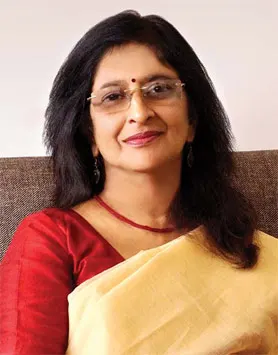
Christabelle NoronhaWe hope you will help us make Horizons better with your valuable feedback. Please do write to us at horizons@tatatrusts.org.
editor
- Christabelle Noronha
- Email: cnoronha@tatatrusts.org
editorial team
- Philip Chacko
- Gayatri Kamath
- Labonita Ghosh
- Shubha Madhukar
Editorial Coordinator
- Nisha Swami
Design
- Shilpa Naresh
- Abraham K John
Designed by
- The Information Company
Contact
- Tata Trusts
- World Trade Centre 1,
- 26th Floor, Cuffe Parade,
- Mumbai 400 005. India
disclaimer
- All matter in Tata Trusts Horizons is copyrighted. Material published in it can be reproduced with permission. To know more, please email the editor at horizons@tatatrusts.org