In rural country, care that counts
Healthcare is at the heart of Jan Swasthya Sahyog’s exceptional efforts to help underserved tribal communities, and others as well, in Chhattisgarh and Madhya Pradesh.
All my life I have seen medical emergencies in our village being treated by a local vaid (ayurvedic practitioner) or a witch doctor,” says Jeevanti Toppo, a resident of Mahamai village in Chhattisgarh’s Bilaspur district. “Whether it was a common cold or pregnancy-related complications, the solution was either some plant derivative or a ‘dusting down’. We were told illness had befallen the family because the gods were unhappy, and we never questioned this.”
It took Ms Toppo, a 38-year-old tribal, many years into adulthood to realise these age-old practises had no scientific basis and were, in fact, the cause of many untimely deaths in her village. That realisation spurred her to become a health worker with Jan Swasthya Sahyog (JSS), a nonprofit that helps provide affordable and quality healthcare in 72 tribal villages in and around the Achanakmar Tiger Reserve near Bilaspur.
JSS has been supported by the Tata Trusts since 2001 for various initiatives, including an all-service hospital at Ganiyari on the outskirts of Bilaspur. In 2024, the Trusts began collaborating with the organisation on a two-year programme to improve access to comprehensive primary healthcare in the tribal regions of Chhattisgarh, as well as two districts in Madhya Pradesh (Anuppur and Dindori).
“JSS has evolved as a resource centre for tribal health over the years,” says Amar Nawkar, a programme officer with the Trusts. “It has emerged as an authoritative voice on tribal health thanks to the efforts of its doctors and community health workers, and how they have approached the idea of healthcare in rural regions.”
Casting a wide net
Jan Swasthya Sahyog has delivered quality healthcare and more to underserved villagers
- 40,000+ number of tribal beneficiaries reached from 72 villages in and around the Achanakmar Tiger Reserve in Chhattisgarh.
- 160,000+ size of population around the intensive field practice area accessing services from JSS’s health centres.
- 1.5 million+ rural and tribal poor from 2,700 villages in nine districts of Chhattisgarh and eastern Madhya Pradesh who access care at the 150-bed Ganiyari hospital and its health centres.
- 250,000+ villagers screened for the rampant sickle-cell disease in Madhya Pradesh.
- 1,800+ children taken care of in creches managed by the community in Chhattisgarh.
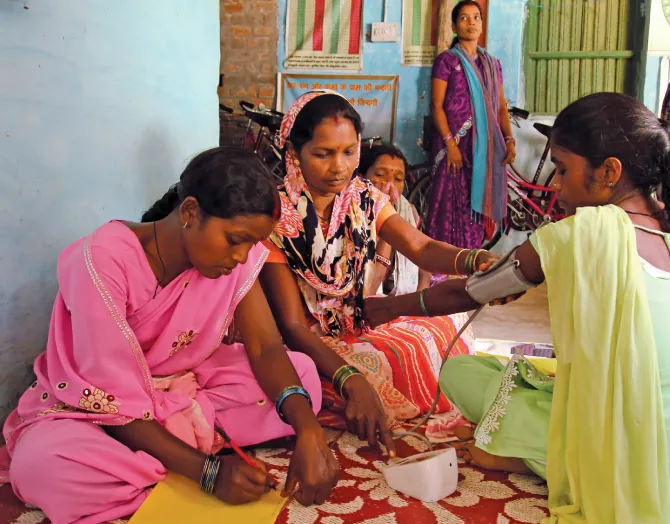
Dedicated personnel are one of JSS’s strengths and Ms Toppo is an example. She manages the health needs of nine of the 72 villages around Achanakmar: from advising and facilitating access to medicines, to referring emergency cases to the next level of care (primarily the Ganiyari hospital).
Ms Toppo goes from home to home, treating those who cannot travel to the nearest health centre; counsels family members to be better caregivers for older patients and those with disabilities; and follows up existing cases. She even attends to noncommunicable diseases like hypertension and diabetes. As part of a cohort of women health workers attached to JSS, Ms Toppo is trained to do this.
For tribal communities in Chhattisgarh and Madhya Pradesh — as in many other parts of India — the biggest problem is exclusion. They have to cope with geographic, economic, infrastructure and governance issues when it comes to accessing even the most basic healthcare benefits.
“For many far-flung tribal communities, dealing with a health problem means travelling long distances and taking different modes of transport just to reach the nearest primary health centre (PHC),” says Dr Raman Kataria, cofounder and executive committee member of JSS. “Travel may take 12 hours or more and cost as much as ₹2,000, leaving them with nothing for the treatment itself.
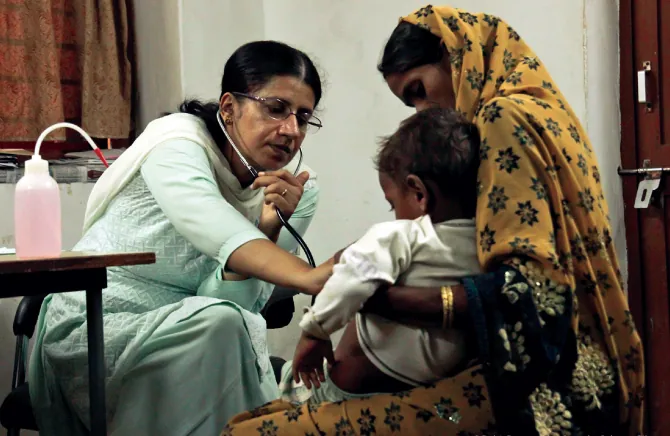
“Also, most government hospitals will not admit you directly unless it’s an emergency. You have to go through the outpatient department, which may insist on more investigations and lab tests, so there’s that cost too. As for private hospitals, they are out of bounds for poor tribal communities.”
Topography adds to the difficulties. Last year, Manmati Baiga, a 35-year-old from Ghameri village near Achanakmar, was bitten by a snake. For two days her family did not realise what had happened as Ms Baiga slipped into a venom-induced paralysis.
“There is a lot of alcoholism in tribal communities and Manmati’s family thought she was drunk on country liquor,” says Praful Chandel, a village cluster coordinator with JSS. “Our health workers, on a chance visit, discovered the snakebite and carried her — on a charpoy across two raging rivers — to get treated.”
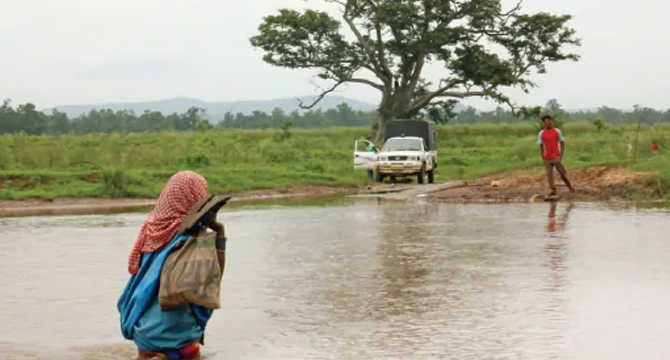
Ms Baiga was administered an anti-venom dose at the local JSS-run health centre and then transferred to the intensive-care facility at the Ganiyari hospital. The care and attention she received saved Ms Baiga’s life.
Given the situation they face, it’s no surprise that tribal families either forego treatment or turn to local practitioners — often with disastrous outcomes. Then there is what Dr Kataria calls a “triple whammy” of conditions.
Community connect that
runs deep
Having worked for many years in healthcare, Jan Swasthya Sahyog (JSS) is now looking beyond this core in its project areas. As Praful Chandel, the nonprofit’s cluster head for forest villages in Chhattisgarh, puts it: “There are other serious community-level issues in the region that demand attention, in farming, with livelihood opportunities, even human-animal conflicts.”
In Manpur village in Bilaspur district, 80% of the population belongs to the Gond tribal community. Farming is this community’s primary source of income, supplemented by forest-based activities and seasonal wage labour. Traditionally, the farmers here practised diversified agriculture, cultivating a second crop of pulses and oilseeds sown into standing paddy. This ensured protein-rich foods for the household.
Gradually, these practices changed because of crop destruction by stray cattle and wild animals. The burden of night-long vigils in their fields forced farmers to abandon their second crop, and this made household diets heavily rice-dependent (a primary cause of undernutrition in the region).
With JSS’s help, Manpur’s villagers got started on a community-fencing project by mapping farming land, estimating material requirements and committing to household-level contributions of labour and resources. This resulted in 160 acres of farmland being fenced and — without the additional pressure of constant guarding — 60 acres being used to cultivate pulses and oilseeds as in the past.
Benefits have accrued quickly as a consequence: seasonal migration has declined and household food baskets have started to become more diversified with the introduction of protein and fats.
“Undernutrition is common among tribals located in remote areas, and the cause is usually poverty and hunger,” he says. “We have seen people, especially women, with a body mass index (BMI) as low as 10. Anything less than 13 makes standard medical treatment, even survival, difficult.”
Undernutrition leaves these villagers more vulnerable to common ailments such as diarrhoea and tuberculosis, or seasonal outbreaks of malaria, dengue and water-borne diseases, which can be fatal. “They have persistent infections that can be overcome by vaccines or other protective measures,” says Dr Kataria. If they could access these, that is.
To add to their health woes, Chhattisgarh’s tribal communities are beset by ‘lean’ diabetes, which is different from the more common type 2 lifestyle-related variety. “They have low BMI and develop diabetes at a much younger age, in their 20s and 30s,” adds Dr Kataria.
Food scarcity leads to poor diets. “Whatever crops or vegetables they grow are sold in the market,” says Dr Kataria. “Their staple is the rice provided by the government’s public distribution system. This polished rice has a poor glycaemic index and is very unhealthy.”
JSS has now embarked on a mission to plug gaps in primary healthcare delivery for tribal villages, improve the quality and range of healthcare services, and design critical-care pathways for tribal communities struck by conditions such as sickle-cell disease and cancer.
JSS has undertaken research and documentation in the 72 villages around Achanakmar, mainly by setting up three subcentres in village clusters and recording data from the Ganiyari hospital. Together, the subcentres and the hospital cater to a population of about 1.5 million people, 40,000 from the programme villages and 160,000 from 2,700-odd villages in and around Bilaspur.
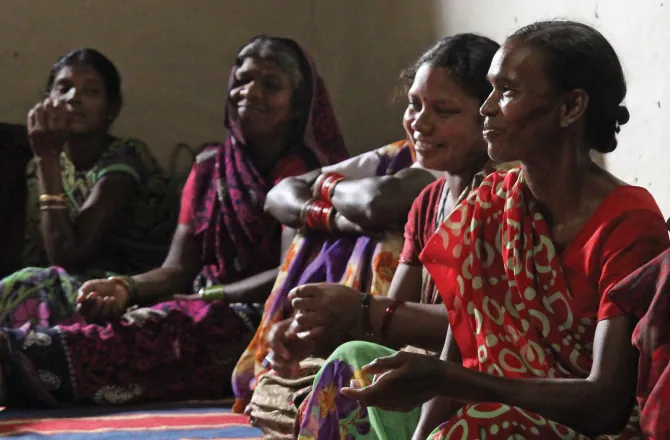
With such a large base to care for, JSS’s people have to be well-trained. “One aspect of our work relates to providing clinical care through village health workers, who are all women selected by the community,” explains Dr Kataria. “Some of them are semi-literate, so they receive both literacy and healthcare training.”
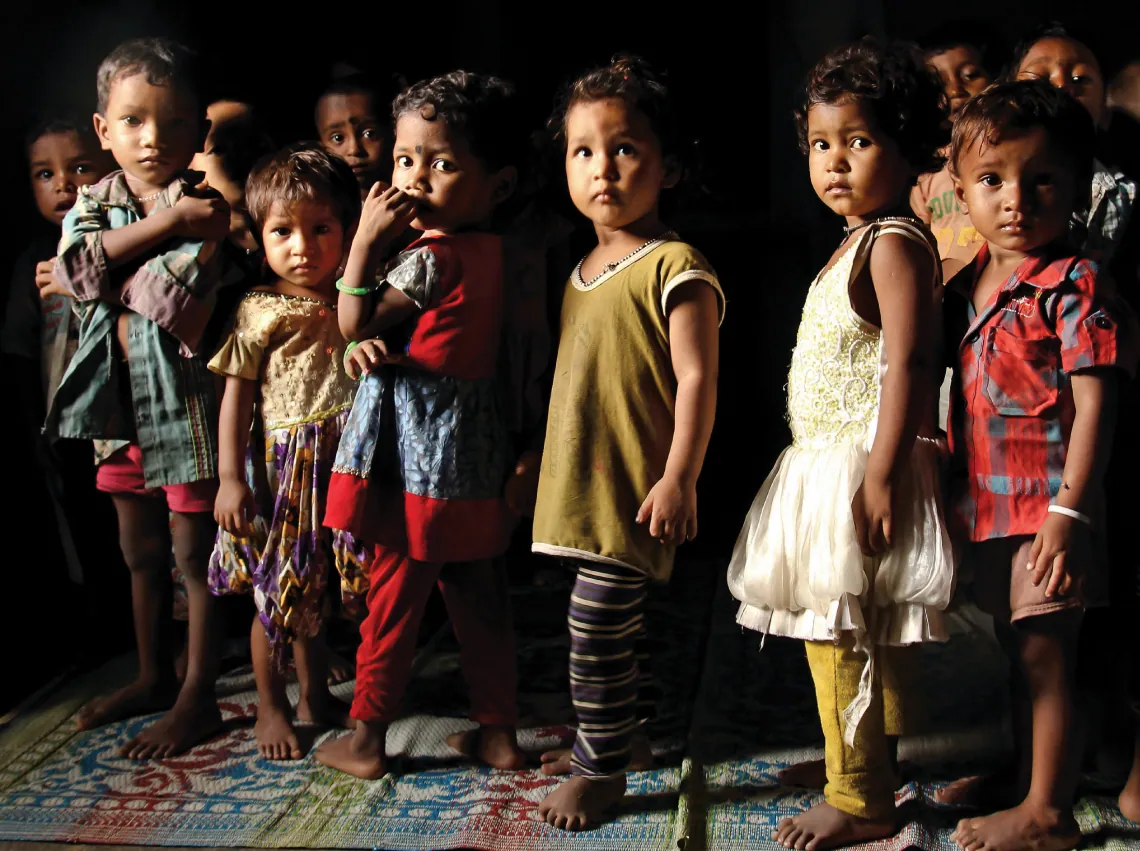
Another JSS project concerns phulwaris (creches), set up to prevent malnutrition among young children. “Children up to six months of age are nutritionally sound because they’re exclusively breastfed,” says Dr Kataria. “Once they are older and the mother leaves them at home while she goes to work, their nutrition starts suffering. We decided to start creches where working women could leave their children, whose diet and safety would also be taken care of.”
The village chooses an older woman to manage about 10 children in a creche. They are fed three-four times a day and receive almost 100% of their protein and 70% of their calorific requirement during these eight hours in care. They are also engaged in play and learning activities. Currently, some 1,800 children are being taken care of in these phulwaris.
JSS’s most substantial contribution is the Ganiyari hospital in Chhattisgarh. With the Trusts’ support, the hospital has grown over the past two decades from a four-bed unit to a 150-bed institution. It provides many essential services — medical, surgical, paediatric and obstetric —and has formed links with diagnostic and public-health facilities for seamless referrals and patient management.
“Almost all common specialities are dealt with here,” says Dr Kataria. “We may not have cardiologists or rheumatologists, but we have internal medicine experts who take care of most problems, and we also consult remotely with specialists.”
In Madhya Pradesh, while working with the state government to promote better maternal and newborn care in the districts of Anuppur and Dindori, JSS encountered a different kind of problem: a flurry of sickle-cell disease (SCD) cases. This congenital blood disorder affects the vital organs and requires early screening and lifelong treatment.
Unfortunately, JSS found there were no means of diagnosing SCD within the public health system, either in the district hospitals or at community health centres. The nearest facilities for this were the Jabalpur or Raipur medical colleges, both well over 200km away.
In 2017, JSS set up innovatively developed, low-cost haemoglobin electrophoresis machines in district hospitals and referral units to diagnose SCD, with a test costing as little as ₹25 (compared with ₹600-700 elsewhere).
The tests unearthed, for the first time, a considerable burden of the disease. “In Madhya Pradesh we have screened more than 250,000 people, diagnosed some 3,500, and identified the sickle cell trait in another 28,000,” says Dr Kataria. “We have even created a sickle-cell registry.”
JSS now works with the district administrations of Anuppur and Dindori to identify and treat SCD. In Chhattisgarh, it has instituted cost-effective diagnostic tests and set up a collaborative centre for excellence at the Ganiyari hospital for SCD patients. In Madhya Pradesh, JSS’s advocacy has led the state government to launch its own SCD and anaemia-elimination programme since 2018.
“While JSS’s initiatives are designed from an equity angle for vulnerable tribal populations, they benefit the entire catchment area the organisation works in,” says Mr Nawkar of the Trusts. “People from non-tribal villages, even from Bilaspur, come to the Ganiyari hospital because of widespread trust that the organisation has earned.”
“Ultimately, it is the government that is the major provider of healthcare for marginalised people,” says Dr Kataria. “What we really want to do is improve the quality of services within the government system.”