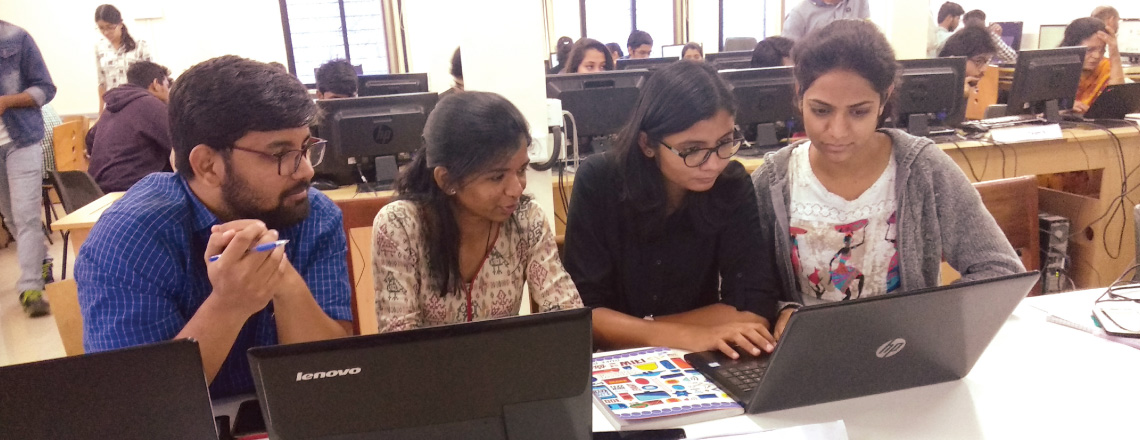
An open-data platform is providing Pune’s citizens with improved access to civic services and offering solutions to resolve urban challenges


INTERVIEW
‘India does not need to copy any one model’
“The real concern,” explains Debolina Kundu, “is not that India is urbanising too rapidly, but that the geography and nature of urbanisation are changing faster than our planning and governance systems are adapting.” Addressing concerns of the kind comes naturally to the director of the National Institute of Urban Affairs, India’s leading think tank for research and training in urban development and management.
Dr Kundu, who has more than 30 years of experience in the field of urban development, speaks to Christabelle Noronha about the country’s urban and near-urban landscapes and how these can be made more habitable for those living and working there. Excerpts from the interview:
With the rapid and haphazard urbanisation that India is witnessing, what do we need to be worried about?
It is important to understand that India is not urbanising rapidly. The annual growth rate of urbanisation in the country in the 1980s was around 3.9%, and that was the peak since independence. There has been a decline since, suggesting a more gradual transition.
The perception of an “urban explosion” partly reflects the scale of absolute growth rather than an acceleration in urbanisation rate. More important is the changing nature of urban growth. The contribution of natural growth has declined sharply. While rural-to-urban migration remains crucial, it is not the dominant driver. At the same time, urban-to-urban migration has increased.
Settlements are increasingly becoming urban through economic and spatial transformation rather than large-scale population inflows. Many administratively rural settlements are already functionally urban. This means that urbanisation is increasingly taking place beyond the boundaries of formally recognised urban areas. In these transitional areas, planning and governance have not kept pace with physical and economic transformation.
Industrial relocation, limited enforcement of building bylaws and rapid development are creating pressure on infrastructure, housing, basic services, transport and the environment. So, the real concern is not that India is urbanising too rapidly, but that the geography and nature of urbanisation are changing faster than our planning and governance systems are adapting.
Do you see any reverse migration happening from urban centres to census towns?
Yes, there are indications of reverse migration and the redistribution of population and economic activity towards smaller urban settlements and peripheral areas. However, it is important to recognise that what we are witnessing is not reverse migration alone, but a broader process of decentralised urban growth.
The perception of an ‘urban explosion’ partly reflects the scale of absolute growth rather than an acceleration in the urbanisation rate. More important is the changing nature of urban growth.”
What about urban development exemplars from around the world, and what can India learn from them?
I think it is important to look at international good practices, but India does not need to copy any one model. We, too, have made considerable progress. However, there is scope for mutual learning and collaboration: learning from international experience while also sharing good practices emerging from Indian cities and states.
One way of looking at or managing urban development is through a mechanism of urban governance. Different countries have adopted different models, and we need to understand what has worked and what can be adapted in India. Empowered mayors, with clear responsibilities and greater capacity to lead urban development, could be one example.
What are the successes and failures of the Smart Cities Mission?
I think the Mission, for the first time in India, tried to bring digital governance to urban centres. The platform was already created by the Jawaharlal Nehru National Urban Renewal Mission, which started in 2005. Then, between 2005 and 2014, cities got additional central assistance for the first time. That laid the basic ground for the Mission to function.
One important development that happened through the Mission was the creation of ‘integrated command and control centres’. And those are functional even today: traffic management, municipal services, streetlights, etc. A lot of urban innovation also happened.
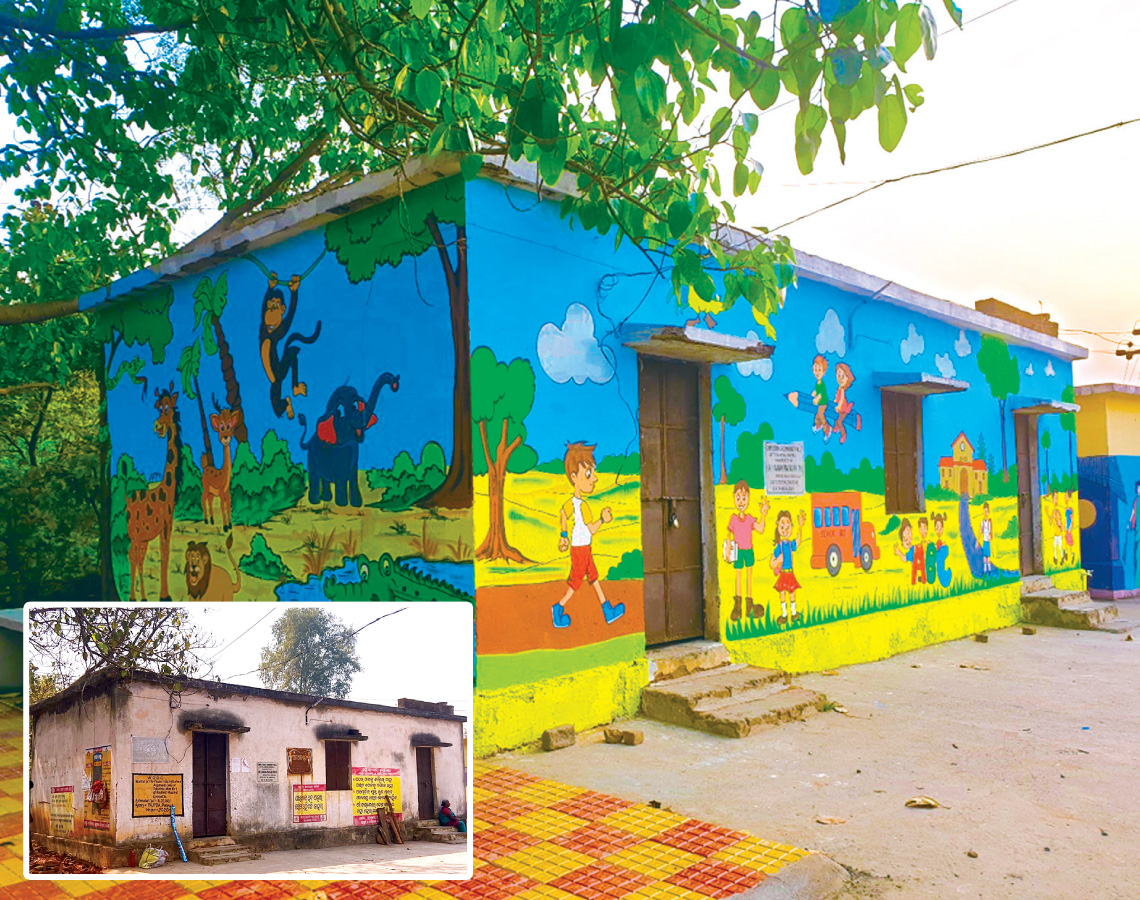
Goodbye slum, hello home
The Odisha Liveable Habitat Mission is an example of how the urban poor can be supported with decent housing in an environment that’s conducive to their well-being
READ MOREI think there was a lot of disparity in many of these smart cities in terms of absorbing funding and in reforms. One challenge was that, when seen from the perspective of pan-city and area-specific development, there was a skewed funding pattern. Also, the Mission’s idea of attracting private engagement and private funding did not happen to the desired extent.
What can be done about the corruption and inefficiency in implementing urban development schemes?
The challenge is often not the lack of schemes, but the implementation gap: delays, fragmented responsibilities, weak project preparation, procurement challenges, limited technical capacity and inadequate monitoring.
Transparency and accountability need to be built into the entire project cycle, from project selection and procurement to implementation, payments, quality monitoring and outcomes. Digital procurement, geo-tagged projects, real-time dashboards, social audits and independent third-party evaluation can reduce discretion and improve accountability.
We also have to strengthen municipal capacity. Cities need professional capabilities in urban planning, engineering, finance, procurement, project management and data systems. Giving urban local bodies greater responsibility without corresponding technical and financial capacity is unlikely to improve outcomes.
There should be a move from expenditure-based monitoring to outcome-based monitoring. The question should not simply be whether funds have been spent, but whether the investment has actually improved water supply, sanitation, mobility, housing, etc. Urban governance is ultimately about converting public money into public value.
One way of looking at or managing urban development is through a mechanism of urban governance ... Empowered mayors, with clear responsibilities and greater capacity to lead, could be one example.”
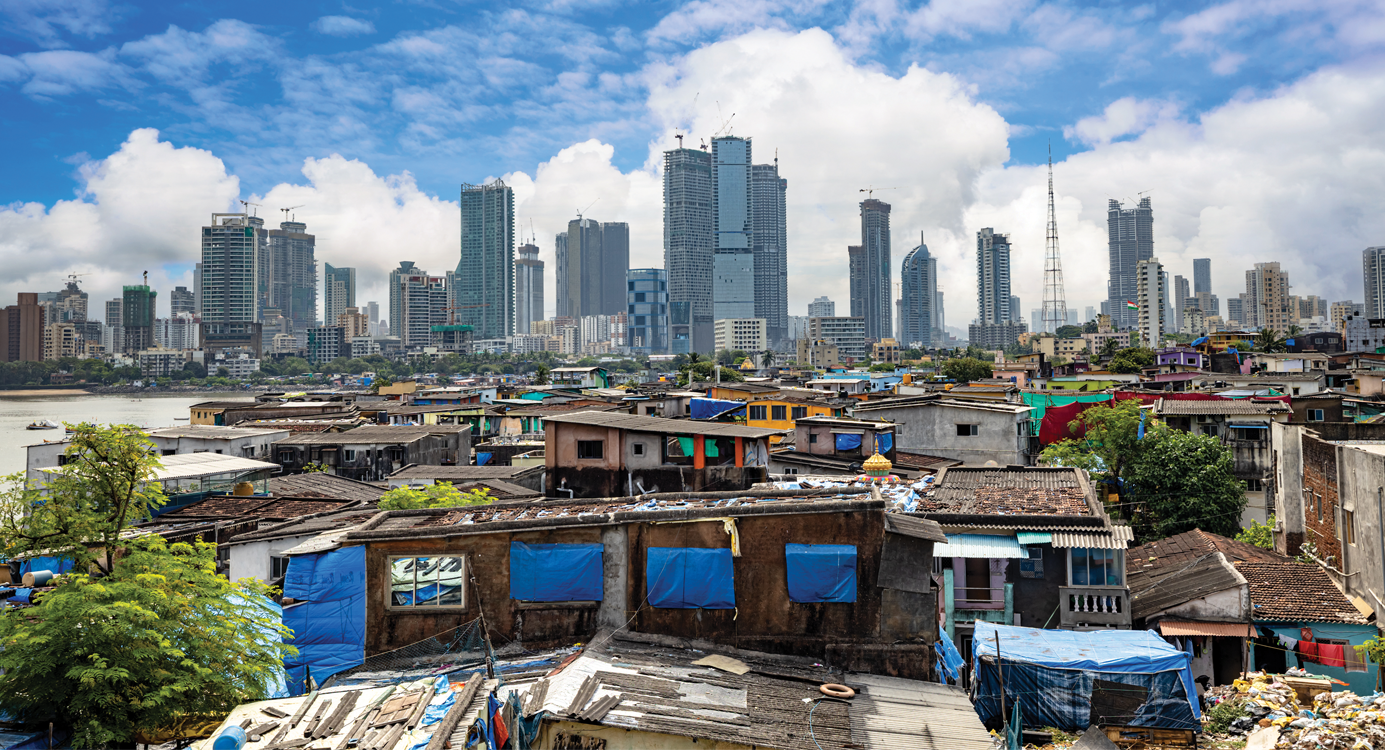
A slum in Mumbai set against the backdrop of skyscrapers; slums are not just a housing problem, says Dr Kundu
Why do Indian cities struggle to find solutions that eliminate or at least minimise slums?
I would like to put this in a global context. The challenge of slums and informal settlements is not unique to India; it is a manifestation of the broader global housing crisis. The UN-Habitat World Cities Report 2026 highlights the scale and persistence of the global housing affordability crisis and the growing difficulty cities face in ensuring adequate, affordable and well-located housing for all.
Across countries, rapid urbanisation, rising land and housing costs, inadequate affordable housing supply and inequality are contributing to the persistence and growth of informal settlements. In India, the fundamental reason is that slums are not just a housing problem — they are a symptom of a deep mismatch between the location of jobs, the price of formal housing and the capacity of cities to provide affordable land and housing.
There are five key challenges. First, the economics of slum redevelopment are inherently difficult. India’s dominant approach has been to use the value of land to finance redevelopment, where part of the land is used for rehabilitation housing and the remaining is monetised through a free-sale component. This model works only where land values are sufficiently high.
Second, relocation solves the structure but not necessarily the housing problem. Slums are often located close to employment opportunities precisely because formal housing here is unaffordable. When households are relocated to peripheral locations, they may gain a formal apartment but they lose access to livelihoods, schools, transport and social networks.
Third, we underestimate the complexity of implementation. A slum is rarely a homogeneous settlement with a single landowner and a clearly identifiable set of beneficiaries. There may be multiple landowners, legal disputes, unclear tenure, tenants as well as structure owners, changing eligibility criteria, political contestation, and difficulties in building consensus among residents.
For private developers, these translate into substantial risks. For governments, they translate into long project cycles and escalating costs. The problem is not merely finding a financially viable project; it is managing a highly complex institutional and stakeholder ecosystem.
Fourth, the financial burden of improving existing slums is often underestimated. In-situ upgrading appears simpler because it avoids relocation, but providing infrastructure and improving housing in dense settlements still requires substantial public investment.
Finally, and perhaps most importantly, we have not sufficiently addressed the continuous generation of new informal housing. Even if a city successfully redevelops or upgrades an existing slum, new households will continue to require affordable accommodation if formal rental and ownership housing remain unaffordable.
What can be done to deal with some of the pain points in urban India: pollution, waste management, water availability, housing and the like?
I think all are interlinked. With pollution, for instance, waste management is coming up in a big way, not only in urban but also in rural areas. We have the Solid Waste Management Rules, 2026. It is very important for people functioning at the city and ward levels to understand these rules and to implement them.
City officials as well as citizens have to take responsibility if our cities are to get better. We are trying to set up a behavioural-nudge unit at NIUA, through which we will try to impart training to officials and citizens across the country to make them understand that it is their behaviour that really leads to the different types of urban challenges that people are facing today.
India has made considerable progress towards achieving the Sustainable Development Goals, and this progress needs to be recognised and built upon.”
How can India better align itself to the objectives stated in the United Nations’ 2030 Agenda for Sustainable Development?
India has made considerable progress towards achieving the Sustainable Development Goals [SDGs], and this progress needs to be recognised and built upon. SDG 11 is particularly important because sustainable cities are closely connected with many of the other SDGs. We need stronger data systems at the micro level and greater localisation of the SDGs — down to the ground level and, where possible, sub-ward level — so that we can identify where progress is being made and where gaps remain.
Related articles

Poonam Muttreja, executive director of the Population Foundation of India, on what it means for India to become the world’s most populous country

The belief that engineering and technology can help us tame nature and build over it has been proven wrong time and again — to little effect
Among the leading architects of his generation, Ashok Behari Lall has been at the vanguard of the effort to bring sustainability to the forefront in the crafting of urban dwellings and spaces
