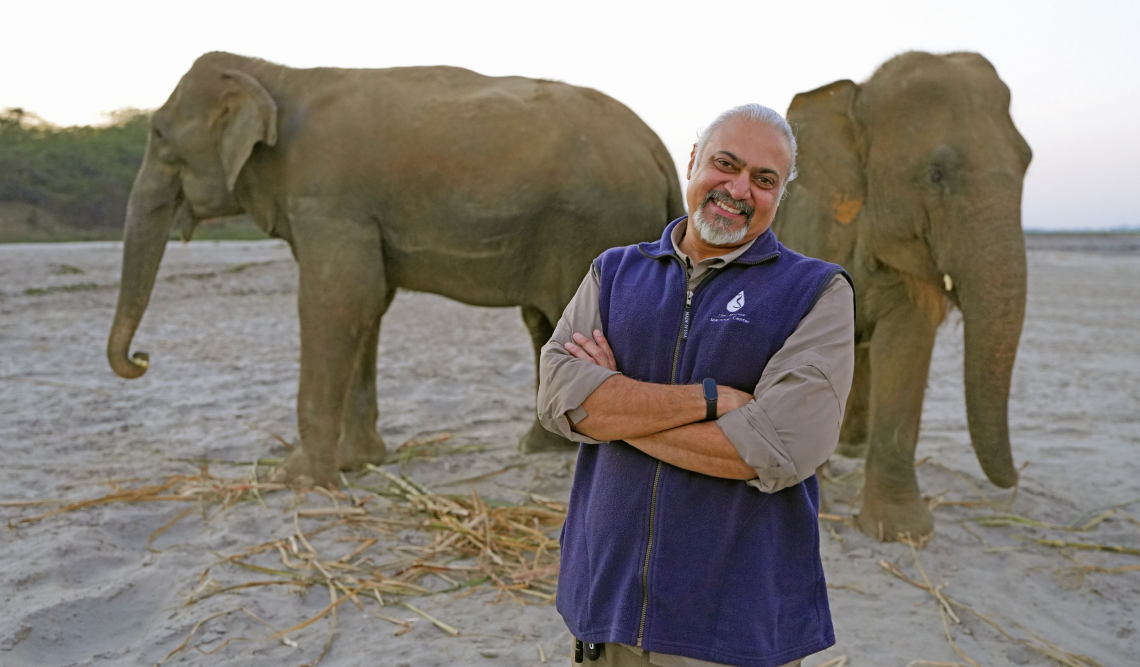
‘Conservation is a
societal ethic’
The “conservation of forests and wildlife is, in essence, the conservation of human beings,” says Kartick Satyanarayan with a depth of understanding that reflects his standing as one of India’s leading wildlife conservationists and votary of animal rights.
In this conversation with Christabelle Noronha, the cofounder and chief executive officer of Wildlife SOS talks about the importance of community engagement in animal welfare, the part that policymaking plays in wildlife conservation, and why we have to reconnect with forests and nature to better appreciate the creatures we share this planet with. Excerpts from the interview:
How would you describe the state of wildlife conservation in India at present? What have we got right and where are we lagging?
On the positive side, India has become a global conservation leader with several high-impact success stories. Our tiger population has nearly doubled over the past decade and today India is home to about 75% of the world’s wild tigers. This displays sustained protection, science-based monitoring and enhanced community engagement.
Gir National Park in Gujarat remains the only wild home of the Asiatic lion. The recovery of its numbers from precariously low levels reflects consistent protection despite development pressures and poaching driven by the illegal wildlife trade. Similarly, populations of one-horned rhinos in Kaziranga National Park in Assam have increased due to sustained government action and monitoring, and the numbers of olive ridley sea turtles along the Odisha coast have stabilised thanks to coordinated policy implementation and community participation.
Yet conservation is far from uniform. Across many regions, habitat fragmentation driven by infrastructure expansion, mining and unchecked land conversion continues to squeeze wildlife populations. India’s rapidly expanding human population intensifies pressure on land, forcing wildlife and people into closer proximity. In parts of Mumbai and Pune, increased leopard presence has triggered public anxiety and, at times, indiscriminate trapping in response to conflict incidents.
Connectivity between key landscapes in the Western Ghats and the Himalayan foothills remains inadequate, limiting genetic exchange among wide-ranging species such as elephants and big cats. Railway lines and highways that cut through forests without mitigation measures have led to repeated wildlife casualties, illustrating the urgent need for wildlife overpasses, underpasses and ecologically informed infrastructure design.
Lesser-known but ecologically vital species — the great Indian bustard, the Indian pangolin and various endemic amphibians among them — continue to decline outside flagship narratives. These species often function as ecological indicators; their disappearance signals deeper habitat degradation that may not yet be visible through more charismatic species.
India’s cultural history is replete with expressions of deep reverence for wild animals ... Yet, paradoxically, contemporary behaviour often starkly contradicts this reverence.”
Much has been said about human-animal conflicts in India and the nefarious contribution of so-called development to this. How can we find a balance, if at all?
Human-wildlife conflict is an ever-present conservation concern in India, rooted in deeper tensions between expanding human footprints and shrinking wildlife habitats. Roads, railway lines, hydroelectric projects, electric transmission lines and unplanned tourism development are often designed for the shortest distance and fastest completion, with little regard for ecological fragility.
When development is planned without studying landscape impact, wildlife corridors, and species movement, we fragment habitats irreversibly and ultimately compromise the very ecosystems that sustain human life. Effective conservation must, therefore, be as much about coexistence as it is about protection. If coexistence is not built into development planning, conflict becomes inevitable.
You have written about how India’s diverse and rich fauna has shaped our many cultures and traditions, and how our connection with nature has been eroded. What explains this ever-growing disconnect and how can we stem it?
India’s cultural history is replete with expressions of deep reverence for wild animals. From ancient scriptures and temple art to folklore that venerates rivers, forests and other living beings, our traditions reflect a profound ecological imagination. Yet, paradoxically, contemporary behaviour often starkly contradicts this reverence.
A striking example lies in our societal attitudes towards snakes. While they are worshipped during festivals such as Nag Panchami, they are also subjected to exploitation, cruelty and commodification in the very same society. During these celebrations, snakes are often captured from the wild, their mouths stitched or their fangs removed. They are starved to weaken them and forced into stressful public displays. When they are too weak to ‘perform’, they are discarded. The result is an ambivalence: reverence on the one hand and exploitation on the other.
The suffering of wild animals is caused by a growing human disconnect that originates with urbanisation, reduced direct engagement with natural landscapes, and a lack of environmental education. Many people are increasingly absorbed in digital spaces, rarely spending time in forests, on treks or observing wildlife firsthand. As a result, nature becomes abstract rather than lived in and experienced.
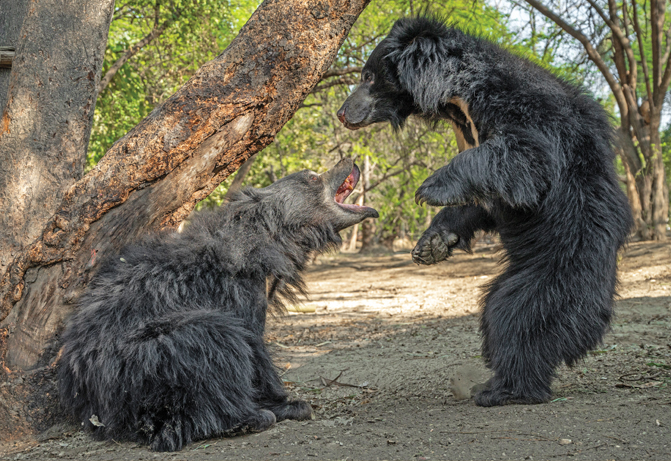
Animals do not have a voice or vote, so whose responsibility is it to protect them in a time of uneven governance, an apathetic public and regulations that are frequently flouted or bypassed?
Animals do not participate in electoral systems, but that does not render them voiceless. Their survival depends on layered systems of responsibility: legal, institutional, cultural and individual. While India’s Constitution recognises a citizen’s duty to show compassion towards living creatures, and landmark legislations such as the Wildlife Protection Act of 1972 and the Forest Conservation Act of 1980 provide strong statutory backing, the effectiveness of these frameworks depends entirely on how they are upheld.
In periods of uneven governance, responsibility becomes distributed rather than diminished. This makes enforcement of the law dependent on strong public will. The discontinuation of animals in circuses across India within a single generation demonstrates how societal shifts can translate into regulatory reform.
Many people are increasingly absorbed in digital spaces, rarely spending time in forests, on treks or observing wildlife firsthand. As a result, nature becomes abstract rather than lived in and experienced.”
Conservation is not solely the state’s burden; it is a societal ethic. Institutions and philanthropic bodies, along with organisations working in partnership with enforcement agencies, play an important bridging role between law and implementation. Apathy often stems from distance. When wildlife feels abstract, accountability weakens. But when people understand that ecological stability underpins water security, climate resilience and public health, conservation shifts from charity to necessity.
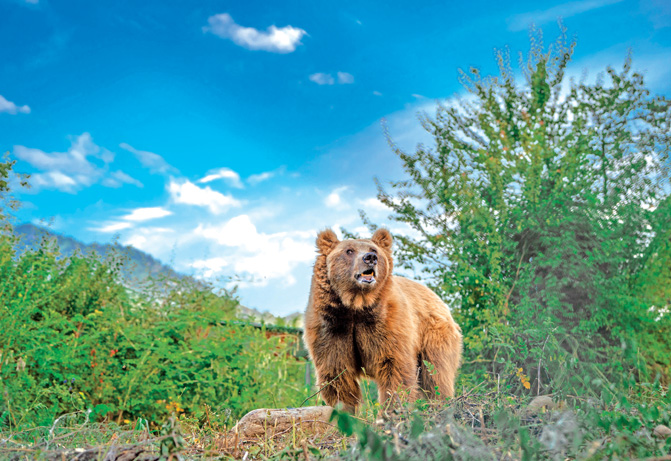
The work that you and your colleagues did to end the misery of ‘dancing sloth bears’ has been recognised globally. Why is it so difficult to accomplish something similar with elephants forced to perform for human gratification?
Ending the exploitation of sloth bears meant dismantling a single, clearly identifiable system: the Kalandar practice of ‘dancing’ bears. This practice, which had continued for nearly 400 years, involved cubs being poached from the wild after their mothers were killed, feeding a pipeline of capture, training and street performance. It required rescuing every remaining bear being forced to perform, rehabilitating families that relied on this practice, and closing the trade pipeline.
Elephants, however, exist within a far more complex landscape. Unlike sloth bears, they are embedded across tourism, temples, private ownership and begging networks. In some regions, even state-supported tourism models rely on captive elephants, further complicating reform efforts. Their use is normalised through culture, religion and economics, making change socially and politically sensitive.
What’s your view on the recent judicial rulings on stray dogs? What would be an equitable solution here?
Wildlife SOS supports a humane, science-based approach to the management of free-roaming dog populations. Experience, globally, shows that harsh removal or culling strategies are not effective. The most effective and globally accepted method is the implementation of the Animal Birth Control (ABC) Rules, 2023, which focuses on sterilisation, vaccination and the return of dogs to their original territories in urban areas.
Mass relocation of community dogs into shelters is not a sustainable or humane solution. India currently lacks adequate infrastructure and resources to house large numbers of dogs while ensuring proper welfare standards. An equitable solution lies in strengthening ABC implementation, improving urban waste management, promoting community participation and adopting location-specific strategies that protect both public safety and wildlife.
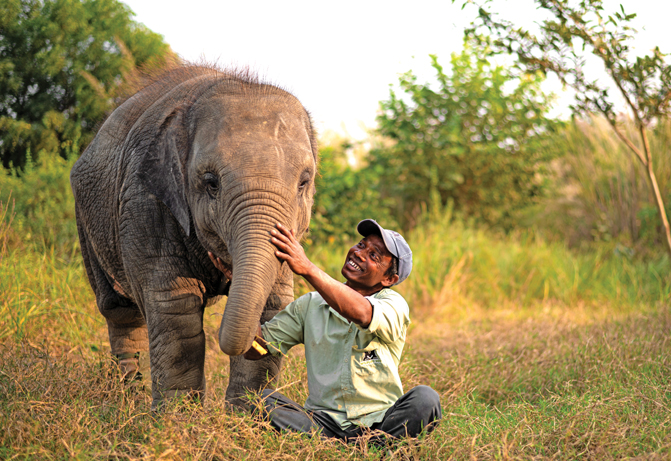
Which do you reckon are the best examples globally of wildlife conservation, and what can India learn from them?
One of the most widely cited examples is the reintroduction of wolves in Yellowstone National Park in Wyoming, USA. Wolves were originally hunted and eliminated following pressure from local farming communities concerned about livestock losses. The absence of this apex predator had led to an ecological imbalance, with unchecked herbivore populations degrading vegetation and affecting river systems.
The reintroduction of wolves in Yellowstone restored its ecological balance through a trophic cascade, allowing vegetation to recover, improving biodiversity and even stabilising riverbanks. The lesson is clear: ecosystems function as interconnected systems, often in ways that exceed simplified human management approaches. Conservation must focus on protecting entire ecological relationships rather than individual species.
Another inspiring model is the work of Sun Bear Conservation in Malaysia. The facility rehabilitates rescued bears while minimising human imprinting, especially in cubs. Through structured rehabilitation that encourages natural behaviours and post-release monitoring using radio collars, the programme contributes to strengthening wildlife populations and their well-being.
Zoos are a subject with pros and cons attached to it. Should they continue to exist?
The role of zoos must be viewed within the context of the current biodiversity crisis. As wildlife populations decline globally, zoological institutions can play an important role in conservation breeding, genetic management, rescue support and public education. For many people, especially younger generations, responsible zoo experiences may be their first meaningful exposure to wildlife.
Zoos should function as centres for conservation learning and excellence. When welfare, education, and scientific management are placed at the core, zoological institutions can contribute meaningfully to building a more environmentally responsible society.
Has the Universal Declaration of Animal Rights, which came about in 1978, made any tangible difference, particularly since it is not legally binding?
While the Universal Declaration of Animal Rights is not legally binding, it has played an important role in shaping the global conversation around animal welfare and ethics. Its principles have influenced policy frameworks, institutional standards and public awareness, encouraging societies to recognise animals as sentient beings.
In India specifically, progress is reflected in evolving legal provisions, like the growing emphasis on the principal freedoms of animals: freedom from hunger and thirst; discomfort, pain and disease; fear and distress; and the freedom to express natural behaviour. These increasingly guide veterinary care, captive management and rescue practices.
What can people do to help and how can they get involved with wildlife conservation?
Everyone has a role to play in protecting India’s biodiversity. The ecosystems around us sustain life by providing clean air, water and food, and protecting them ultimately means protecting ourselves. Small everyday choices can make a real difference. Be mindful about conserving electricity, water and food, plant native trees, and practise kindness and compassion towards animals and fellow human beings.