Doing it her way
A start in micro and small businesses for 40,000 women — that’s the happy outcome of a collaboration between Tata STRIVE and the Pimpri-Chinchwad Municipal Corporation in Maharashtra
Smita Kshirsagar carries two bottles of perfume in her bag, not for use but for inspiration. Ms Kshirsagar, who makes attar, a fragrant oil distilled from botanicals, has been trying to break into the perfume market with little success. The 52-year-old homemaker-turned-entrepreneur from Pune thinks she knows why: “I saw this box that was attractively packaged, listing all the ingredients. My products have simple packaging and branding; this is what I need to change.”
Ms Kshirsagar is getting there with help from Tata STRIVE, a skill-development initiative of the Tata Trusts. Tata STRIVE works with 4,690 self-help groups (SHGs) in the Pimpri-Chinchwad Municipal Corporation (PCMC) area of Pune to help its women members run micro, small and medium businesses (MSMEs).
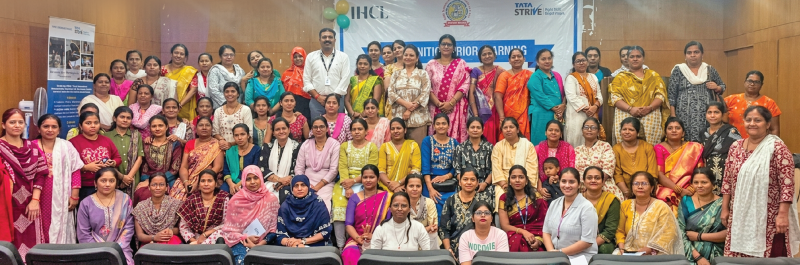
Project Sakshama, launched by Tata STRIVE in 2023, has in its fold around 40,000 SHG women. SHGs are a cornerstone of women’s socioeconomic empowerment in India, yet many face challenges in upgrading product quality, accessing markets and improving revenue. Tata STRIVE stepped in to lend a hand.
Women empowered
“When a woman is empowered with a livelihood, the entire family is empowered,” says Bijitha Joyce, head of ecosystem strengthening at Tata STRIVE. “Typically, SHGs are viewed merely as money-saving, loan-dispensing entities. We wanted to go beyond that savings mindset and establish a livelihood for the women members of SHGs.”
Project Sakshama is a five-year programme that trains women in financial literacy, livelihood skills, leadership and enterprise management. It seeks to strengthen the SHG system itself — for collective growth, improved bargaining power and better market access — through clusters and federations.
In addition, SHG members are connected with customers through corporate, retail and e-commerce platforms. And finally, by embedding digital governance and tracking systems such as real-time dashboards, Sakshama promotes transparency, accountability and efficiency.
“The idea was to take SHGs, build their capabilities and enable [new sources of] livelihoods for them,” says Ajita Karve, head of design, quality and communications at Tata STRIVE. “After year three of this five-year project, we will begin handing it over to the respective departments at PCMC so that they can assess the sustainability of whatever we’ve done so far.”
Tata STRIVE began in Pimpri-Chinchwad by collecting data to understand existing SHGs and their activities, something that had never been done before. A baseline survey was conducted to assess the profiles of the SHGs and their members’ livelihood needs.
“We have created a dashboard that contains all the information about the SHGs, down to every member and her entire business background and revenue stream,” adds Ms Karve. “With a click of a button, we can access information about 4,000-plus SHGs.”
Tata STRIVE tracks SHG activities through this dashboard and tries to ensure that processes are followed, for instance, checking that the panchsutri [a five-step internal regulation mechanism] is maintained. “Accounting practices and meetings are now registered on the dashboard,” says Ms Karve. “At any point, you can see which SHGs are holding meetings on time, who’s lending, who’s repaying, etc.”
Tata STRIVE’s capacity-building programme, designed inhouse, has four modules that deal with financial literacy (how to open bank accounts, start and manage online payment systems; get access to microcredit and government funds, etc); livelihood development (how to be financially independent with either a business or upskilling for a job); leadership; and enterprise management (providing trade-specific training). More than 22,700 women from 4,588 SHGs in the PCMC area have been trained so far.
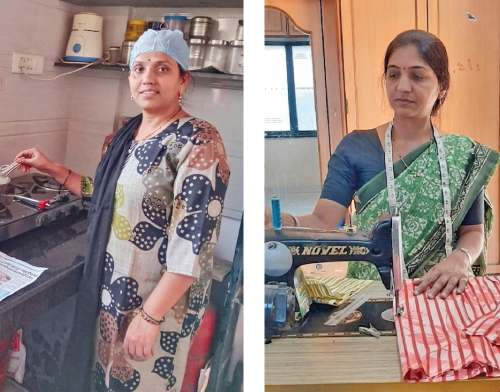
There’s a variety of training options. “For those who can’t work full-time but want to earn some money, we offer short courses that come in handy during festivals,” says Ashwinee Sangekar, lead, monitoring and evaluation (PCMC). For instance, 25 SHG members were trained in women’s grooming, 38 have learned tailoring, while another 32 and 20 members respectively have become proficient at making seasonal offerings. Also on the learning menu are home décor, jewellery and gift items.
The aspirations of the women involved are high and Tata STRIVE is doing its best to support these. About 50 MSME activities have been identified for nurturing, mentorship and development, including helping potential entrepreneurs identify business opportunities; create a business plan; get information about requisite licenses and registrations; and improve packaging, branding and pricing of their products or services. There is also an emphasis on soft skills such as personal grooming and customer interfacing.
Cooking up a career
For homemakers interested in culinary skills, Tata STRIVE has organised for chefs from the Taj Group of Hotels to host cooking lessons. This venture led to 48 women setting up food stalls in a PCMC-managed hub in Pune’s Akrudi neighbourhood. “The food stalls generate ₹2,000-3,000 in revenue every day because of high demand,” says Ms Sangekar.
Cloud kitchens top the list of home-based ventures. That’s the road 38-year-old Rupinagar resident Sonali Bhoge is planning to take with her soon-to-start food business (she currently sells spice mixes from home in partnership with two other women from her SHG). “I have learned how to package my cooking masalas more attractively and how to price my products,” says Ms Bhoge. “I participate in exhibitions and have set up temporary stalls in the offices of some Tata group companies.”
Having PCMC as a partner has been a boon for the programme, such as offering opportunities for casual employment. SHG members have delivered property tax bills for a small fee and also conducted door-to-door surveys about PCMC’s services, again for earnings.
While individual success stories are meaningful, Tata STRIVE is also engaged in strengthening the SHG system by forming a structure of clusters and federations. A group of about 10 SHGs, each with 10-12 members, forms a cluster; 11 to 15 clusters form a federation.
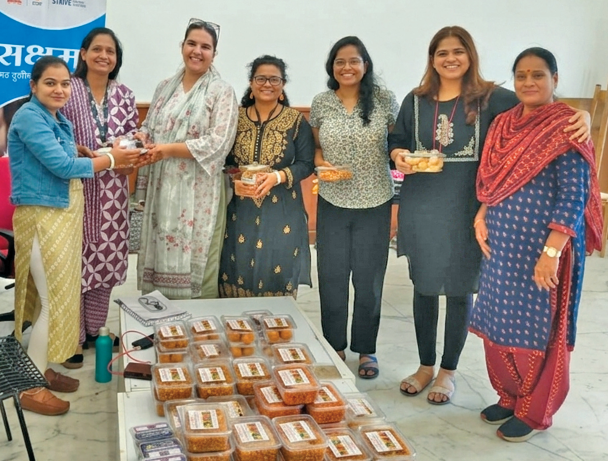
There are 255 clusters and eight federations in the PCMC area. Each federation is governed by an executive committee that manages its operations independently. The idea is that this formal structure will last longer. “We’re trying to build an institution that can run independently when Tata STRIVE is no longer present,” says Ms Joyce.
“It’s difficult to get women out of their homes and into a livelihood, but it’s harder to ensure they don’t drop out,” says Rekha Somavanshi, president of the Zhep federation. “My biggest challenge has been to make sure my fellow SHG members finish their training and continue in the system.”
That means constantly having to find new sources of work while creating the next level of leaders. “I also have to ensure we have a ‘hero’ product that sells well, and that we have the requisite licences to run our businesses,” adds Ms Somavanshi. “I have learned all this from the Tata STRIVE training.”
