Tomorrow calling
With relevance and necessity in mind, Tata STRIVE has made the skilling of youth for new-age industries and vocations a priority
The word vocation evokes images of carpentry shops and tailoring units. Tata STRIVE is rewriting this playbook by creating skilling courses for today’s emergent industries: cloud computing, solar power, electric mobility, cybersecurity, full-stack development and more.
Starting with six courses in 2015, Tata STRIVE has been adding new courses every year, with the tally now crossing 50+. “There is a push-pull logic to the way we plan courses,” says Ajita Karve, head of design, quality and communications at Tata STRIVE.
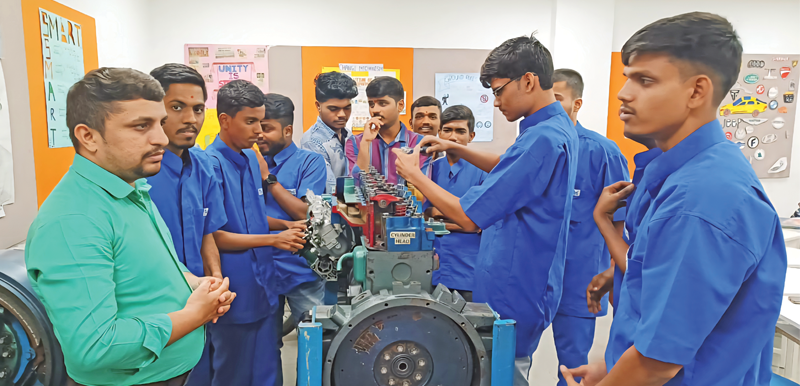
The pull comes from new requirements voiced by the organisation’s industry partners. For instance, Tata Motors has partnered Tata STRIVE for years as a pipeline for skilled auto technicians. A few years ago, when the demand for electric vehicles started rising, the automaker approached Tata STRIVE to skill trainees in servicing these. Similarly, Bajaj Auto requested skills specifically in servicing 2 wheeler CNG engines. “When we get a particular request from a partner, we try to determine the demand for such a course and how many livelihoods could be generated,” says Ms Karve.
Often, industry partners choose corporate social responsibility expenditure as a route to skilling. “Organisations look for implementation partners like us,” says Rajarshi Mukherjee, head of partnerships and programme development at Tata STRIVE. “They want to ensure their spending is aligned with their core business and marketing strategy, even as it helps improve brand visibility and directly impacts youth in their operational areas.”
An example here is Voltas, which needed retail sales associates to market its Beko brand of home appliances. In response, Tata STRIVE designed a course that layered retail skills with information specific to Beko appliances.
Some of the push to launch new courses comes from within. “We get feedback from our faculty and our placement team, who tell us what skills companies are looking for,” says Ms Karve. One line of feedback comes directly from the trainees placed.
As part of its process, Tata STRIVE touches base with placed students regularly. The students talk about their real-world experiences and whether their workplace needs a particular skill. This feedback gets incorporated into the design of the course.
Apart from adding new courses, Tata STRIVE continuously upgrades existing courses. Ms Karve cites the assistant electrician course as an example. “Our assistant electricians need to handle the newer electrical products in the market, with new displays and sensors and AI-based devices.”
Schooling them early
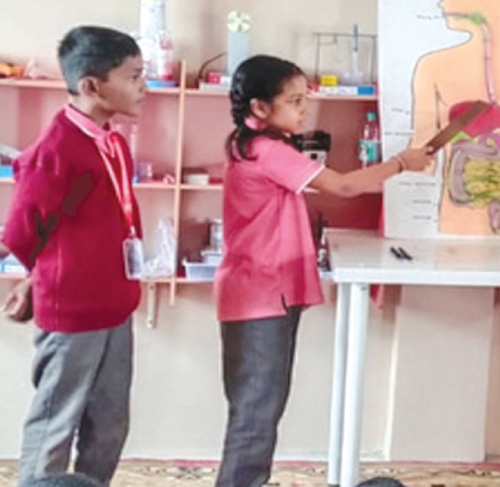
Tata STRIVE has ventured into a new area, schools, to introduce various vocations as an alternative to higher education — and to destigmatise skilling.
The doors were opened by the National Education Policy (NEP) 2020, which aims to move Indian schools from rote learning to competency-based education and bring in vocational exposure from middle school onwards.
Tata STRIVE’s school engagement started in 2025 and now operates in 24 schools with a collective count of 3,243 students from classes VI to XII. The Tata STRIVE team is also connecting with schoolteachers to help interpret the new-age pedagogy highlighted in NEP 2020.
Underlying all these efforts is a central idea: to make skilling popular and create acceptance for vocation-oriented learning.
While relevance is critical in sustainable skilling, so is consistency and course quality. To stay on top, Tata STRIVE has designed its own quality framework, which is used to rigorously monitor the performance of its centres, facilitators and courses.
An interesting facet is that all courses are designed to be consumed easily and to match the profile of those who come to Tata STRIVE. This is typically a cohort that prioritises applied learning over theoretical study and shows a strong preference for visual communication over dense, text-heavy formats.
Tata STRIVE’s design team develops highly detailed facilitator guidebooks for every course. Such granularity ensures that a course launched in Mumbai can be replicated in Assam or Rajasthan with zero dilution in quality.
“We are integrating dedicated AI modules into all our courses, preparing youth to thrive in future work environments,” says Raghu Reddy, head of technology and innovation at Tata STRIVE.
There is support for trainers and facilitators. If facilitators have to explain an abstract idea in the local cultural context, they can use the AI tool to cite examples. As with so much else of its work, Tata STRIVE is doing what it is meant to in the skilling space — make the present relevant for the future.