Jobs and beyond
Odisha has been a laboratory for Tata STRIVE’s skilling initiatives, and a boon for the state’s youth and its Industrial Training Institutes
The mood in the kitchen is tense. A Master Chef-like situation is playing out in the culinary department of the World Skill Center (WSC) in Bhubaneswar, Odisha. Two senior chefs from the Taj Group of Hotels, spoons in hand, are tasting and grading dishes prepared by a batch of would-be chefs. The youngsters stand around in uneasy silence as the examiners taste each plate.An hour later, they breathe easy: they have passed with flying colours and also picked up a host of tips along the way.
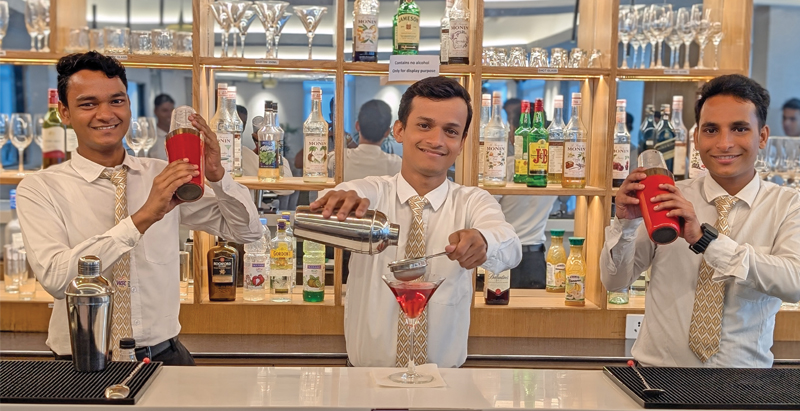
The exam is part of a course for commis (Junior Chefs), designed by Tata STRIVE and offered as one of four career options in the school of hospitality at WSC. The three-month WSC programme, which also covers housekeeping, front office and food and beverage (F&B) courses, provides youngsters with a fast-track option into the hospitality world, preparing them for internships and, eventually, jobs.
Spreading their wings
Says Akanshya Dandasena, a 22-year-old from Gajapati district in Odisha who completed the F&B course a year ago and now works with a Bhubaneswar restaurant: “I used to be wary of meeting and conversing with new people; I don’t fear that anymore. I have learned so much about personal grooming, presentation and customer interfacing.”
The WSC School of Hospitality is just one of the many initiatives that Tata STRIVE has operationalised in Odisha. There are nano unicorns, sports change leaders, a chief ministers’ fellowship programme and more, all of them crafted to raise the skilling bar and generate livelihoods.
The Tata STRIVE engagement with Odisha dates back to 2017, when the Odisha Skill Development Authority invited it to upgrade 10 government Industrial Training Institutes (ITIs). Over the years the programme has been expanded to cover all 69 government ITIs in the state. “We entered Odisha at a time when skill development was a new idea across the country,” says Rajarshi Mukherjee, head of partnerships and programme development at Tata STRIVE. “Many states were providing skilling solutions without understanding the actual challenges faced by the youth. Odisha was going through a similar situation.”
Odisha’s ITIs, like a lot of its ilk across India, had not kept pace with changing industry dynamics. Technology and teaching methods had become outmoded and there was little focus on employability skills.
On your mark…
Sport has become integral to Odisha’s Industrial Training Institutes (ITIs). Tata STRIVE has about 30 ‘sports change leaders’ and their job is to motivate learners to strengthen their body, mind and inner self. Sport plays a key role in all of this.
Ankit Barla, a former state-level basketball player, is a sports change leader with the Sundergarh ITI. He works on the fitness levels of his wards and also conducts yoga and meditation sessions “to calm their minds”.
Mr Barla’s classroom lessons focus on team building, seeing tasks to the finish and facing up to challenges. The mindset that emerges from these lessons enables students to succeed in a competitive work environment.
The programme benefits youngsters from marginalised tribal families. “They know that if they play well, they will get selected for sports hostels where they will get free food, accommodation and equipment, things they can’t afford back home,” says Mr Barla. “When they come to the ITIs to secure a job, we need to make them mentally strong as well.”
Mindset and attitude
To make its learners employment-ready, Tata STRIVE developed modules for workplace competencies and life skills: personality development, communication ability, critical thinking, problem-solving, etc. These are now taught across Odisha ITIs, reaching 35,000-plus learners in 30 districts. “We provide them with the right kind of mindset and attitude,” says Kumar Indrajeet, lead, special projects. “It’s about creating individuals who can serve industry with will and focus.”
To achieve this objective, Tata STRIVE rewrote the ITI playbook. Trainers and instructors are guided to become ‘change leaders’. Currently 109 in number, they are Odisha natives with a background in soft skills teaching who go through a special 10-day ‘train the trainer’ programme that aligns them with Tata STRIVE’s pedagogy.
Change leaders liaise with companies and invite them during placement season. They engage with parents to resolve challenges faced by students in completing their ITI stint. This aspect is important because Odisha is home to a large number of underserved communities, where agriculture is the fallback for many families and ITI dropout rates are high.
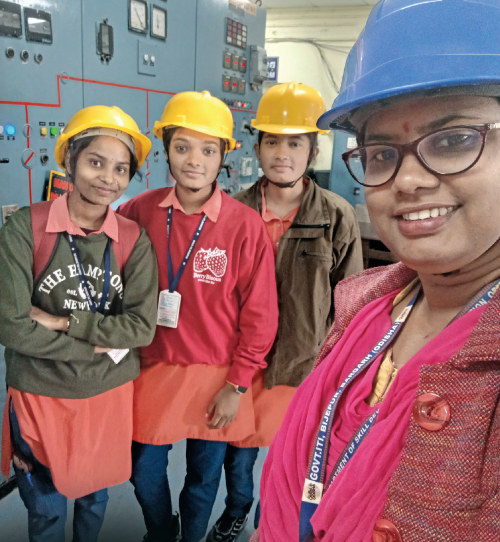
“My primary responsibility is to train learners, enhance their employability and help them create a career,” says Tejaswini Nayak, a change leader at the Bijepur ITI in Bargarh district. “I also organise industry visits for students to get a sense of workplaces. There is nothing like exposure trips to give them a taste of the real world.”
Learners often view change leaders as lifelong mentors. Uday Hembram, a native of Takatpur village in Mayurbhanj district, talks about how a change leader helped him get his life back on track. Despite being a chemistry graduate, Mr Hembram couldn’t get a job for many years and his family’s financial situation was precarious.
In 2021, Mr Hembram joined ITI Jatni for an 18-month course in welding. He wanted to drop out but was convinced by the institute’s change leaders to persevere.“They have become like family and I still consult them even on personal decisions,” says Mr Hembram, who has since become a trainer at the ITI in Phulbani.
It isn’t just skilling. In 2018, Tata STRIVE launched a project, in partnership with the government, called Nano Unicorn. This aims to train young people, especially those from marginalised backgrounds, to become job creators rather than job seekers. The programme integrates experiential learning, business plan development, financial literacy and digital-skills training into a 10-day course, while also providing access to mentorship and funding.
The would-be entrepreneurs receive structured guidance from a pool of 75 mentors, with participants being able to pick a subject of their choice (food processing, dairy, retail, tailoring, mobile repairs, beauty services, etc).
Some 3,300 nano unicorns have been supported in Odisha. Among them is Shibani Mohapatra from Berhampur, who set up a common service centre, a place where citizens get help to avail services such as opening of bank accounts, getting identity papers processed, and finding information about pensions or the latest government schemes.
Plugging into business
“Berhampur is surrounded by villages where the nearest bank or government office could be several miles away,” says the 20-year-old Ms Mohapatra. “Most people, especially seniors, struggle to access these centres. That’s why I decided to open one closer to them.”
The Nano Unicorn programme has found good traction, with an average monthly revenue of ₹39,704 and a profit of ₹16,899. Notably, 96% of those trained in 2024-25 have begun their loan repayments, a testament to the initiative’s effectiveness.
A unique aspect of Tata STRIVE’s work in Odisha is the Chief Minister’s Skill Development Fellowship, a collaboration with the Indian School of Business that places young leaders in district administrations to improve, implement and strengthen various skilling initiatives.
What Odisha has accomplished is being noted elsewhere. “We have been approached by many states about the ‘Odisha model’,” says Mr Mukherjee.
