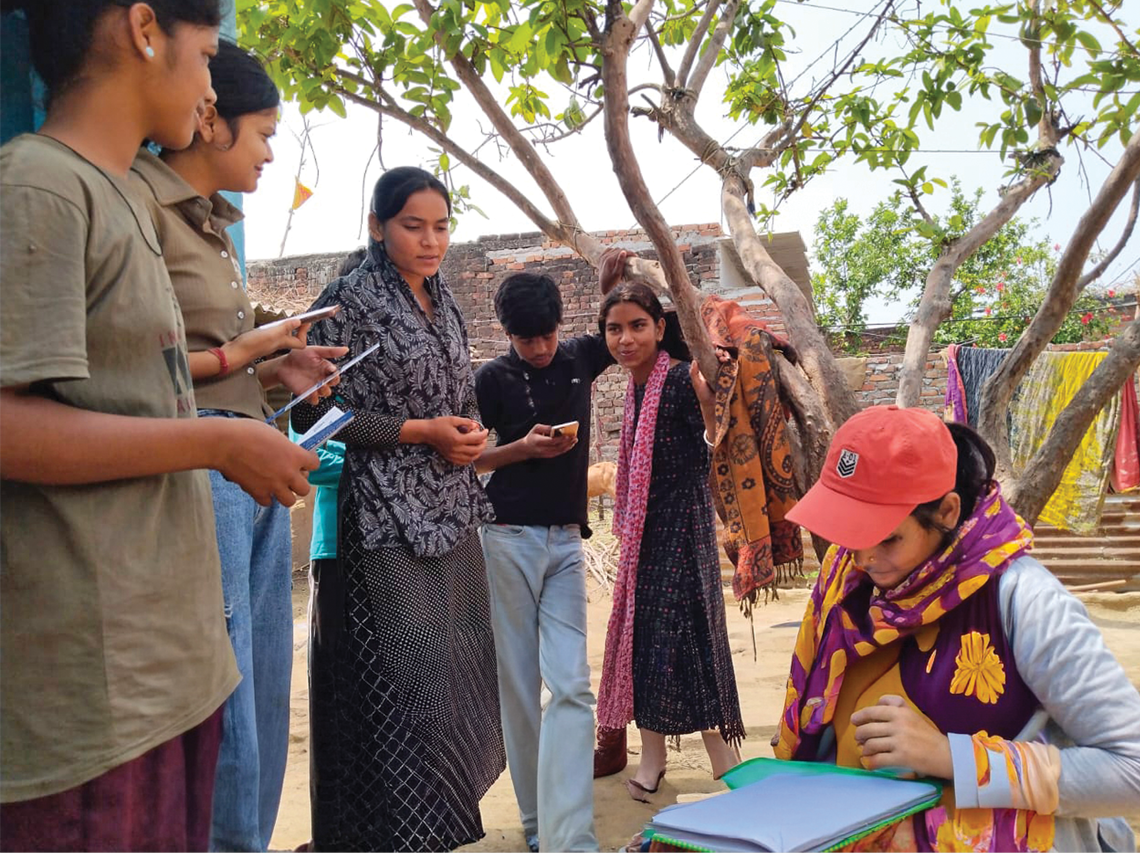
Where there’s a skill...
More than 2.5 million job seekers of ‘young India’ have benefitted from Tata STRIVE’s wide and varied employability and entrepreneurship efforts.
Every morning around 9am, denizens of Gopeshwar in Uttarakhand’s Chamoli district pause as the sound of the national anthem fills the mountain air. It is sung by the 60-odd youngsters attending a course in hospitality skills at the Tata STRIVE skilling centre nearby. In a few months, they will be ready for proper careers.
About 1,500km from Chamoli, in Jharkhand’s Jagannathpur town, another set of youngsters is prepping for the auto-technician course at the local Tata STRIVE centre. They are seeking openings at service centres or garages that cater to electric two- and three-wheelers.
In Nerul, Navi Mumbai, the Tata STRIVE skilling centre sees about 700 youngsters train each year in a range of disciplines: Java developers, front-office associates, auto technicians, cybersecurity executives, hospitality executives, electricians, nursing assistants and more.
India’s demographics — with about 65% of the population below the age of 35 — will yield dividends, experts attest, only if the country’s youth find sustainable livelihoods. That’s the mission for Tata STRIVE, a skill-development endeavour that reaches more than 450,000 youth annually in 24 Indian states. It does this through a slew of programmes that aim to help bridge the gap between education and employability.
Enabler for learners
“Our vision from the beginning has been to serve the underprivileged through [training in] employability, entrepreneurship and community enterprises,” says Tata STRIVE’s chief operating officer Ameya Vanjari. Supported by the Tata group and several leading corporate entities, and under the aegis of the Tata Trusts, this is a skill-development initiative that has been an enabler for more than 2.5 million ‘learners’ since its inception in 2015.
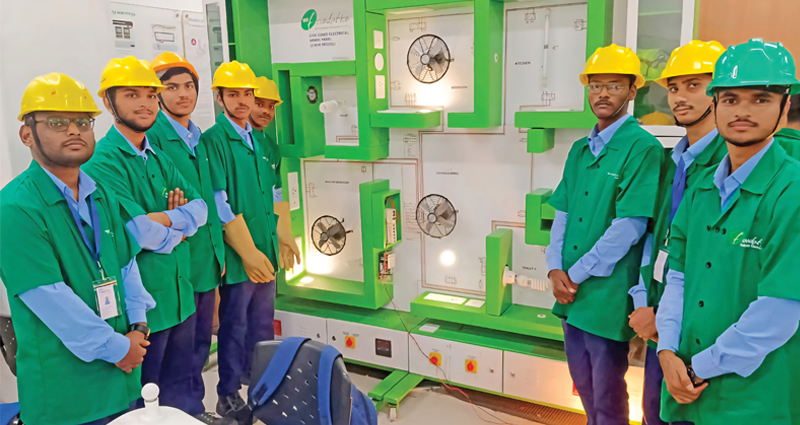
Employability is the primary concern for Tata STRIVE, which offers 70+ job courses to aspirants, with the effort going beyond trainers, classrooms and equipment. There are multiple elements in the mix: industry-relevant pedagogy, training in domain as well as life skills, and engaging with industry partners for on-the-job training, internships and placements.
Tata STRIVE now has a network of 167 skilling centres that span the length and breadth of India, from Kupwara in Jammu and Kashmir to Kochi in Kerala, from Guwahati in Assam to Mithapur in Gujarat. Industry preferences are a factor in picking the location for a centre. For instance, inputs from industry partner Bajaj Auto about auto technicians led to centres coming up in Odisha and Maharashtra.

The Tata STRIVE story
- Established in 2015, it has been an enabler for more than 2.5 million youth, including 468,000+ women
- The organisation has 167 skilling centres in 24 states, offering 70+ courses in a variety of job streams
- Skilling for jobs, entrepreneurship development, ITI ecosystem, strengthening self-help groups (SHGs), and school support are the five pillars of the initiative
- Tata STRIVE has connected with 620+ ITIs; trained 60,000+ women SHG members; engaged with 2,800 students from 25 schools; and collaborates with 60+ partners, including corporate entities, government departments, philanthropies and academic institutions
- FY-2025 impact: 450,000+ youth engaged; 200,000 counselled; 18,000+ placed in jobs; 1,950+ entrepreneurs supported
Tata STRIVE has also set its mind on opening centres in small-town India, such as the ones in Gopeshwar in Uttarakhand and in Jagannathpur in Jharkhand, where jobs are scarce and skilling helps open up opportunities to the world beyond the local.
Starting a centre is a complex exercise. “There are socioeconomic considerations, aspirations, community attitudes and parental concerns that need to be weighed in to make a centre successful and sustainable,” says Shiladitya Samaddar, head of operations, skill development and entrepreneurship at Tata STRIVE.
A crucial constituent when starting off is the community mobiliser, typically the first employee when a new centre is being established. “These mobilisers talk to the community about the value of skilling and the livelihoods they make possible,” adds Mr Samaddar. The mobiliser’s toolkit includes videos that explain different career options and a counselling app called Karyapath that supports candidates in choosing a path based on their interests.
The skilling centres vary in size and scope. Smaller centres have a couple of classrooms and about 100 students passing out every year. Mid-sized ones offer more courses and cater to about 250-350 youngsters annually.
Diamonds shine
The Nerul centre is one of the largest, with about 10 courses and 700-plus learners every year. “It’s our flagship centre and we have had diamonds passing out from here,” says Mr Samaddar.
The diamonds he refers to are students who have found new settings for their talents, such as hospitality trainee Shreeram Kulkarni, now an in-demand florist, and barista Nisha Bankar, whose culinary skills took her to the India Skills 2025 competition.
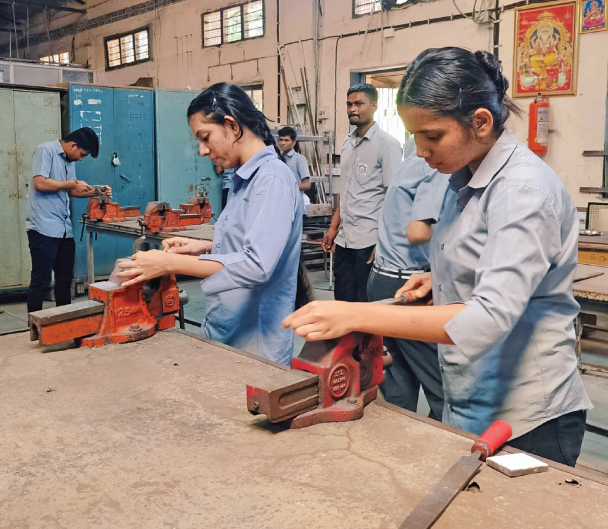
Diversity is an important aspect for Tata STRIVE, which has a 38% intake of women at its skilling centres. The Hyderabad and Rudrapur (Uttarakhand) centres have women training to be auto technicians, and the Nashik centre hosts all-women batches for its electrician course.
A key differentiator for Tata STRIVE is in the pedagogy design that underpins its training courses. The courseware is built with inputs from domain specialists and with an optimal blend of classroom and hands-on experiences. Additionally, trainees are hand-held through modules in soft skills such as communication, digital literacy and financial literacy.
Tata STRIVE has employed technology to optimise operations across its multiple centres and courses. “We have built a digital backbone that captures real-time data across every intervention,” says Raghu Reddy, head of technology and innovation at Tata STRIVE. “Every process is designed for replicability, ensuring that even as we reach millions, our quality remains uncompromised. This strategic integration is what empowers us to hit our most ambitious targets.”
In course design, Tata STRIVE swears by a fundamental truth: industry requirements and social aspirations are always evolving. As a result, courses are constantly adapted to meet relevant needs. For example, beauty courses have expanded to include bridal makeup and nail art. With digital services on the rise, Tata STRIVE collaborated with Microsoft and Tata Communications to design a course on cybersecurity.
Partnership positives
Partners have played a critical role in Tata STRIVE’s journey, providing domain expertise, equipment, on-the-job training and job opportunities. The organisation’s partners range from small and medium businesses in cities and towns to stellar companies such as Indian Hotels, Siemens and Schneider. There’s more to Tata STRIVE’s exertions than its skilling centres.
A key initiative is the engagement with government-run industrial training institutes (ITIs) to make pedagogy more relevant and candidates more job-ready. See: Inside assistance
Another component is training aimed at paving the entrepreneurial pathway. “We encourage youngsters who have learned a skill to step out on their own and set up a business,” says Mr Vanjari. The businesses run the gamut, from solar power maintenance to beauty salons to cloud kitchens.
The budding entrepreneurs are supported in full, with the provision of seed capital that can go up to ₹150,000, and mentoring and feedback sessions with ‘success’ managers. Also included is a 10-day course on business-related matters (income tax, goods and services tax, legal regulations, business planning, etc).
Fostering small enterprises at scale is an intensive exercise and scale-up can be a challenge. To address this, Tata STRIVE has explored a third pillar: plugging into India’s vast network of self-help groups. The standout example here is Tata STRIVE’s engagement with more than 60,000 women in the Pimpri-Chinchwad region in Pune.
From 2025, Tata STRIVE has added a new initiative to its programming: counselling schoolchildren on vocational careers. This takes forward insights gained from years of experience working with youngsters. “There is a considerable gap in our education system; our youngsters are not aware of the potential in non-academic options,” says Mr Vanjari. “We want to see how middle-schoolers can benefit from being introduced to vocations.”
Connecting with governments (central and state), industry (conglomerates to small enterprises), homegrown entrepreneurs, homemakers, career-minded youngsters and, now, schoolchildren has helped Tata STRIVE strengthen its offerings and expand its horizons. That’s good news for India’s livelihoods ecosystem.