Inside assistance
Pointed pedagogy and hands-on experience are the main ingredients in Tata STRIVE’s attempt to enhance India’s industrial training institutes
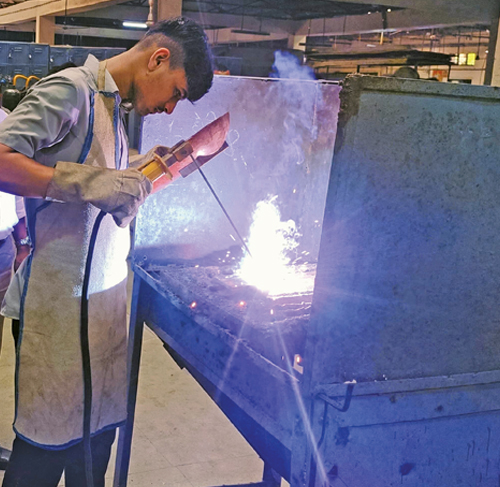
From welder to purchase manager — that’s the arc Roshan Rane’s working life has taken. The transformation can be traced to the day he joined the welder course at the Industrial Training Institute (ITI) in Mumbai’s Mandvi area in 2022.
As part of the course, Mr Rane went to Shree Vishwakarma Industries in Thane for on-the-job training. His attitude and leadership skills caught the eye of company owner Ravi Vishwakarma. Within a couple of years, Mr Rane’s career blossomed: from a welder apprentice he became a production manager and then moved up to purchase manager.
Mr Rane’s career growth can be attributed to the exposure and training he received at the Mandvi ITI, which is one of 300+ such government-run institutions Tata STRIVE has been involved with since the programme began in 2017.
Most of these ITIs have fallen behind the times in terms of infrastructure, equipment and pedagogy. And yet they are often the most convenient resource for youngsters looking to secure vocational training. “Strengthening the ITI ecosystem is important for helping the youth get better quality of learning and employment-relevant skills,” says Bijitha Joyce, head of ecosystem strengthening at Tata STRIVE.
Linking up with the ITI network was logical. Skilling in India has to be a play of scale, and Tata STRIVE knows this better than most. For a decade, it has laboured to revise the ITI pedagogy to improve both trainers and trainees. The intent is to make teaching and learning experiences more effective and domain skills more relevant to modern industry.
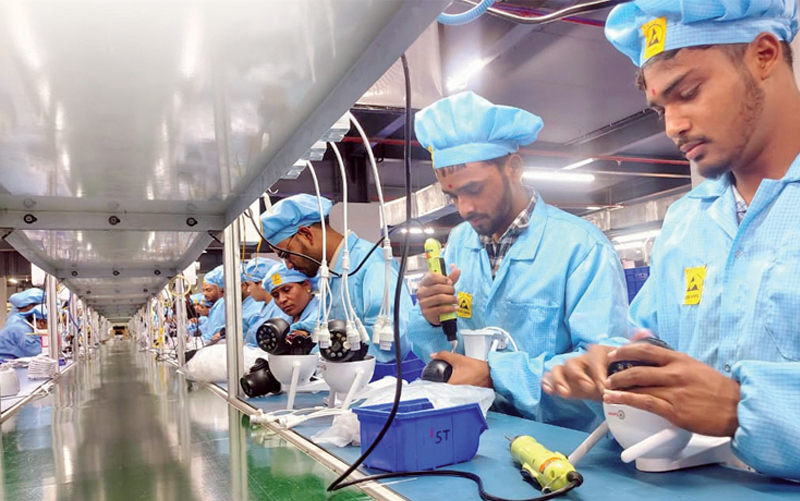
As a result of Tata STRIVE’s ITI engagement, more than 190,000 youth have learned sustainable skills and a clutch of industries has found a pipeline of employees, among them electricians, auto mechanics and welders.
Improving India’s ITIs
- 190,000+ trainees have benefitted from the initiative
- Odisha, Maharashtra, Uttarakhand, West Bengal, Gujarat and Andhra Pradesh are the participating states
- Tata STRIVE has cemented tie-ups with 2,600+ partners, including Siemens India and Bajaj Auto, to enhance the programme
To upgrade the ITIs, Tata STRIVE banked on two very different types of partners. At one end are the state government directorates that oversee vocational training, and at the other are enterprises and industries in search of the specifically skilled.
Several states have come on board, including Odisha, Maharashtra, Uttarakhand, West Bengal and Gujarat. Of these, the Odisha engagement, which started in 2017, is noteworthy because of its sheer scale.
The state government wanted Odisha to develop skilled talent to global standards. Tata STRIVE developed and cascaded a new curriculum to all 69 ITIs in the state. Soft skills — communication, teamwork, problem-solving, confidence-building and digital literacy — have been packaged into a youth development module.
Another success story is Maharashtra, where Tata STRIVE engages with 169 ITIs. The organisation’s advocacy effort has brought an additional benefit: the state government directorate has addressed safety issues and made accident insurance mandatory for all ITI trainees.
What the state authorities appreciate is the value that Tata STRIVE brings to the table in terms of pedagogy and industry connect. One example is the partnership with Siemens India to roll out a programme called Dual Vocational and Education Training (Dual VET) in 398 ITIs.
Dual VET is a German-origin model of skilling where a significant component is on-the-job training in local industries. To make Dual VET industry-relevant, Tata STRIVE has reached out to some 3,000 industry partners to provide on-the-job experience.
Another interesting engagement is the partnership with Bajaj Auto, which has been ongoing since 2022. This has introduced 600-plus ITIs to Bajaj Management Systems (BMS), a course that imparts 11 tenets of ‘total productivity maintenance’ while utilising the auto giant’s manufacturing excellence.
What all of this will deliver is a pipeline of potential employees familiar with quality thinking that can support the auto company’s supply chain partners. Ashutosh Kamble, who joined the welder trade at the ITI in Beed, Maharashtra, is among those who completed the BMS course. “It teaches us quality, efficiency and discipline,” he says.
With both state governments and industry tracking India’s skilling evolution with interest, Ms Joyce sees the focus on ITIs increasing. In its FY-2026 budget, the central government has allocated ₹6 billion to upgrade 1,000 ITIs across the country. This is good news for youngsters seeking skills that will lead to a living wage.
