No sugar, no sweat
The upshot is sweet for poor children with type-1 diabetes in an initiative that breaks new ground while covering more than 3,000 village families in Maharashtra
Saie Pawar has vivid memories of the time when she was, at age 10, diagnosed with diabetes. “I was on a spiritual trip with my grandmother and her friends,” the now 20-year-old Ms Pawar recalls. “I was the youngest in the group but I had to go to the washroom often, and I became tired very quickly. It was embarrassing.”
Blood tests on her return home showed she had type-1 diabetes, an autoimmune disorder distinct from lifestyle-linked type-2 diabetes. It changed Ms Pawar’s life. Now she had to cope with the mandatory insulin injections, thrice-daily pricks to measure her blood glucose, dietary restrictions, social stigma and emotional distress.
Ms Pawar is no longer the scared little girl traumatised by her disease. Now studying to be a physiotherapist in Pune, she is articulate and confident about the future. The transformation was made possible by the holistic care provided by Sweetlings, a nonprofit that supports underprivileged children with type-1 diabetes from birth to age 21.
Sweetlings is the brainchild of paediatrician Anuradha Khadilkar and her husband, paediatric endocrinologist Vaman Khadilkar. The spark for the initiative was a tragic incident in 2008 that claimed the lives of two young girls from a poor family.
Recalls Dr Anuradha: “The family had absolutely no money, so we funded insulin injections for the girls while looking for formal funding.” A week later the two children died in a drowning accident. “One way or the other, we lost those two girls. It left a mark on us.”
Support for the poor
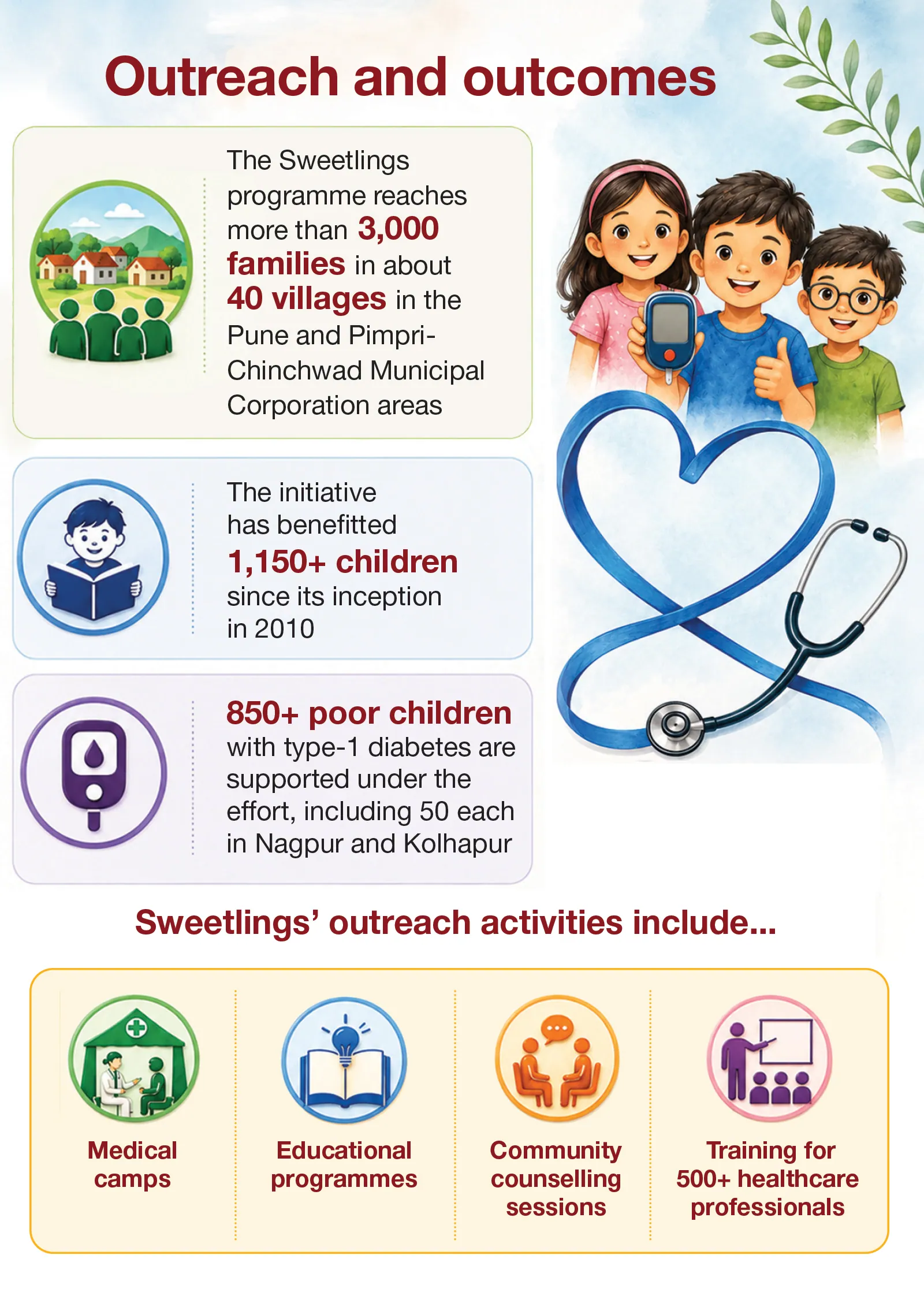
The incident prompted the Khadilkars to set up Sweetlings in 2010 as a type-1 diabetes clinic for underprivileged children under the Hirabai Cowasji Jehangir Medical Research Institute at Jehangir Hospital in Pune.
For the first four years, the couple struggled to raise money for the “few hundred” kids they supported — “People thought we were crazy,” says Dr Anuradha — before CSR (corporate social responsibility) funding, from about 2014, began opening the door to grants.
What started as a personal mission has grown into a full-fledged programme that covers 850 diabetes-afflicted children from different parts of Maharashtra. Sweetlings operates from Pune through a hub-and-spoke model, with outlets in Kolhapur and Nagpur. Sweetlings spends around ₹120,000 per child for treatment every year.
In March 2026, Sweetlings opened a centre of excellence, setting the stage to further fuel the programme’s growth. The Tata Trusts supports this centre by funding the medical care of 150 children, its medical and social work team, and a research project.
“Support from the Tata Trusts has been invaluable for us,” says Dr Anuradha. “We see this as a long-term collaboration in not just looking after patients but also for research and capacity-building.”
The need for organisations such as Sweetlings is acute. Nearly 300,000 children and young adults in India are estimated to be living with type-1 diabetes, a disorder in which the pancreas produces little or no insulin. Without insulin support, these children can die from high sugar levels and their attendant toxicity.
Sweetlings estimates there are about 35,000 children struggling with the autoimmune disorder in Maharashtra alone, with cases increasing by 3-4% a year. The burden of managing the disease is especially taxing for poor families.
Drawing on their experience in the United Kingdom, the Khadilkars have adopted a multidisciplinary model to manage diabetes. Sweetlings goes beyond providing medical care. There are free glucometers and insulin pens, health checkups and specialist consultations for diabetes-related complications like eye, nerve and kidney damage, as well as nutritional, social, psychological and even career support, community awareness programmes, and the training of healthcare professionals in municipal hospitals.
‘This is a godsend’
Ravindra Mate, a driver at the Hirabai Cowasji Jehangir Medical Research Institute’s office in Pune, recalls how terrified he was when their daughter, Janhvi, was diagnosed with type-1 diabetes when just four years old. After she lay listless for two days, Mr Mate took her to Jehangir Hospital in Pune, where he was introduced to the Sweetlings programme.
“We had heard that diabetes can cause loss of eyesight, but the team calmed our fears,” says Mr Mate. “They taught us how to check Janhvi’s sugar and insulin doses. They reassured us.”
Janhvi, now six, enjoys going to school, and singing and dancing are her favourite activities. The tough part is that she needs three glucometer readings and four injections a day, apart from regular checkups, but the Mates have learned to cope.
“I couldn’t have afforded this on my own,” says Mr Mate. “Sweetlings is a godsend.”
Child-centric approach
“A multidisciplinary clinic is necessary when it comes to any childhood disorder because children are growing and dealing with so many changes,” says Dr Anuradha. “Many a time, what happens at home or school impacts the child.” Adds Dipali Ladkat, medical officer (research) at the Jehangir Research Institute: “Our model is child-centric, not disease-centric.”
Over time, Sweetlings has added staff and capabilities to address the diverse needs of the children being cared for. Its 25-member team includes doctors, healthcare professionals, nutritionists, educators and counsellors.
Poverty, single-parent homes, abuse and myths are among the several social issues faced by the children and young adults that Sweetlings works with. One of the biggest challenges in all of this is the lack of awareness. “Some parents don’t even know how to assess the sugar levels of their children,” says Dr Ladkat.
Sweetlings’ diabetes educators start by teaching children and their families the basics, and then the how and when of administering insulin. The team also dispels fears and myths associated with diabetes.
Real-life situations have shaped the organisation’s journey. Dr Anuradha recalls how one child kept skipping her afternoon dose because the neighbour in whose fridge she kept her insulin pen would take a nap. That led to Sweetlings donating mini-refrigerators to families (10-15 of these are distributed every year).
Apart from assessing family dynamics, Sweetlings’ social workers address misconceptions at school. For instance, many schools don’t allow children to take insulin injections. Dr Ladkat recounts how their social worker prevented a school from expelling a child because the teacher did not want to take the responsibility. “She even made him sit outside the classroom.”
Children can be cruel, too. “We have had kids calling our diabetic child a drug addict for injecting insulin,” says Dr Anuradha. The organisation invests in training its teams to handle such situations. For older children, the programme includes skilling coordinators “because, unlike us, many of these children don’t have role models at home”.
The problems thrown up by type-1 diabetes are many. The disease impacts mental health, leading occasionally to suicidal behaviour and depression. “When children, especially adolescents, see their friends partying or eating what they please, it affects them,” says Dr Ladkat.
Starting afresh every day
Ms Pawar talks about how she had to overcome a physical fear of needles and also cope with emotional stress. “I had to tell my friends’ parents that I couldn’t play for long because my blood sugar would drop,” she says, “or I would be angry at how my friends could get fascinated by the needles. Sometimes, the biggest challenge is to start afresh every day.”
The Sweetlings team helped Ms Pawar shift the focus away from diabetes, to ‘normalise’ conversations around it, and gain new perspectives on life. “They have supported me through thick and thin and seen me grow into the woman I have become,” says Ms Pawar, who is now able to enjoy her favourite cheat sweet (two bites of 75% dark chocolate).
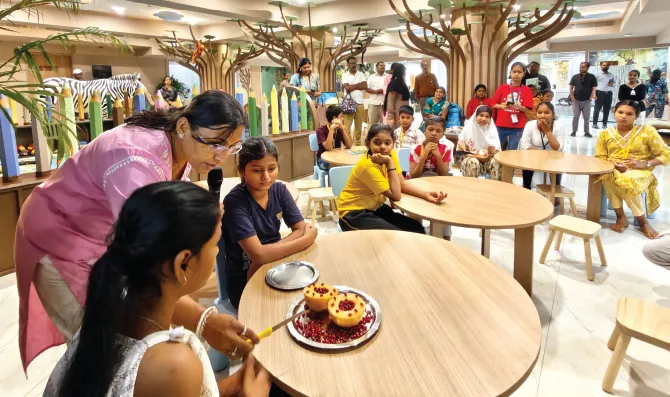
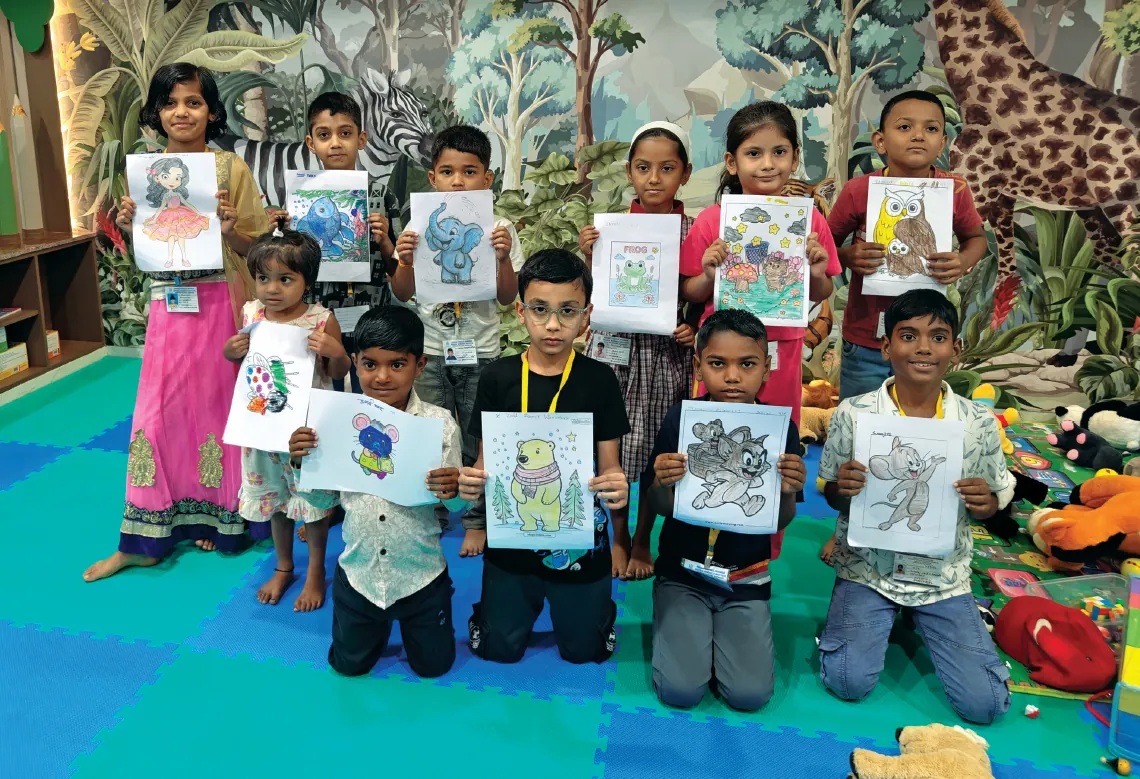
With the Tata Trusts-supported new centre, the Sweetlings team is looking forward to expanding its work, which till recently stretched them thin. The new 8,500-sq-foot centre in Pune houses everything under one roof. This includes a dedicated lab, a pharmacy, an X-ray room, a play area and even a tiny café.
Ultimately, the Khadilkars and their team want one outcome above all else: that is, as Dr Anuradha says, “Healthy and happy children who become healthy and happy adults capable of looking after themselves.”