Train and gain
An exceptional fellowship programme in Odisha is building a high-quality workforce by enabling local youth through skilling and entrepreneurship initiatives
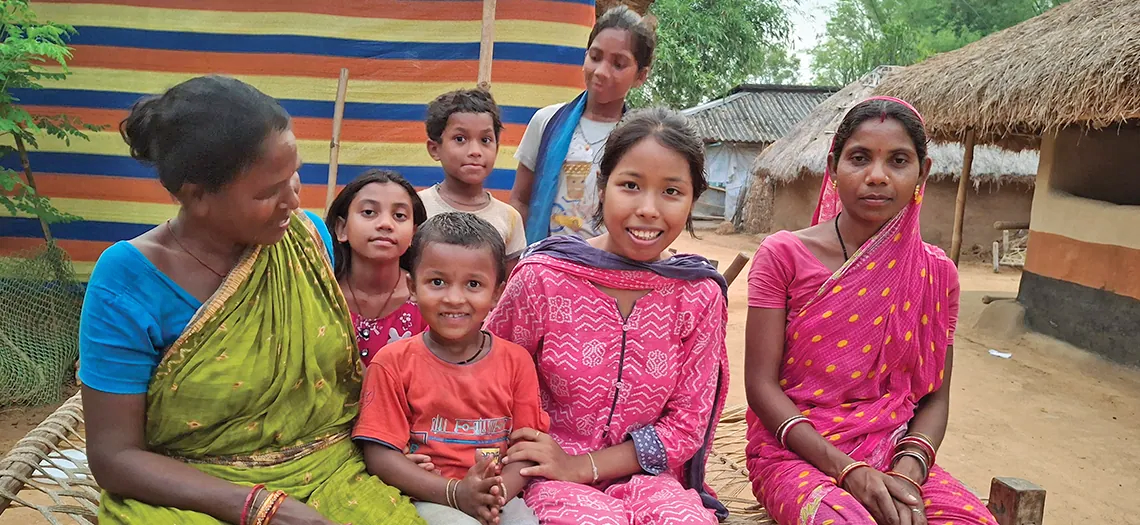
Kandhamal district in Odisha has a unique transport service. It offers ‘migrant’ buses that ferry tribal villagers from designated places across the district to Kerala, Tamil Nadu and Andhra Pradesh. These villagers travel across state lines to work as farmhands and labourers, and they are an indicator of widespread migration.
Minati Khandual doesn’t blame the migrant workers. “About 80% of Kandhamal is covered by forests,” she says. “There is no industry and no social development projects here, which means there are no jobs. What are youngsters from the poor marginalised communities to do?”
The 30-year-old Ms Khandual has been tasked with finding employment or entrepreneurship opportunities for local people so that this distress migration is reduced, perhaps even reversed by attracting migrants back to Odisha.
Ms Khandual is a part of the Chief Minister’s Skill Development Fellowship (CMSDF) programme, a collaboration between the Odisha government and Tata STRIVE, an associate organisation of the Tata Trusts. The programme aims to equip the state’s youth through skills training and entrepreneurship development.
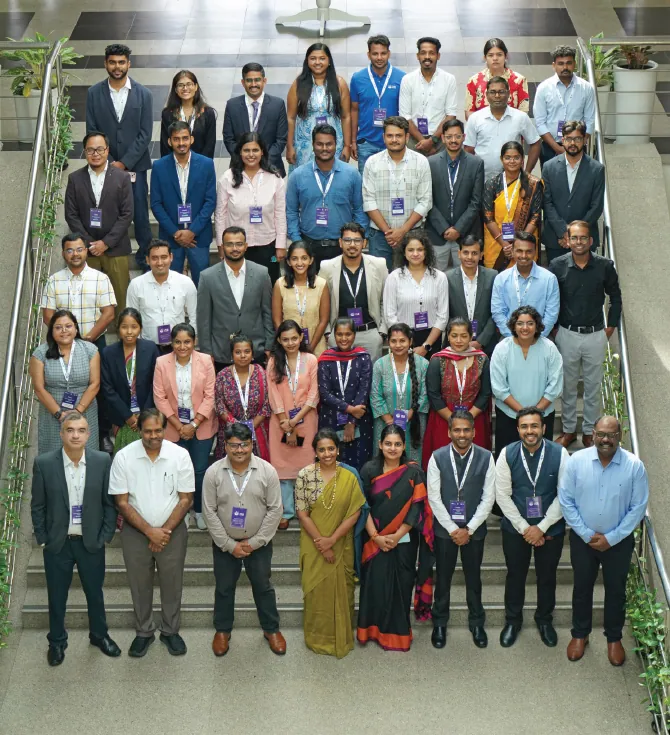
The inaugural batch of CMSD fellows, deployed across all 30 districts of Odisha, graduated in July 2026 following two years of rigorous grassroots engagement. The fellows worked in close synergy with the ‘district skill development and employment officers’ (DSDEOs) and local administrations to drive impactful initiatives on the ground.
The Tata STRIVE program management unit (PMU) serves as the programme’s administrative backbone, ensuring seamless execution through standardised operating procedures, continuous monitoring, and governance. By facilitating regular field visits, structured mentorship, and strong stakeholder coordination, the PMU provides a strong support system.
Problem-solving skills
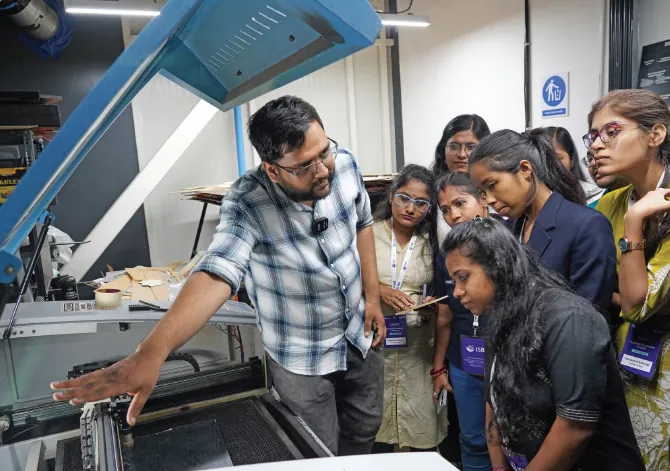
The fellowship is the highlight in the Indian School of Business’ certificate course in public policy, equipping the fellows with evidence-based problem-solving skills for governance. This is bolstered through bi-annual academic forums that provide direct mentorship from senior bureaucrats and industry leaders.
There is a background to all of this. In 2016, the state set in motion its ambitious ‘Skilled in Odisha’ plan by establishing the Odisha Skill Development Authority to spearhead, implement, coordinate and oversee skilling programmes in the state.
Each district was assigned a DSDEO to work on a ‘district skill development mission’. The objective was to build a highly skilled workforce of professionals, trained to and aligned with international industry standards, to meet “local, national and global market demands”. The CMSDF programme plugs right into this.
“CMSDF has been truly transformative,” says Ameya Vanjari, the chief operating officer of Tata STRIVE. “The energy, enthusiasm, and fresh perspectives brought by the young fellows have been instrumental in strengthening Odisha’s skilling ecosystem and driving meaningful change on the ground.”
Some DSDEOs feel that while Odisha’s youth are willing to pursue skills training for employment or even entrepreneurship, they often lack awareness, guidance and access to opportunities. Addressing this situation requires counselling, mobilisation, and follow-up support, all of which CMSDF provides.
“The fellows conduct their own surveys and analysis to understand the skill gap in their respective districts,” says Tony Jacob, lead, ecosystem strengthening, Tata STRIVE. “They then implement certain projects based on their research. Working closely with the district administration means that they can get funding and operational help for their projects.”
Each district has its own particular socioeconomic characteristics and challenges, and these affect the local workforce. While youth from the largely tribal Kandhamal district are forced to migrate for employment, people from Angul district don’t want to leave their home base for jobs.
“In Angul, a large section of the population is engaged in agriculture,” says Biswajit Panda, the CMSD fellow stationed here. “The district is also a mining hub because of its rich mineral and coal resources. Companies setting up operations here are always looking for workers.”
Going local
Angul’s native agrarian population would be ill-prepared to handle these typically heavy-industry jobs. That led Mr Panda and the Angul DSDEO team to design training programmes that teach locals to operate earth-moving machines, blast furnaces, aluminium moulding and fabrication, or even become site and factory floor supervisors.
While companies in Angul are constantly seeking staff, many of them would rather hire labour from outside the state to avoid locals forming unions and creating unrest. That has sparked an influx of people from Bihar, Uttar Pradesh and South India. “To tackle this problem, we sign agreements with the companies to identify and train people,” says Mr Panda.
Hrishikesh Wakhare, a fellow working in neighbouring Dhenkanal district, has faced a similar situation. “There are 11 big companies operating in Dhenkanal and they currently have more than 1,300 job vacancies,” he says. “But they don’t want to hire from the district.”
Mr Wakhare adds that there are alternatives for the district’s youth. Dhenkanal, he points out, is the largest producer of cashews in Odisha, but there are no cooperatives to manage this, and no processing plants either. “We could establish an entire cashew production-processing-distribution value chain run by locals and sell the cashews.”
Mr Wakhare also believes there is a market for the traditional metalwork craft of Odisha, known as dhokra, which is extensively practised in Dhenkanal and could do with a structured skills push.
While the men may want to stay, the young women of Dhenkanal have no qualms about pursuing opportunities outside the state. “There are a lot of school dropouts among young women in Dhenkanal, and that got us to set up a skills centre where they were taught about smartphone assembly,” says Mr Wakhare. “Now many of them have moved to Bengaluru to work in smartphone production plants.”
Some 1,000 of these women who trained as sewing machine operators are currently employed in the apparel industry of Tirupur in Tamil Nadu.
Tattwomasi Mohapatra, the DSDEO in Dhenkanal, cites other areas of impact. “Between 2024 and 2026, the number of short-term trainees grew by 96% and placements rose by 24%,” he says. “Importantly, the female trainee base grew by 126%. This is a measurable expansion of women in the formal workforce.”
Dhenkanal has adopted a ‘skills registry’ of 6,638 verified candidates, each mapped by residence, qualification and aspired job role. “The governing principle is simple: if a candidate is not in the registry, he is not in the [overall skills] plan,” says Mr Mohapatra.
Beyond job placements, there is the Nano Unicorn scheme, an initiative that fosters entrepreneurship among youth by guiding them and offering training, funding and market access. Each year, the programme supports about 400 entrepreneurs, providing them up to ₹100,000 as seed capital from the Odisha Skill Development Authority.
“Everybody wants a secure government job; it’s hard to explain to young people how competitive these are,” says Ms Khandual. “They might be better off starting a business by taking advantage of the benefits their district has to offer.”
Ms Khandual has mentored 40 entrepreneurs from Kandhamal in the last year to open shops and pursue small trades, while nudging them away from the pitfalls of unplanned entrepreneurship.
In Dhenkanal, 20 women have been funded through Nano Unicorn to set up salons and tailoring shops, engage in mushroom cultivation and snacks manufacturing. These are home-based (or closer-to-home) ventures that ensure a sustainable income.
Says Smruti Ranjan Tripathy, the DSDEO of Gajapati district: “The fellowship programme has contributed considerably to strengthening the skilling and employment ecosystem in Gajapati. It has reinforced the importance of convergence among stakeholders and the need for localised approaches to skilling and livelihood promotion.”