A treat unfolds
A bakery and a café in Uttarakhand deliver a tasty example of women-led enterprises securing success with ingredients blended to order
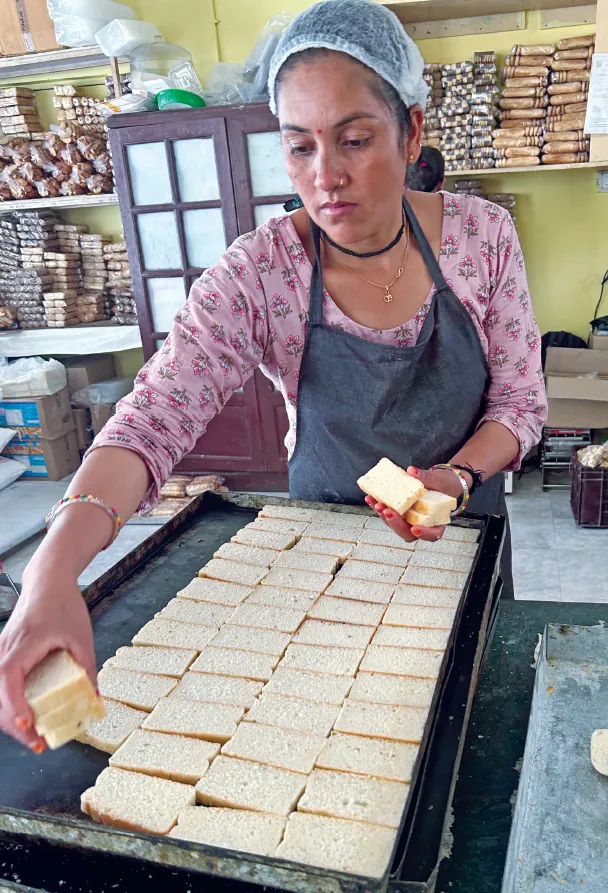
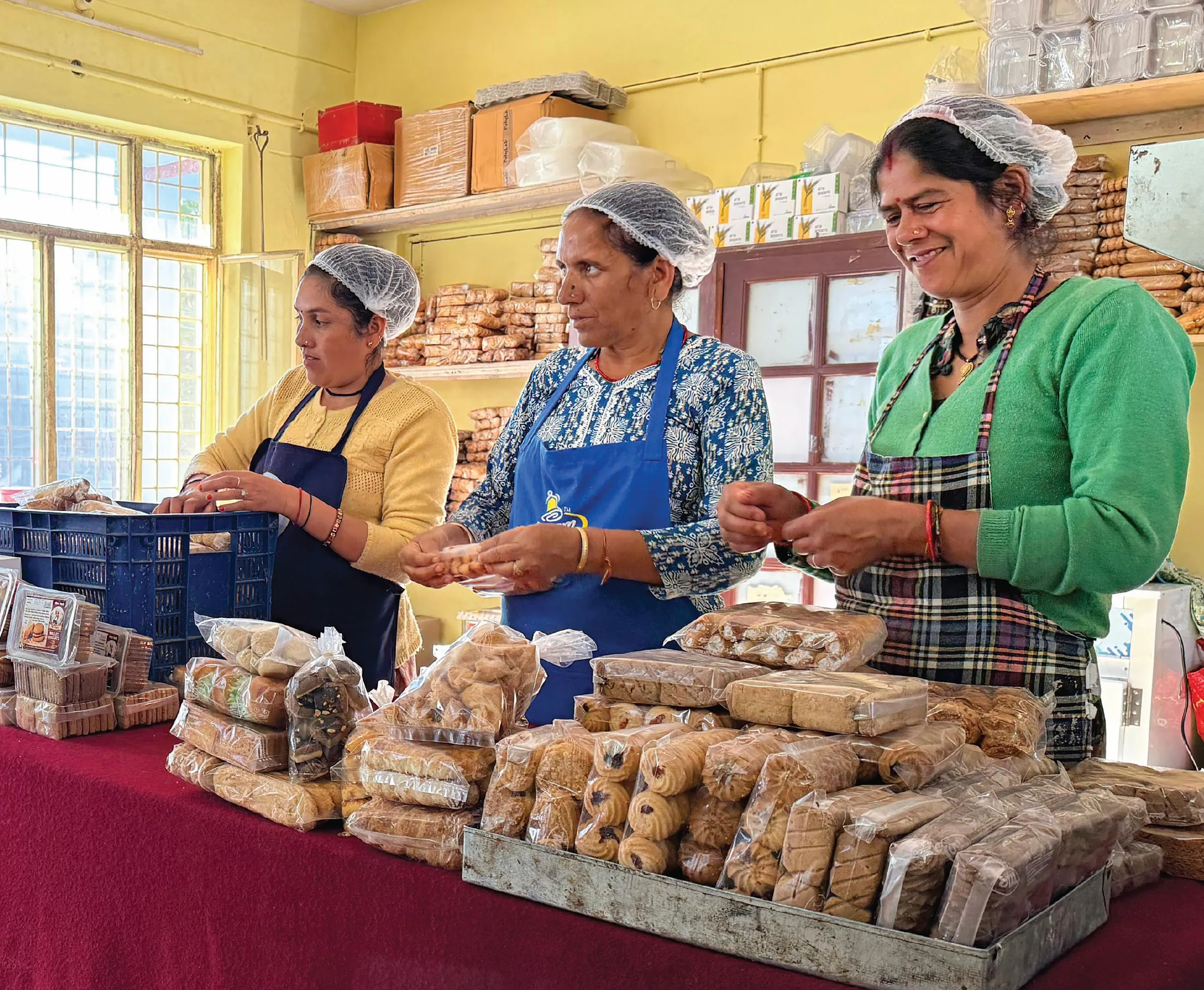
The aroma of fresh baking lingers in the morning air around the Millet Bakery in Pauri town in Uttarakhand’s Pauri Garhwal district. The bakery opens at 9am and the all-women crew running the venture has its hands full setting up for the day’s service. There’s a sense of energy, of purpose and ownership, in the ways of these women, many of whom have travelled from far-flung villages to get to work.
This is a sisterhood in which women’s empowerment is more than bland terminology, and the vehicle for it is an initiative called ‘gender-inclusive livelihoods through financial inclusion in Uttarakhand’ (GiLU). Anchored by the Himmotthan Society, an associate organisation of the Tata Trusts, the initiative is supported by the Uttarakhand State Rural Livelihoods Mission.
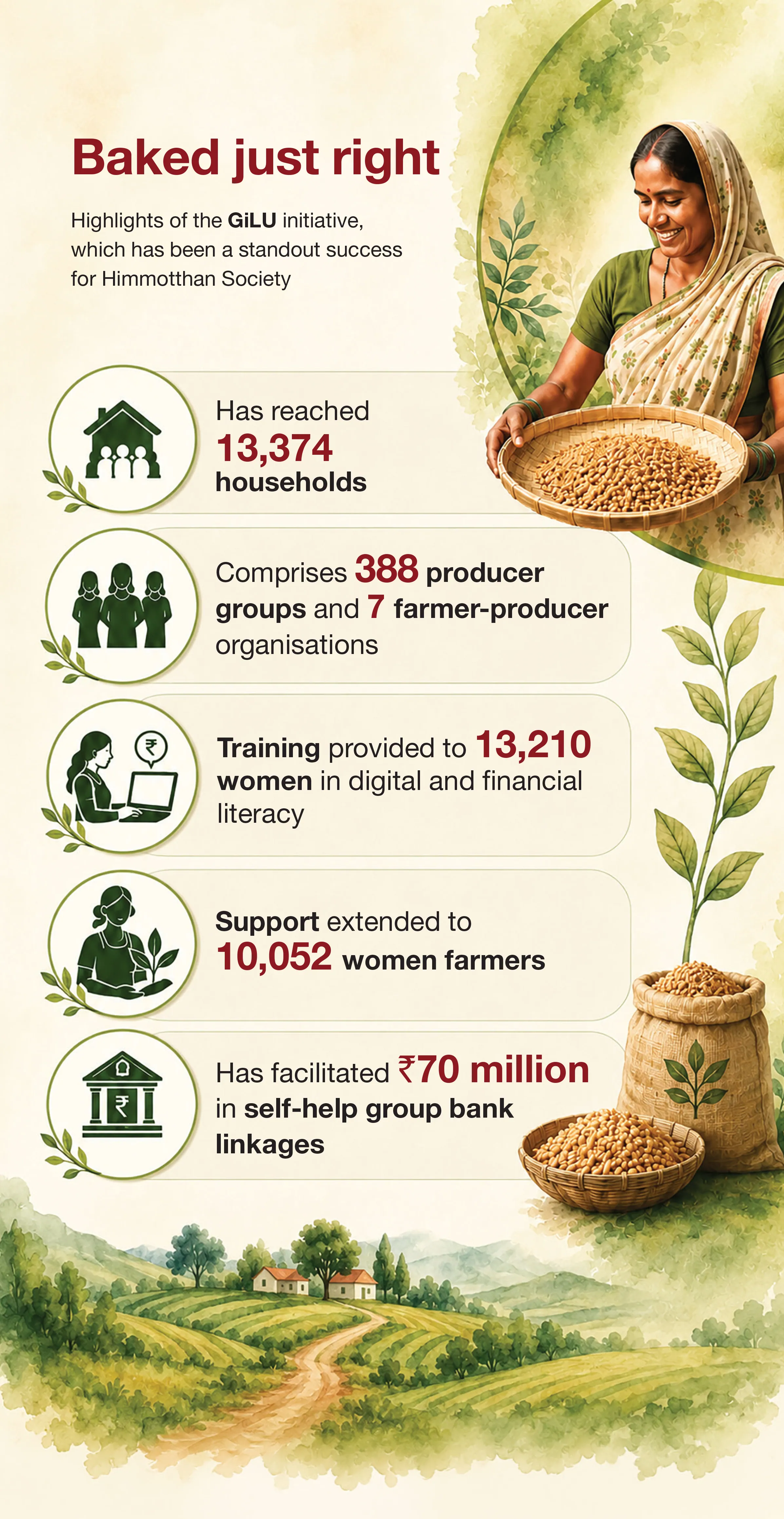
The GiLU effort is aimed at strengthening women-led institutions and promoting access to sustainable livelihoods in seven subdivisions across five districts of rural Uttarakhand. In its fold are more than 13,300 rural households who have been reached through interventions covering financial inclusion, livelihood diversification, enterprise promotion, skill development and market linkages.
The bakery and the nearby Didi’s Café, a popular landmark, are among the standout examples of women-led organisations nurtured by Himmotthan. “The GiLU project is designed to place rural women at the centre of economic growth,” says Rajendra Singh Koshyari, the organisation’s head for agriculture and agri-allied initiatives.
Himmotthan has backed the establishment of seven farmer-producer organisations (FPOs) in the region. The one linked to the bakery and the café is Gauras FPO, which was formed to strengthen women-led self-help groups (SHGs) and producer groups.
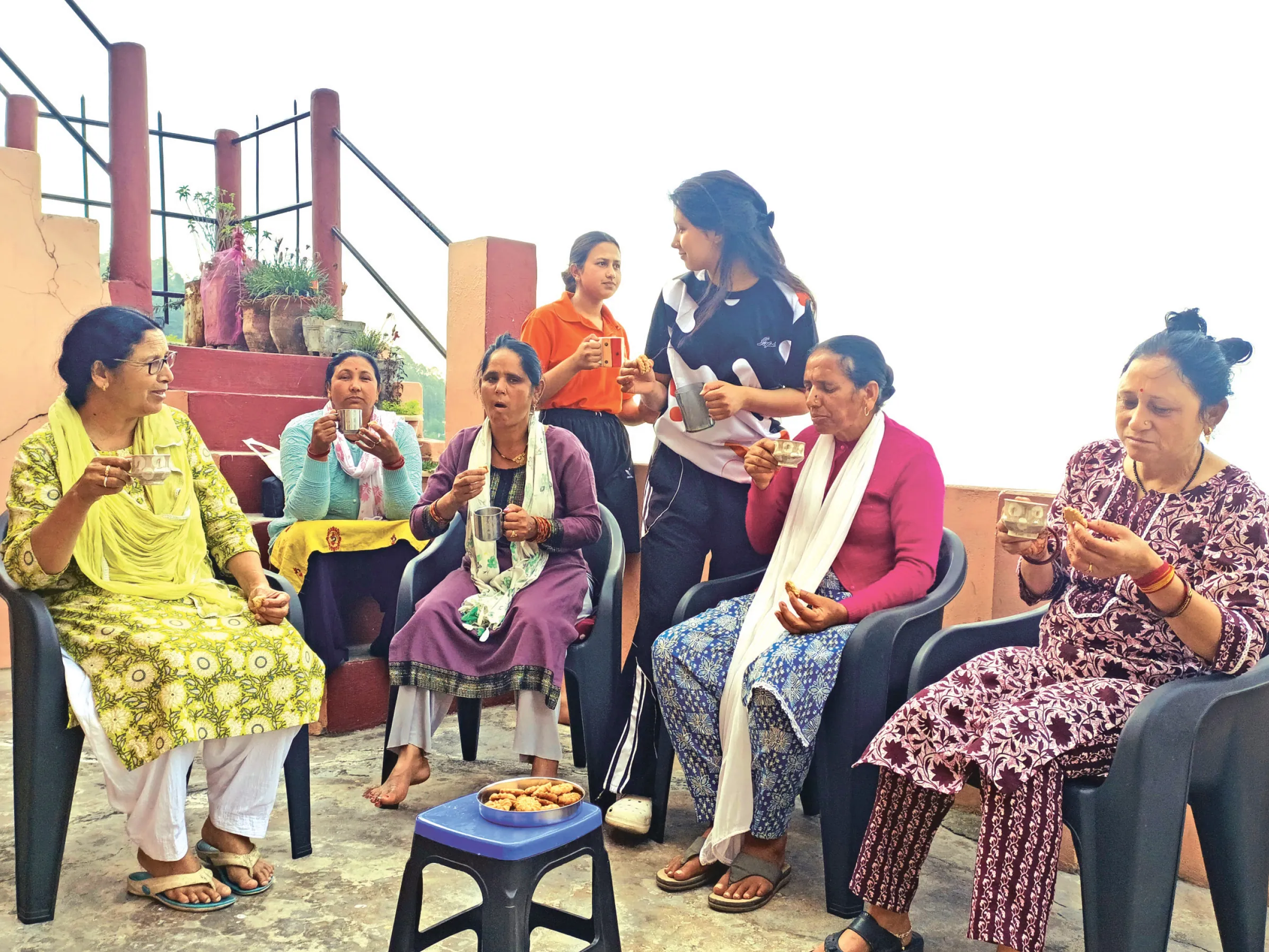
“I have been associated with an SHG since 2006; that was when my husband passed away,” says Seema Devi, a 54-year-old from Baunsri village in Pauri Garhwal district (she is the oldest and most experienced of the five women at the bakery). “Many people ask me if I get tired because of my age. I tell them I feel energised because I try to exceed my own sales every day. I compete with myself.”
Ms Devi has learned to manage the multifaceted precision required in running the bakery: measuring ingredients, calculating sales incentives, handling orders, etc. She and her co-workers get a fixed daily wage and incentives from door-to-door sales. This approach has helped the women earn an additional income, while also helping the bakery grow.
Financial inclusion and livelihoods are the pillars of the initiative, and they keep 37-year-old Saroj Devi going after she lost her husband when she was 24. Income from the bakery has enabled her to keep her children in school and college. Another employee, 50-year-old Kusum Devi, has the bakery to thank for being able to take care of her family and her sick husband. “We all forget our problems when we bake,” says Ms Saroj, an ace at making cream rolls.
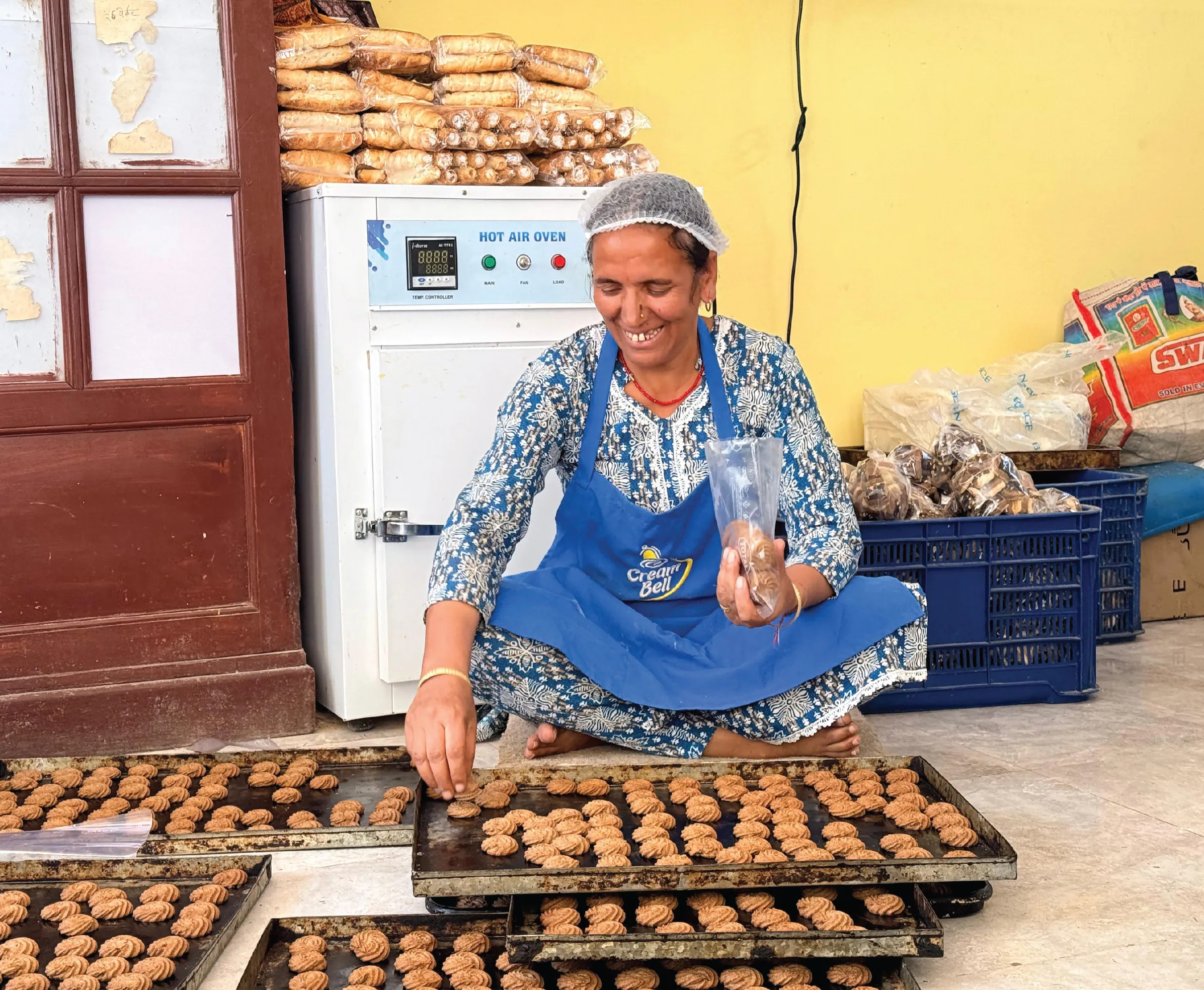
The bakery has been a learning journey for all these women. “Everything was new to me. I had never used — or even seen — an oven before,” says 34-year-old Parvati Devi. “We were scared of putting the baking tray in the oven. Now, it’s a daily affair and we all know how to set the temperature and pull the fresh bake from the oven.” Ms Kusum agrees: “Our fear of machines is long gone.”
Millet Bakery made a humble start in 2019, but Covid and the following lockdowns threw a spanner in its works. The central government’s National Rural Livelihoods Mission (NRLM) came to the bakery’s rescue at that point, giving it the contract to supply millet biscuits to children in anganwadis (childcare centres) in five subdivisions of Pauri Garhwal.
The programme was also supported by the central government’s Integrated Child Development Services. “This helped the bakery earn about ₹150,000-200,000,” recalls Vijay Bisht, NRLM’s mission manager for Pauri Garhwal. Since then, the bakery has gone from strength to strength.
The bakery stands out for two reasons. The first is its unique selling proposition: offerings made using locally grown millets and dairy products. “It is a great way to feed millets to our kids,” says customer Uma Devi, whose 20-year-old daughter snacks on jeera-flavoured jhangora (barnyard millet) biscuits while preparing for her exams. Secondly, the local millet supply chain that feeds the enterprise has a women-driven value chain that extends back to the farm.
To promote millet cultivation, Himmotthan worked with women farmers and trained them to adopt improved agricultural practices, from field preparation to sowing techniques, harvesting and post-harvesting methods.
“A high-yielding, early-maturing variety of finger millet (called VL379) was made available to the farmers,” says Dr Koshyari. This was developed by the Almora-based research institute Vivekananda Parvatiya Krishi Anusandhan Sansthan, which comes under the Indian Council of Agricultural Research.
The millet story is central to the success of the bakery and its sister concern, Didi’s Café. Pankaj Negi, manager of the Gauras FPO, believes that the two entities are able to maintain the quality of their products because the millet growers are direct suppliers. “Also, the finger millet grown by members of the FPO is procured at the minimum support price,” he says.
Diwakar Purohit, who leads the GiLU project for Himmotthan, explains that the bakery was provided technical and financial support along with continuous guidance on quality control, recipe development, product certification, branding and packaging, and marketing strategies. “This guidance helps our women-led enterprises grow from small initiatives into organised and sustainable business ventures,” he says.
“The success of Millet Bakery and Didi’s Café demonstrates that when rural women are provided with the right ecosystem — access to institutions, finance, skills, technology and markets — they become entrepreneurs, leaders and drivers of local economic growth,” says Vinod Kothari, the executive director of Himmotthan Society.
Inside the bakery itself, growth is driven by products such as the bestselling cream roll, with sales of an average 37 packets (one dozen rolls per packet) every day. Another bestseller is the baked millet laddu. In all, the bakery sells about 45kg of pastries and other products daily.
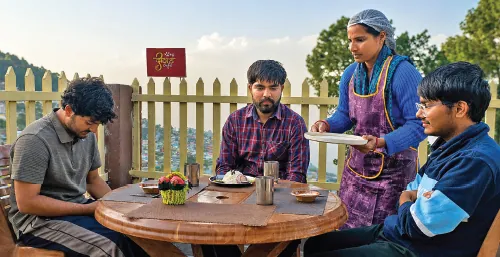
Didi’s Café uses the same supply chain as the bakery. Managed by 42-year-old Anju Devi and a team of four women, the café serves health and affordable fare. Its millet thali, for instance, is priced at ₹80 and is a popular lunchtime option. During evening hours, students from the nearby Hemvati Nandan Bahuguna Garhwal University patronise the café.
The well-being of Millet Bakery and Didi’s Café is encouraging for far more than financial reasons. They establish how community participation, strong market linkages, hard work and commitment can widen horizons and give rural women new opportunities to be independent, and interesting ones at that.
Fast-lane FPO
The Gauras farmer-producer organisation (FPO) was established in Pauri in Uttarakhand in 2022 to create downstream and value-addition opportunities in millets. Himmotthan Society, while working with local women farmers, realised that though production of milk, finger millet, barnyard millet and other local products had increased, market opportunities were lacking.
The Gauras FPO was set up under GiLU by Himmotthan to address this gap. Apart from the bakery and café, the FPO has established women-led community-run dairy units. Women members have received training in enterprise management, quality assurance, customer service, financial management and business operations.
They are also guided to make the most of government schemes such as the National Rural Livelihoods Mission, which gives women access to community investment funds, bank credit and other financial services. This support makes it easier for women-led enterprises to find their feet and to thrive.
The Gauras FPO has 1,190 members from 62 villages in Pauri Garhwal district and an annual turnover of more than ₹8.5 million in 2025-26. “It has gone beyond being a market facilitator; it has become a collective business platform for women, who organise the entire value chain from production and aggregation to processing and marketing,” says Diwakar Purohit, lead for the GiLU project at Himmotthan.