Study time gets a
long-due revision
There remain wrinkles to be ironed out, but vocational education is well on its way to becoming an integral part of India’s schooling ecosystem
Sarika Gaikwad was apprehensive when she heard about a new subject being added to her school syllabus. “I was, like, one more subject? I didn’t know what vocational education was or what we were going to be taught,” says the 15-year-old grade 10 student at the Dr Vasantdada Patil Madhyamik Vidyaniketan, a government school in Shukrawar Peth in Pune. “Then, after the first session — it was on electronics and electrical technology — I got a bit interested. This was something novel and I got more interested.”
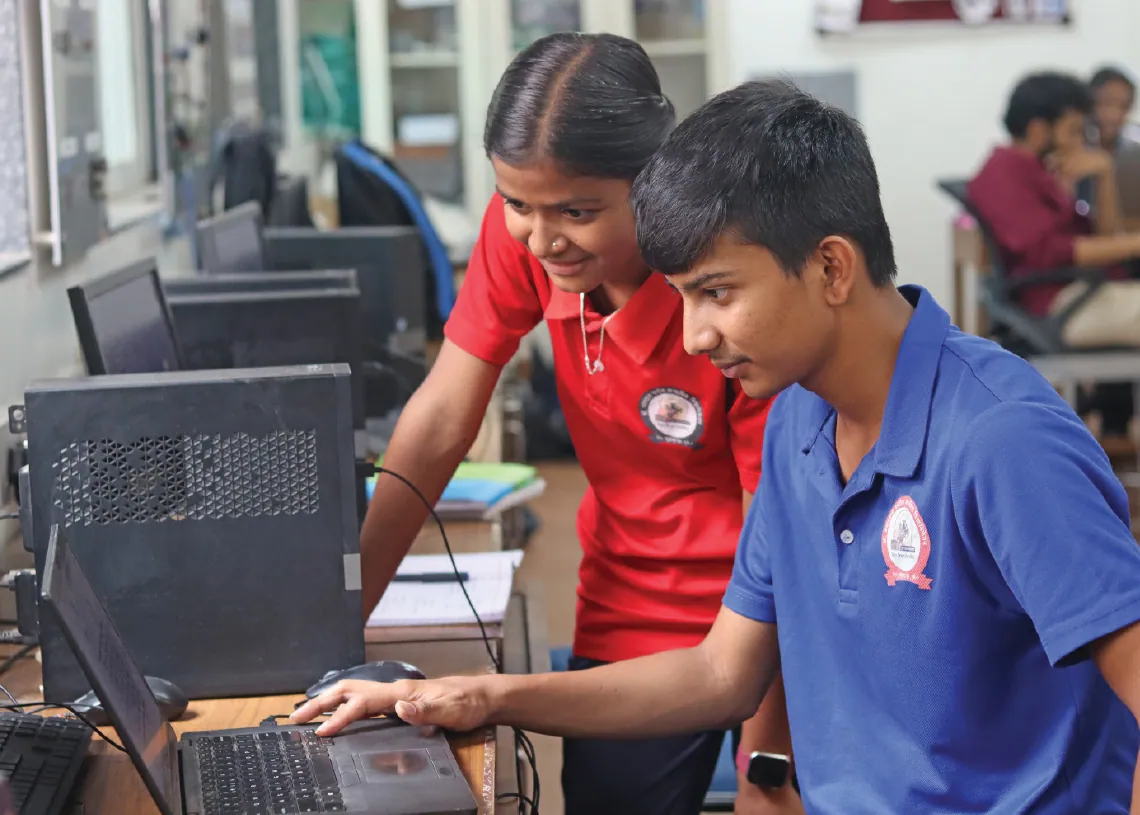
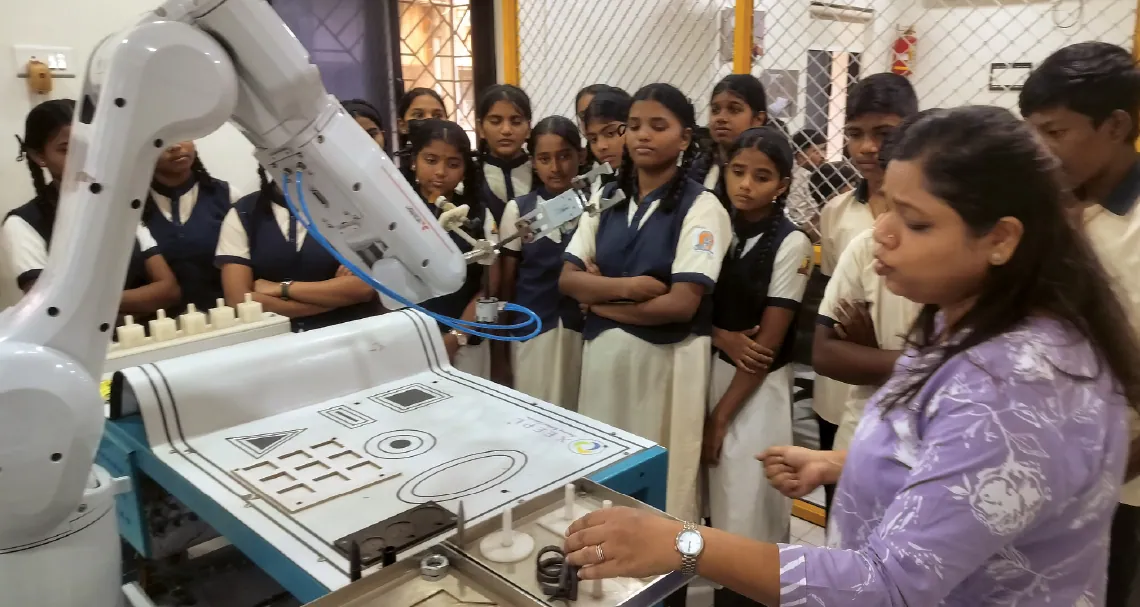
For 14-year-old Aman Gupta, another grade 10 student from the same school, the vocational training period turned out to be an enlivening break from routine. “Our regular subjects are boring; all we do is listen and there’s so much of mugging up involved,” he says. “Now we have classes on finance, gardening and mechatronics, which is my favourite. It has taught me how machines function.”
Having her own bank account, and knowing how to operate it without assistance from her parents, is what has got Pihal Gaikwad kicked about her vocational education class. “Finance is one of the topics taught and that led to banking, saving, debit cards and opening a bank account,” says the 16-year-old grade 10 student at the government-run Hutatma Balveer Shirishkumar High School in Shivajinagar in Pune.
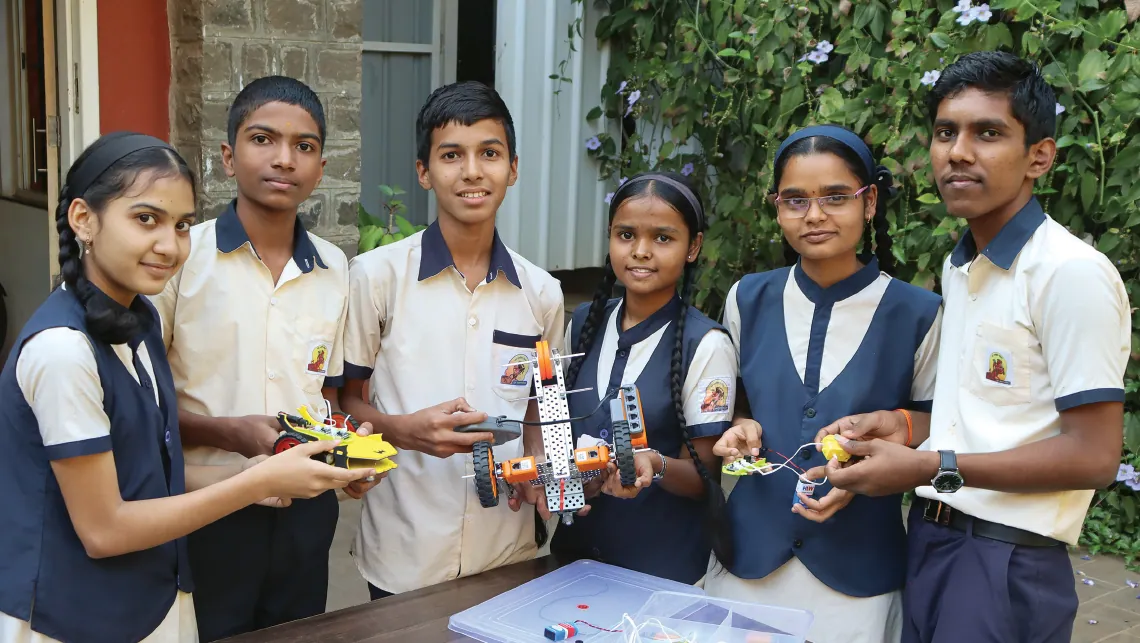
Kindling interest in subjects off the beaten schooling track sits right with the Maharashtra government’s effort to make vocational education an integral component of the school curriculum from grade 6 to higher secondary. Hands-on classwork, soft skills, practical knowledge and much more are on the learning menu, and the subjects are varied: agriculture and gardening, food and cooking, healthcare, finance, electronics and robotics. It’s a spread designed to enable and encourage students to explore the world around them and discover their place in it.
Unlike the usual
“Same as everyone in my class, I found these subjects stimulating,” says Aman. “They were unlike the usual stuff, maths and science and language, where we have to remember what to do next. Here you have to understand what to do next.” The mechatronics inclination has prompted Aman to consider studying computer engineering in the years ahead and aim for a career in the Indian Air Force. And he has a backup plan in place. “I have the option of joining my father in his carpentry trade.”
Exposure to vocational education has sparked Sarika’s curiosity about home automation. A visit to the fire station, she says, opened her eyes to safety issues and how to protect herself in an emergency. As for gardening, “I never knew you could make a career in it,” she says.
“We learn by observing and doing, we have guest lectures, which are great fun, and our teachers, well, they are like our older brothers and sisters,” adds Sarika, who has set her mind on becoming a lawyer. “It is my childhood dream. There is a lot of injustice everywhere, especially with what’s being inflicted on girls and women. I will fight to have their voices heard.”
In its essence, vocational education expands the worldview of students, and starting with the theme early delivers a host of advantages that traditional classroom teaching does not and cannot. This flies in the face of received wisdom, which suggests that vocational training is only for those seeking immediate employment after higher secondary, or for students whose grades are not up to the mark.
That’s as far from the truth as blackboard learning in a classroom is from a field visit to a factory. The recommendations of the National Education Policy (NEP), 2020, and the National Curriculum Framework for School Education (NCFSE), 2023, reinforce the point, highlighting vocational education’s role in moulding the minds and futures of school students.
The Tata Trusts have taken this message to heart, building partnerships with seasoned nonprofits working to bring vocational education into the mainstream of India’s schooling ecosystem, and into the curriculum as a subject with scoring marks. Lend A Hand India (LAHI) and STARS Forum are two of the nonprofits being supported by the Trusts in this endeavour, which has the potential to reshape how students are tutored and what such tutoring can translate into.
The Pune-based LAHI collaborates with government and government-aided schools to cement vocational education as a core component of the curriculum. This involves setting up labs with tools and equipment, recruiting and training teachers, and helping students with internships, assessments and certifications.
Founded in 2003, LAHI has nurtured ‘technical and vocational education and training’ (TVET) programmes in 24 states of India, reaching more than 1 million students in about 12,000 schools. The partnership initiative with the Trusts, stretching over three years, will see LAHI push the TVET envelope in 50 schools in Pune and four other districts (in the Vidarbha region). The objective is to cover 13,000-plus students, train 80-plus teachers, and test different vocational education models in diverse settings.
The expectation is that the initiative will, down the line, lead to innovative, inclusive and widely applicable solutions, which can then be employed in schools elsewhere. “The NEP-NCFSE blueprint is in place, but it is not clear how their goals can be realised,” says Akash Patki, a senior manager with LAHI. “We need to operationalise this on the ground and showcase what can be achieved in multiple types of schools.”
STARS Forum, the second organisation being backed by the Trusts, is an offshoot of Vigyan Ashram, a nonprofit established by the late scientist-turned-educationist SS Kalbag in 1983. Based in Pabal near Pune, Vigyan Ashram applies Gandhian principles to a raft of rural development interventions and is rooted in the vocational education mantra of ‘learning by doing’.
STARS stands for ‘skills training for advancement in rural societies’ and STARS Forum, set up in 2010, reflects the belief embedded in the acronym. Its objective is to find common cause with like-minded partners and create a platform that advances vocational education in rural and tribal communities and with the urban poor. To this end, it has expanded to reach more than 2,300 schools across India.
The Tata Trusts are supporting STARS Forum in setting up a ‘resource and innovation centre for the advancement of school-based vocational education’ (RICVE) in an initiative that will be effected over three years.
Multiple elements
The project comprises a clutch of elements: implementation models; training for teachers and instructors; content curation; technical backing for allied organisations; and crafting a robust assessment structure.
The way it is envisioned, STARS Forum will have approximately 19,200 students (grades 6 to 10) from 40 schools in rural Maharashtra and Chhattisgarh under its vocational education umbrella. Also on the agenda are training for 160 instructors and the generation of teaching-learning resources.
“The challenges we face in [getting this programme right] are multifaceted,” says Ranajit Shanbhag, a trustee at STARS Forum. “The first has to do with the mindsets of teachers, parents and school administrations. We are into the fifth generation of schooling by blackboards, books and memorisation — we are habituated to it — so when you say hands-on learning, which is what vocational education is about, it does not quite seem like an essential part of schooling. But it is, because we are always ‘learning by doing’, in our homes, on the playground and while going about our lives.”
TVET is new for the teachers and administrators in India’s schooling system, which may explain their anxiety about what its arrival portends. Administrators worry about the resource factor — the money needed for infrastructure, tools and material — while teachers fret over taking on another subject.
“Acceptance of vocational education by kids is almost immediate; for the teachers it could appear like being saddled with something extra,” says Mr Shanbhag. “There’s also the fear that their own subjects and their skill sets could be undermined and, consequently, their jobs threatened.”
Parents, a vital part of the matrix, are a special kettle of fish. “When we talk about project-based learning, about carpentry and plumbing, the feeling among parents is, ‘I don’t see my child as a future plumber or electrician.’ But this is basically about life skills,” adds Mr Shanbhag. “Teachers, parents and administrators may not be direct beneficiaries, but they are a crucial part of the programme. We need to talk to them; we need to show them results.”
State-side support
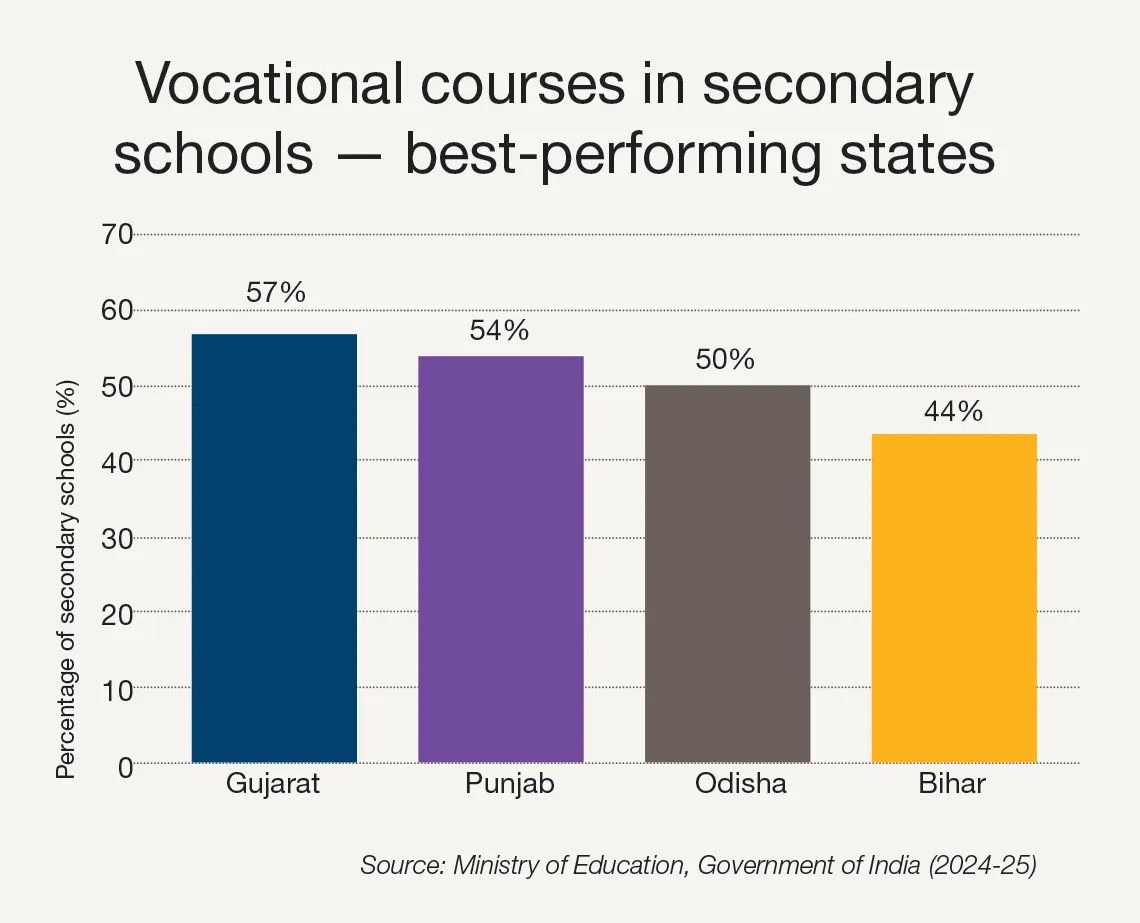
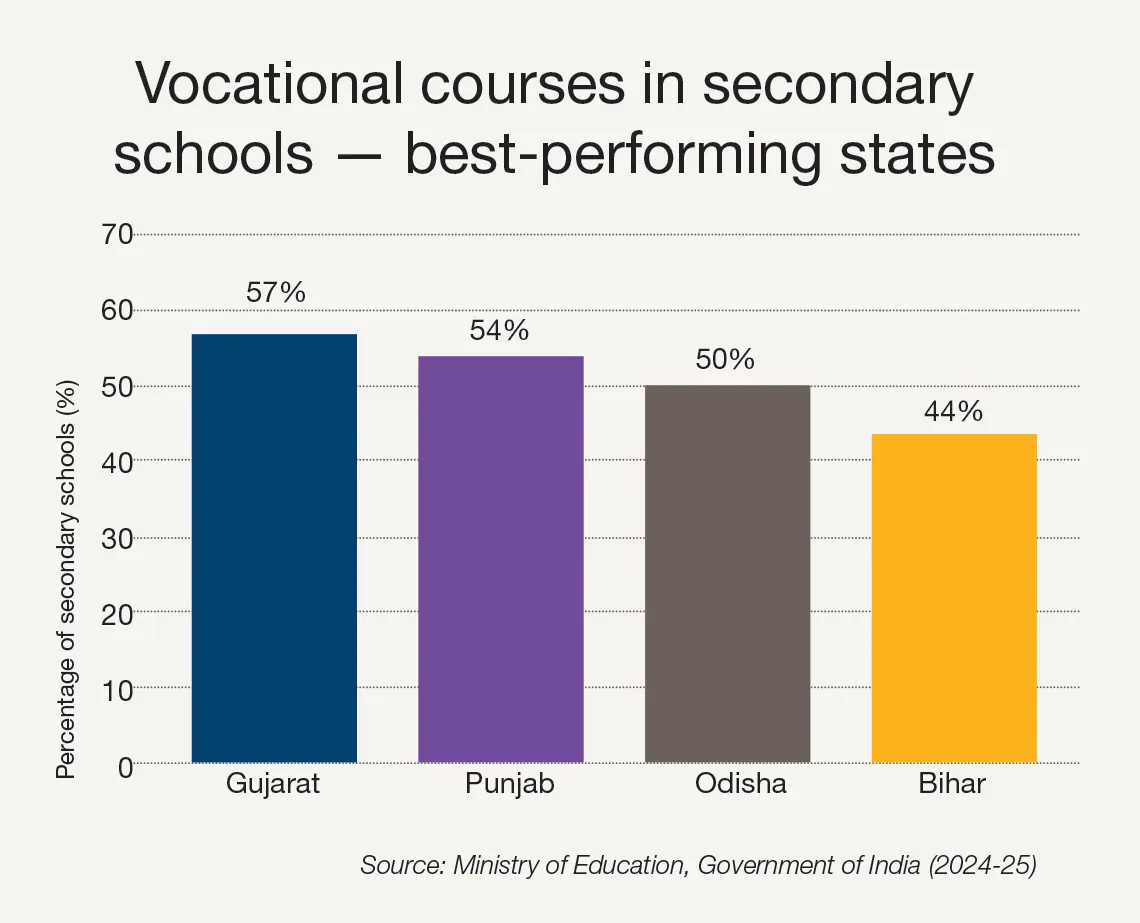
Institutional support is an important determinant of how TVET fares on the ground. States that have bought into the concept, among them Gujarat, Punjab, Odisha and Maharashtra, have shown positive results, indicating the heft that such support lends to vocational education in schools.
“NCFSE has defined the flow and framework of vocational education in schools; now it is up to the states to adapt and adopt,” says Mr Patki. “There are six aspects that require attention: having proper teachers; getting those teachers trained; setting up infrastructure with tools and equipment; making sure the relevant books are there; ensuring a delivery model that makes allowance for different kinds of schools; and assessment and certification. We have to operationalise all of these aspects.”
From the Tata Trusts’ perspective, the STARS Forum and LAHI programmes have a two-fold agenda. “In the short-term, this is about developing an exemplar; in the long-term, it’s about alignment with NEP to fully integrate school-based vocational education,” says Kishore Darak, manager, education programmes, with the Trusts. “The path to realising these goals is not linear. We need more such initiatives, more partners and more collaborative innovation.”