Early is the key
A joint policy document crafted by the Tata Trusts and Unicef aims to strengthen India’s child education ecosystem
Small interventions paired with knowledge can create a lasting impact. For Renu Sharma, an anganwadi (child and mother care centre) worker in Peechupara Kalan village in Rajasthan’s Dausa district, it was a matter of deep concern that despite her dedication in providing nutritious meals to her community members, they were reluctant to consume the fortified takehome ration (THR).
The anganwadi provides several services at the village level for children under the age of six and for pregnant and lactating mothers. During a field visit by local officials, it came to light that Ms Sharma herself was unaware of the benefits of the fortified food.
Recognising the knowledge gap, Ms Sharma was provided counselling through a Tata Trusts-supported intervention that covered the basic science behind fortification, the importance of essential nutrients, and how fortified staples can combat malnutrition. The information was shared in an accessible way so that young mothers could understand its importance. The team from the Trusts also encouraged Ms Sharma to participate in a poshan maah (nutrition month) recipe competition using THR products, where she went on to win first place. The real victory came later.
Knowing better enabled Ms Sharma to educate the households in her village, demonstrating how simple dietary changes could prevent malnutrition. “Learning about fortified food was a revelation,” she says. “Earlier, I didn’t understand its importance, but now I actively educate my village. Together, we can fight malnutrition, one meal at a time.”
Fortified forever
Fortified foods are no longer seen by the villagers of Peechupara Kalan as just government rations, but as a key contributor to better health. Ms Sharma’s efforts have led to increased THR consumption among women and children, and a shift in the community’s attitude towards fortified staples.
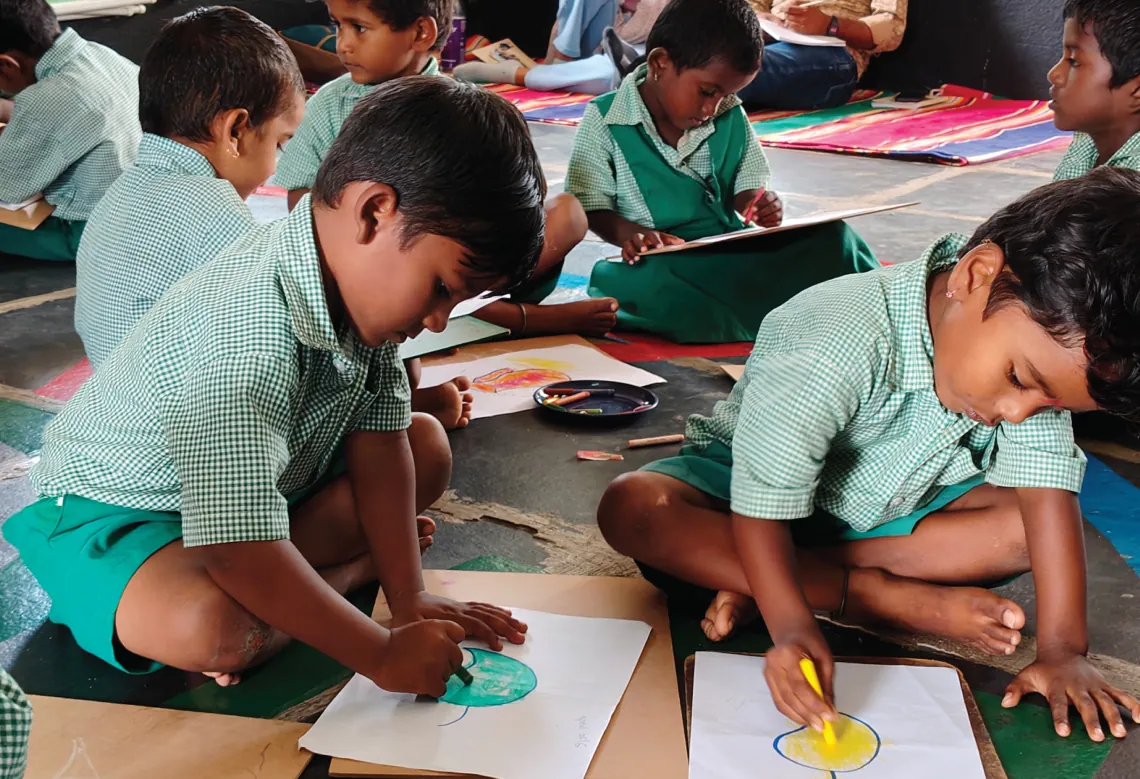
The intervention in Ms Sharma’s village is one of millions across the country under India’s Integrated Child Development Services (ICDS). Initiated more than 50 years ago, ICDS is counted among the world’s largest programmes aimed at childhood development and care. Over the past decade, the Tata Trusts have partnered with several civil society organisations in multiple states to strengthen early childhood development (ECD) through ICDS-run anganwadis, the focus being on children aged three to six.
Neuroscience research has produced compelling evidence highlighting the criticality of development in the early years, particularly from birth to age six. This understanding is reflected in India’s Early Childhood Education (ECE) Policy, 2013, which notes that “there are critical stages in brain development during this period that influence physical and mental health… Deficits at this stage have substantive adverse impacts on human development.”
Research underscores the heightened biological sensitivity to environmental influences up to the age of eight and the lasting impact of early experiences on a child’s future. During these years, neural connections form at an unprecedented rate — over one million per second — making this period uniquely influential.
Adequate nutrition supports physical growth, immune strength, early stimulation and quality education, which foster cognitive growth and social-emotional development. Together, these experiences lay the foundation for lifelong learning, problem-solving abilities and healthy social relationships.
The Trusts have cemented a longstanding commitment to reaching India’s poorest communities through evidence-based, scalable models. Its education portfolio has primarily focused on strengthening government systems, recognising public education as the primary pathway for disadvantaged children. The ICDS scheme, which includes ECE for children aged three to six, is implemented through a vast network of 1.4 million anganwadis, the largest such network in the world.
Sustainable, scalable
T he Tata Trusts framework for early childhood education (ECE) has been successfully implemented across states through partner organisations.
Kalike, an associate organisation of the Trusts that works in Karnataka, has scaled up its ECE model through technical support to 13,300 anganwadis (child and mother care centres), reaching nearly 380,000 children in seven districts through collaborations with the state’s Department of Women and Child Development and the Kalyan Karnataka Board.
Independent evaluations have revealed significant improvements through these efforts in the learning environment, supervision, worker capacity and ECE practices, resulting in the improved school readiness of children before they enter the formal education system.
In Rajasthan, the Centre for Microfinance, another associate organisation of the Trusts, has demonstrated quality ECE delivery in two districts, Sirohi and Karauli. The Centre has developed anganwadi (child and mother care centre) workers as trainers to address supervisory shortages. This has benefitted about 66,000 children in 1,400 anganwadis.
Where children are the beneficiaries
In Maharashtra, QUEST, an education resource organisation and long-term partner of the Trusts, has developed a multi-year ECE programme aligned with the National Education Policy 2020. Through a training model engaging the entire Integrated Child Development Services (ICDS) hierarchy, it has transformed some 3,000 anganwadis, reaching more than 100,000 children.
Seeding an early-learning network in the country, the Trusts have brought together 25 organisations and experts. The purpose is to share resources and learning, undertake research and evidence creation, and join hands for policy advocacy on early learning. Considering scale and diversity, this approach of bringing key players together can go a long way in building consensus and collaboration.
Together, these interventions demonstrate that systemic capacity-building, hands-on training and strong demonstration models can significantly strengthen ECE delivery within ICDS.
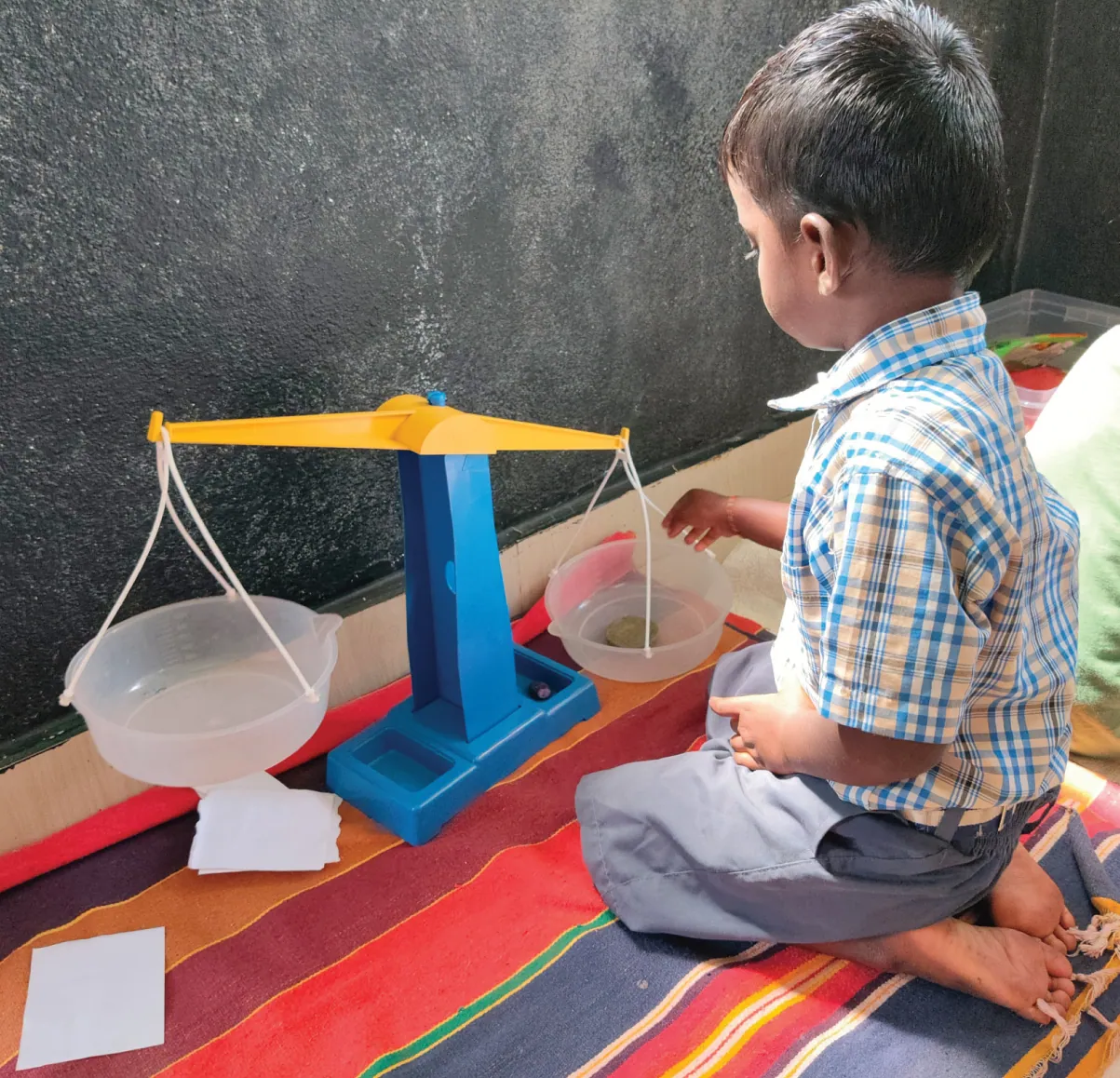
Anganwadi workers are mandated to deliver six services under ICDS, ECE among them. But this component remains neglected due to three key challenges: limited capacity and conceptual clarity on ECE; inadequate training and on-site mentoring for anganwadi workers; and insufficient availability and usage of age-appropriate teaching–learning materials.
“The Trusts support organisations that demonstrate scalable, high-quality ECE models within ICDS,” says Amrita Patwardhan, who heads the education theme at the Trusts. These models converge around core intervention areas: the setting up of model anganwadis that demonstrate age-appropriate, play-based ECE, the use of these sites to deliver hands-on training, and the professional development of anganwadi workers.
The interventions also include improving the anganwadi learning environment and community engagement, and strengthening systems to build long-term capacities within the ICDS ecosystem.
Unicef, the global body that works to promote and protect the rights of children in over 190 countries, works closely with the central government and multiple states, as do the Trusts. Both provide technical support to state governments, and the Trusts fund a large number of on-ground programmes on ECD.
Aligned with the common objective to strengthen ECD through anganwadis and with a view to advocating a future-focused framework, Unicef and the Trusts have released a joint policy brief on ECD, highlighting key issues and recommendations to strengthen services for young children.
“ECD is the bedrock of progress in the education system,” says Saadhna Panday, chief of education at Unicef India. “When two credible partners — the Tata Trusts and Unicef — come together to speak with one voice on what works in ECD, the chance of shaping policy and practice increases significantly. Unicef is proud of this joint initiative and its growing partnership with the Trusts.”
The joint policy brief has been shared with state- and district-level government departments of the women and child development and education ministries, the primary audience for it, as well as with the civil society partners of the Trusts, who are the key implementers working to strengthen anganwadis.
Fixing the framework
All government schemes and programmes flow from policy and regulatory frameworks. The union government’s National Early Childhood Care and Education 2013 and the National Education Policy (NEP) 2020 have brought ECE within the ambit of the education policy. While NEP has opened up significant opportunities in the field of ECE, it has also foregrounded several new issues that need to be addressed.
“Even as ICDS has mandated anganwadis to deliver six services aimed at the holistic development of children up to age six, there are several implementation challenges that have resulted in uneven quality of services on the ground and lack of structured mechanisms to build the professional capacity of Anganwadi workers,” says Ms Patwardhan.
The need of the hour is to define a regulatory framework that sets standards for ECD. The joint policy brief underlines the need for strong structures and processes for professional development and training of ICDS functionaries. On-ground service can only improve when the workforce is trained and supported, the parent community is engaged, and sufficient allocations are made for this critical service.
The Tata Trusts-Unicef policy brief highlights gaps in the professional development of anganwadi workers and helpers, who are at the frontline of engaging with children and parents for ECD. It outlines the need for structured, hands-on training, makes a data-based case to fill vacancies in the workforce, especially at the supervisory levels and highlights the importance of integrated data collection and data analysis to inform planning.
In pursuit of the objectives outlined in the United Nations’ Sustainable Development Goals and NEP 2020, there is also a need to establish resource organisations at the government level. These organisations can collaborate closely with governments, institutions and other stakeholders by offering technical assistance and policy suggestions to ensure high-quality early childhood care and education for the most disadvantaged children.
The Trusts are actively engaging with partners to design and implement programmes to develop robust models that can be demonstrated to state governments and scaled within their respective systems. These efforts focus on documenting best practices in early learning, drawn from programmes implemented by expert NGOs as well as within government systems.
“The intention is to create clear, practical guidance for all stakeholders seeking to provide meaningful and high-quality learning experiences for young children,” adds Ms Patwardhan. “Through these initiatives, the Trusts are seeking to realise the vision of building a more equitable India by strengthening the public education system.”