Shuttling success gathers steam
The Mizoram Badminton Initiative nurtures young talent from the grassroots level to the tournament stage
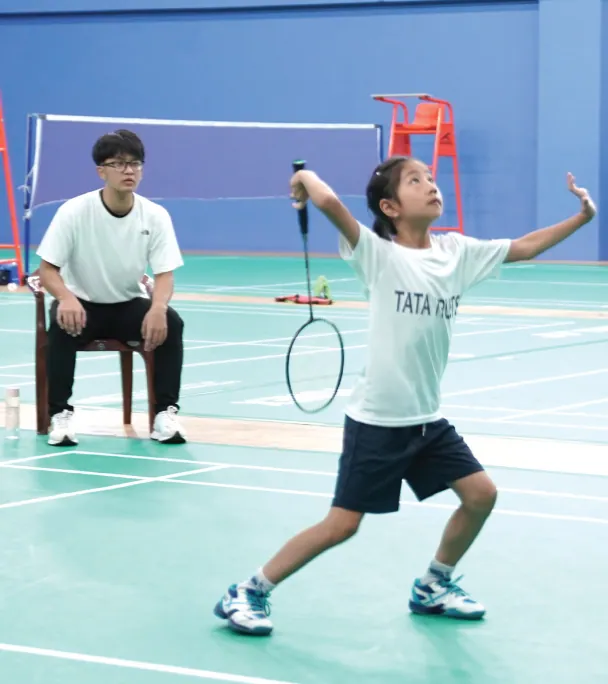
Back in 2010, four-year-old Lalthazuala Hmar took after his father when he picked up a badminton racket for the first time. By the age of seven, Zuala, as he is fondly called, was playing tournament badminton. But much as the young talent wanted to pursue the game seriously, the road ahead was tough for his Aizawl-based family. That was not going to stymie Zuala, though. With his father’s training and a government-employee mother who held the household together, the budding shuttler made light of the deterrents.
Now 18, Zuala has risen to become the maiden international badminton player from Mizoram and is currently ranked seventh in India in the under-19 category. Having represented India at the Badminton Asia Junior Championships in July 2025, he contributed to team India’s maiden medal win — a bronze — at the BWF World Junior Championships held in Guwahati in October 2025, and has played tournaments in China, the Netherlands and Germany.
The turning point in Zuala’s journey occurred when he joined the Regional Development Centre (RDC) in Aizawl under the Mizoram Badminton Initiative, a Tata Trusts programme launched in 2018 in collaboration with the Mizoram State Sports Council, the Mizoram Badminton Association and the Pullela Gopichand Badminton Academy (PGBA).
Zuala and his younger sister, Rinhlui, were among the first to be selected for specialised training at the centre. Under the tutelage of expert coaches, Zuala’s talent has blossomed. “We are grateful to the Trusts, the Academy and the coaches for honing our son’s potential,” says Zuala’s father, Zohmangaiha Hmar.
The Aizawl RDC, which opened in 2019, targets talented youngsters drawn from grassroots programmes. That was the path taken by Zuala, who came through club, district and state levels to make a mark on the national stage. In 2023, he made history by becoming the first player from Mizoram to win a junior national badminton championship when he clinched the under-17 crown in the Hyderabad edition.
The win opened doors to national recognition for Zuala, as also the profile of the game in Mizoram. “Earlier, we couldn’t win medals even at the Northeast level; now we are in the national reckoning championships and have reached the international stage,” says Lalnghinglova Hmar, Mizoram’s sports minister. “Our youngsters are the torchbearers of the state’s badminton movement.”
The idea of the Mizoram Badminton Initiative was born when Kannan Gopinathan, a senior bureaucrat stationed in Mizoram, pushed to capitalise on two factors prevalent across the state: a deep-rooted sporting culture and plenty of indoor badminton courts. He took the lead in bringing Pullela Gopichand and Tata Trusts together. What followed was a community-led grassroots programme designed to turn potential into performance.
Mizoram already had the essentials in place. Almost every locality has an indoor badminton hall and a community that uses it. A large number of recreational and competitive players, a plethora of clubs and fierce local rivalries have enabled badminton to flourish. Add to that athletes with ability and a hunger to compete. The missing ingredients were structured training and competitive exposure for younger players. The Mizoram Badminton Initiative provides that and more.
The Initiative has a tiered system: 40 grassroots training centres across Mizoram and two regional competitive training centres. Each centre is managed by a committee comprising community members, a local coach and a district representative from the Initiative. Fees were set by the committee according to local capacity and reinvested for the upkeep of individual centres.
The badminton programme, which integrates sports and academics to create well-rounded athletes, is implemented through the Trusts’ associate organisation, the North East Initiative Development Agency. The aim is to identify talent at the grassroots level and, then, to deliver quality coaching and world-class facilities.
Smashing talent
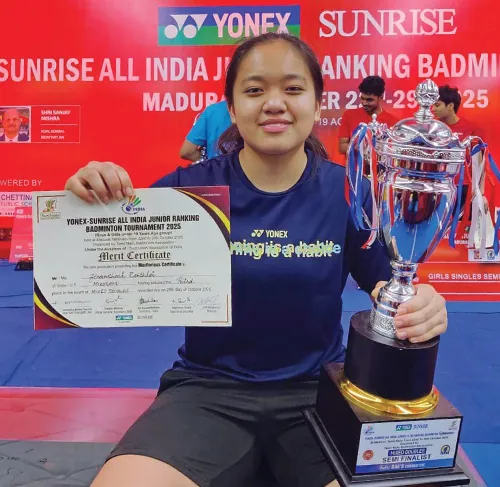
From picking up the racket at the age of five, when she could not even reach the net, 16-year-old Zoramthari Renthlei is today emerging as one of Mizoram’s — and India’s — most promising young badminton talents.
Her father Lalthlekchuailova Renthlei, a devoted badminton enthusiast, was her first mentor and would confidently tell friends that his daughter would one day make a name for herself on the global stage. Fate, however, dealt a cruel blow in 2017 when her father passed away. Zoramthari was only seven then but, inspired by his belief and driven by determination, she has carried his dream forward.
Zoramthari’s competitive journey began in 2018 at the Champai grassroots centre. She quickly made her mark, claiming championship titles in the U-9, U-11 and U-13 categories. Her growing reputation earned her selection for advanced training stints at Aizawl, the ITM Raipur Badminton Academy and eventually at the Pullela Gopichand Badminton Academy in Hyderabad.
In October 2025, Zoramthari won a bronze (see above) in the mixed doubles category in the All-India Junior Ranking Tournament held in Madurai. She currently continues her training at PGBA, sharpening her skills and preparing for higher levels of competition.
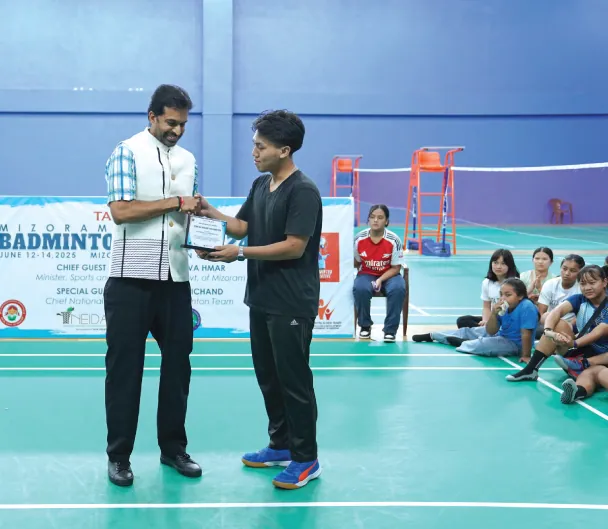
“The initial seed funding covered coach salaries, quality equipment, travel costs for inter-state tournaments and multi-week residential camps at PGBA Hyderabad,” says Neelam Babardesai, who heads the sports portfolio at the Trusts. “By the time phase two of the programme was launched in 2021, many centres were self-sustaining and paying trainer salaries from local fees, making the model rare and replicable.”
A standard operating practices manual has clarified roles, processes and documentation, with committee and association members receiving training in management and governance. Beyond coaching, the programme has layered in life skills and sports psychology while paving talent pathways. The Initiative’s key interventions include:
- Scholarship placements: Of 50+ players trained at the regional centres, 18 have earned full scholarships to residential academies, notably PGBA Hyderabad and the Badminton Centre of Excellence at ITM University, Raipur.
- Pullela Gopichand intensive training programme: Intensive training camps funded by PGBA for top regional players provide promising youngsters with regular exposure to elite coaching.
- Mental skills: Group sessions led by sports psychologists help players manage match pressure and sharpen focus, while also breaking the stigma around seeking psychological support and making such support accessible and affordable.
- Grassroots leagues and awards: A statewide league has given more than 300 players sustained competitive exposure. Awards for the best centre and the best trainers have made excellence aspirational and visible.
Badminton was always more than just a hobby or a passion in Mizoram. It has now become a movement thanks to the Mizoram Badminton Initiative and similar endeavours. These grassroots-to-structured training efforts are guided by mentors from the PGBA, creating a self-sustaining ecosystem of opportunity and excellence.
The results of the Initiative, in particular, are both numerical and transformational. Of the 40 grassroots centres established initially, 28 remain active. Trainers and communities have adopted a sporting rhythm and training routines, and children have developed healthier habits, discipline and stronger social bonds.
In the matter of performance on the bigger stage, four players from Mizoram have become national champions and the state’s boys team has climbed from bronze to gold-medal status at the badminton nationals in just one year, with five of the seven members of the team being part of the Initiative.
And in Maharashtra…
The lessons from the Mizoram Badminton Initiative have been replicated in the ‘Grassroots Kreedakul’ programme in rural Maharashtra, where the Tata Trusts have fostered the holistic development of talented young badminton players through structured training, life-skills education and health interventions.
This initiative, designed to benefit children in the 8-14 age bracket, incorporates physical fitness as also mental and emotional well-being. Launched in 2024, Grassroots Kreedakul is the Trusts’ first hub-and-spoke sports development model, designed to nurture rural talent and build local ecosystems that can sustain sporting excellence.
Implemented by Jnana Prabodhini Kreedakul (JPK), a pioneering sports school with 25 years of experience, the programme integrates sports, academics, mental conditioning, and Ayurvedic health practices to create well-rounded athletes.
Over the years, JPK’s holistic approach has enabled more than 200 athletes to win national medals, with seven representing India at international tournaments. Grassroots Kreedakul builds on this proven model to reach deeper into rural areas, empowering local organisations to manage 10–12 grassroots centres across village clusters.
Access to quality sports infrastructure and training remains limited in rural India, where young talent often lacks exposure, resources and structured coaching. The Grassroots Kreedakul initiative addresses this gap by combining scientific training methods, community participation and traditional knowledge systems to develop physically and mentally resilient youth.
The programme operates through four hubs in Baramati, Harali, Maval and Chiplun, covering about 35 villages and reaching some 1,200 rural children with structured, play-based sports training. Besides the sporting aspect, the initiative has improved nutrition, hygiene and overall well-being of the participating children while creating local employment opportunities.
There are centre management committees at each Grassroots Kreedakul centre, comprising trainers, parents, and community members. These committees foster local ownership and ensure effective management, paving the way for the long-term sustainability of the centres.
Two of the programme alumni, Zuala and C Lalramsanga, represented India at the Junior World Badminton Championship in October 2025, contributing to India’s first-ever team medal at that level (a bronze). “The two Mizoram kids played a stellar part in winning the team bronze, and in Mizoram winning the team gold in the national championships,” says badminton legend and coach Pullela Gopichand. “This is one of my biggest success stories of recent times.”
This success has come from three aligned forces: an ingrained sporting culture, fit-for-purpose community infrastructure, and outside technical and financial support that respects and amplifies local ownership.
The Tata Trusts and their partners didn’t replace the community; they cemented it by supplying structure, expertise and pathways to sporting excellence. For the Trusts, it’s about creating long-term impact across the sporting landscape of Northeast India.
Mizoram’s badminton story is a reminder that sports can be nurtured outside of elite facilities and groups of elite athletes. A combination of community involvement, natural athletic advantages, locally owned systems and funding support has filled gaps in the sporting ecosystem of the state. Top-notch outcomes have followed.