Solutions that count
Research studies from two districts in Rajasthan and Uttar Pradesh reveal the challenges that need to be addressed for rural India to get its fill of potable water
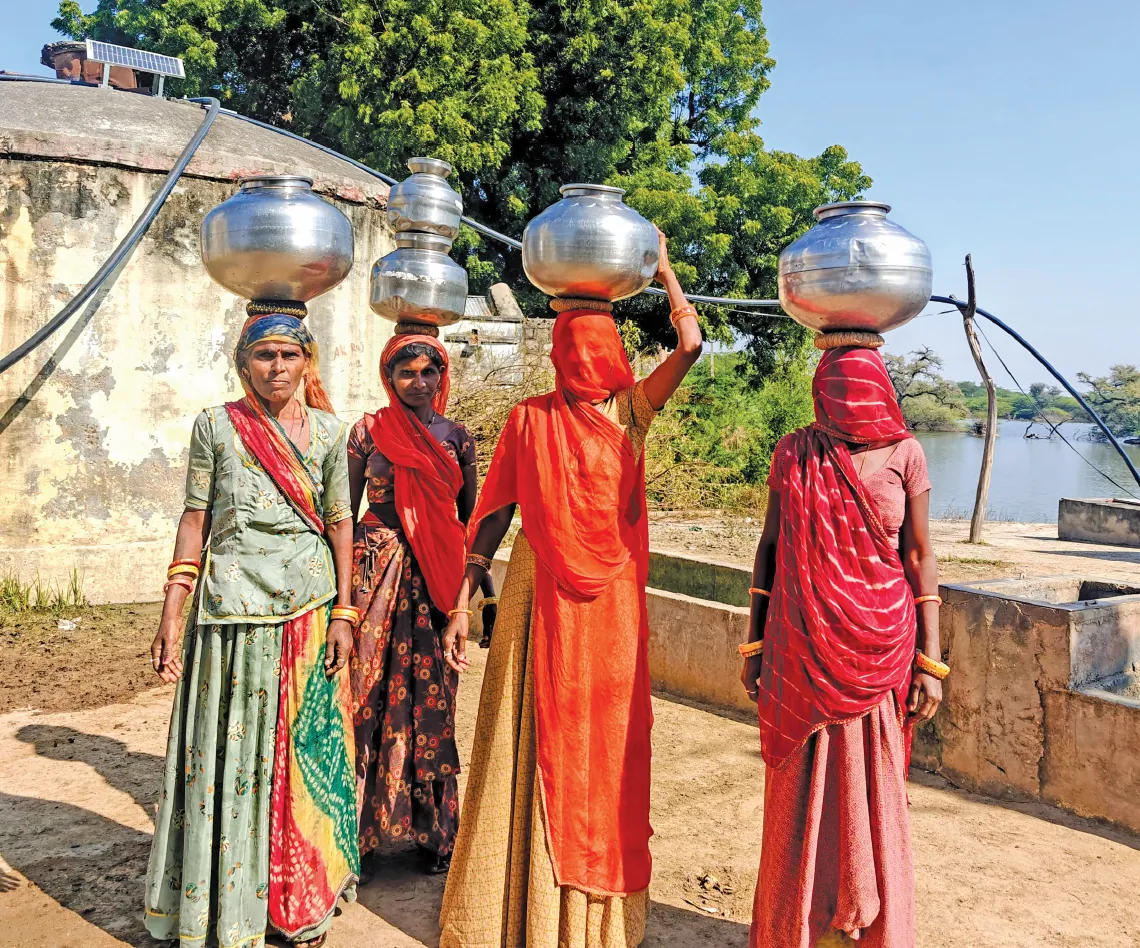
Prabhu Ram, who hails from a tribal community in Goriya village in Rajasthan’s Pali district, understands only too well what water scarcity means. His house is on a hillock and the women and children in his family once had to make the arduous back-and-forth walk every day to fetch water from an open well.
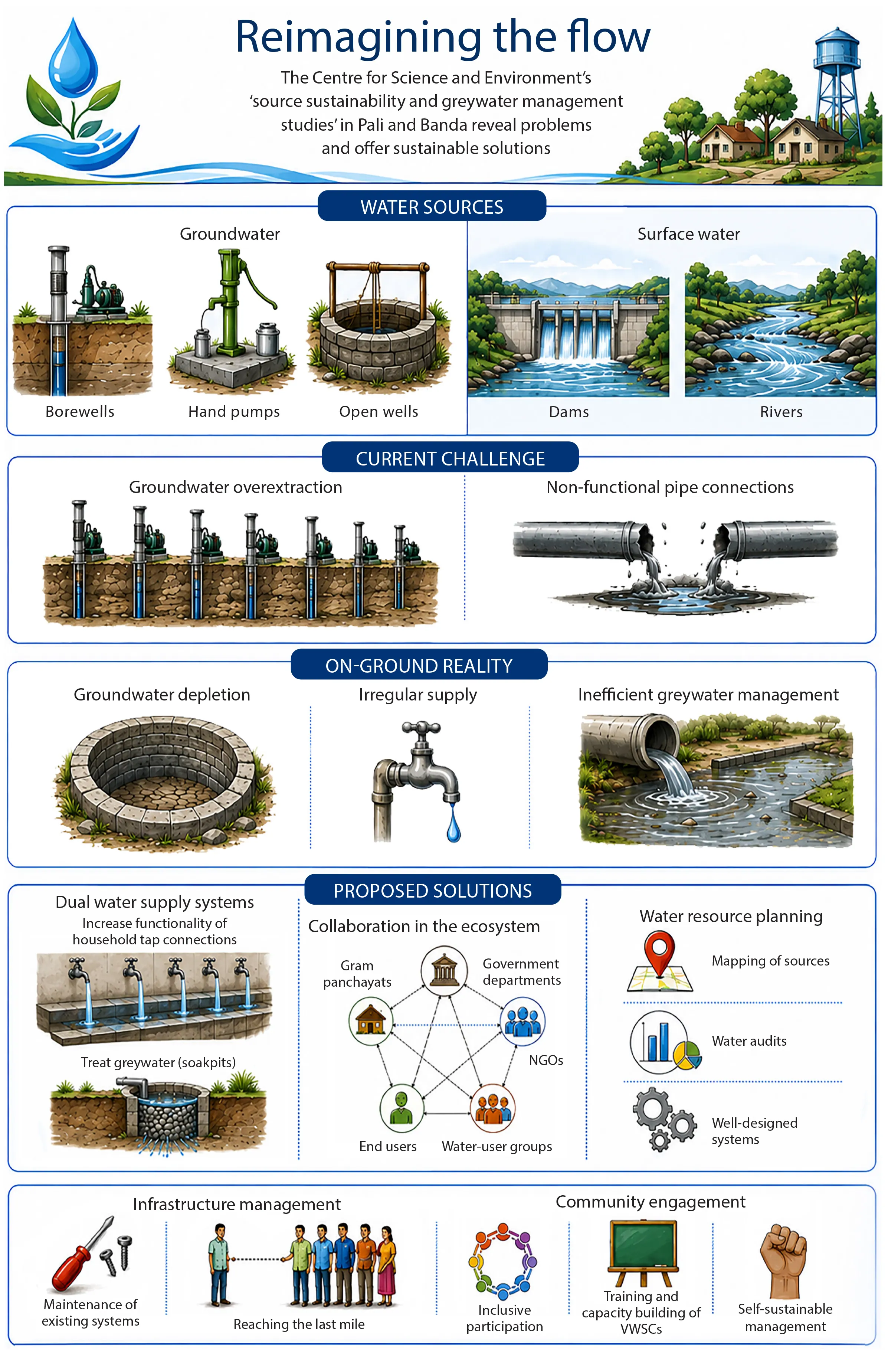
Lack of piped water has been a plight shared not just by the 600-odd households of Goriya but by countless millions across India. Since independence, various programmes at the central and state government levels have attempted to plug this problem. The most ambitious of these initiatives is the Jal Jeevan Mission (JJM), launched in 2019 as a nationwide water initiative to provide every rural home with a functional household tap connection (FHTC) for drinking water.
While JJM has hugely expanded water access, extending tap connections to an estimated 81% of rural households, there are areas that need strengthening to ensure water supply to village communities, including two critical aspects of water management: sustainability of water sources and greywater management.
The Tata Trusts have supported three diagnostic studies — conducted by the Delhi-based Centre for Science and Environment (CSE) — to analyse these aspects. The studies’ findings will help sharpen the Trusts’ understanding and be of use in designing future interventions.
Two districts researched
CSE selected two ecologically distinct rural regions for its evidence-based research: Rajasthan’s desert district of Pali and Banda district in Uttar Pradesh’s Indo-Gangetic Plain. The nonprofit’s studies stated that while taps are in place in these two districts, water supply is not reliable. More positively, the studies shed light on how actions in the field could bring about change.
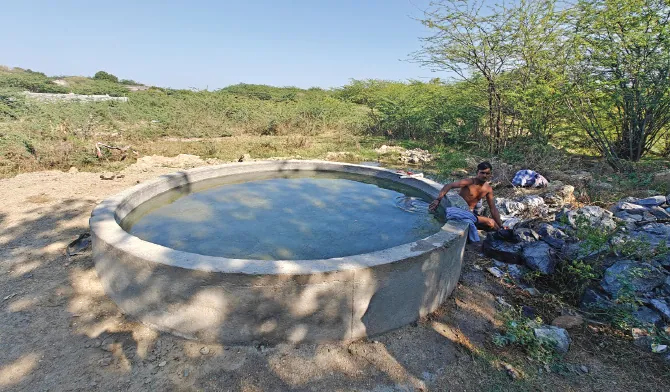
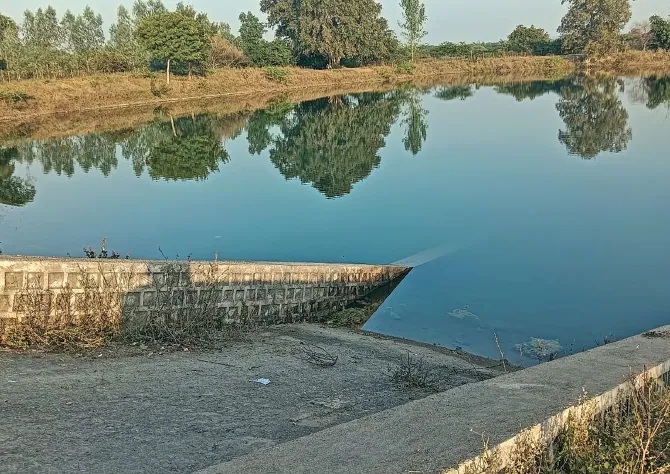
The reasons for inadequate water supply vary from the capacity gap facing communities in the maintenance of pipe systems to the drying up of sources. In Pali, traditional groundwater sources have become saline due to overextraction, compelling villagers to turn to surface water sources like the Jawai Dam.
No fringe benefits
While rural India struggles to manage its greywater, the issue is even more complex in peri-urban areas. These are, typically, the outer fringes of cities.
Towns have expanded outward and absorbed nearby villages. Bijnor in Uttar Pradesh is an example. In December 2020, the town nearly doubled in size when its municipal boundary was extended to absorb 14 surrounding villages. Areas that had been served by gram panchayats (village councils) now came under the city’s municipality. The pipes, drains and sanitation systems didn’t change overnight, but responsibilities expanded.
Five years on, the Centre for Science and Environment’s study of Bijnor’s new peri-urban wards reveals what happens when settlements get caught between rural and urban service systems.
While the core city meets national service benchmarks, the new peri-urban wards get intermittent supply of water, leaving many households dependent on hand pumps. And almost every household still relies on septic tanks.
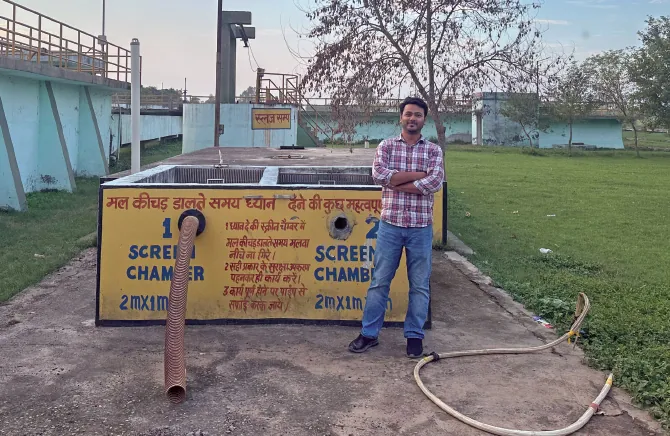
Bijnor’s sewage treatment plant runs below capacity because the new wards are not connected to it. Open drains carry a mix of stormwater, greywater and even septic tank overflows.
The study highlights how peri-urban settlements across India tend to experience some of the most acute problems in water supply, sanitation, wastewater management and stormwater drainage.
The CSE studies also show how uneven governance, limited community participation, the absence of proper water resources mapping, and inadequate funding are contributing to challenges in sustaining drinking water sources.
The Trusts have attempted to complement government efforts through water-focused initiatives implemented by their associate organisations, among them the Centre for microFinance (CmF) and Collectives for Integrated Livelihood Initiatives (CInI).
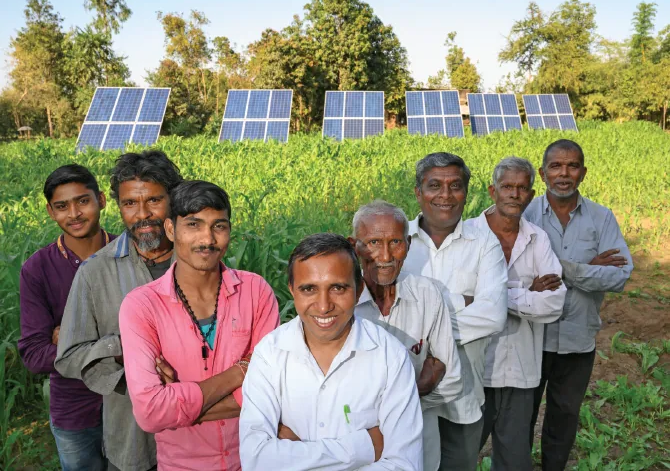
In Goriya, for example, CmF encouraged Mr Ram and a cluster of neighbouring households to come together to form a water-user group. The group managed the construction of a nearby water tank, which now provides them with access to potable water.
It's better in Banda
The situation is marginally better in Banda in Uttar Pradesh. Households here rely on groundwater as well as surface water from the Yamuna and Ken rivers. However, coverage of tap connectivity remains low, and water supply consistency continues to be a challenge.
CSE’s research flags how the digging of deeper borewells has led to overextraction of groundwater and an increased risk of geogenic contamination, wherein minerals such as fluorides leach from underground rocks into the groundwater.
The CSE studies conclude that source sustainability of drinking water can be achieved through the combined use of surface and groundwater. Advanced tools, complemented by traditional community knowledge, can be used to map existing and potential drinking water sources; identify potential recharge zones with effective design and implementation; and increase recharge systems to improve groundwater quality.
All of this is possible through decentralised water governance, primarily collaborative efforts of relevant government agencies and village communities, like in Goriya, where the water user group under Mr Ram’s leadership operates and maintains its water supply system (with technical support from the local government agency and CmF).
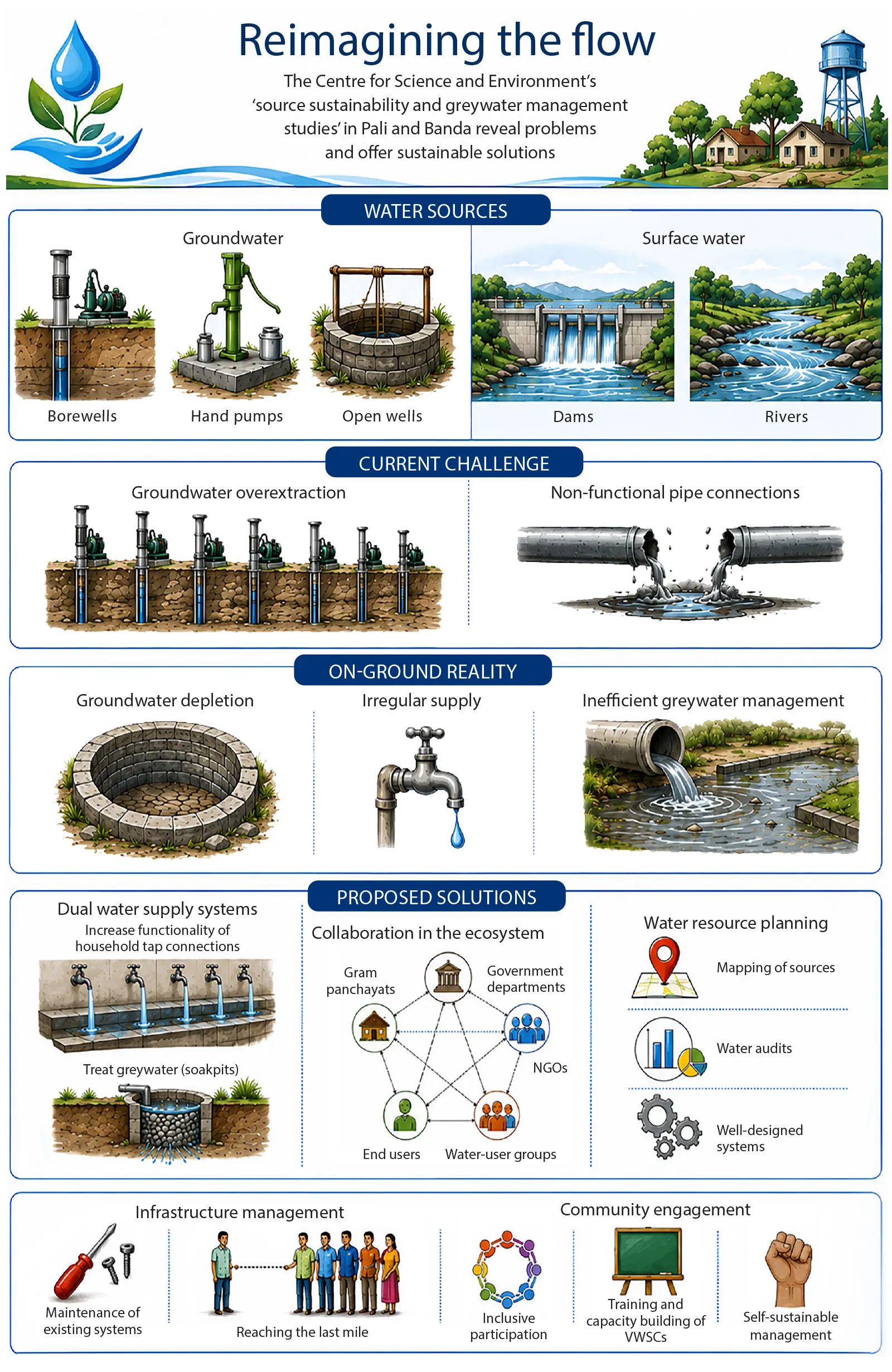
As consumption of water increases in rural communities under JJM, so does the generation of greywater. CSE found different problems in the two districts: in arid Pali, low greywater volumes seep into porous soil; in Banda, large volumes overwhelm village drains.
Lack of data on how much water is being supplied, consumed and discharged as greywater makes planning difficult. Missing or non-functional soak pits, clogged drains, septic tank overflows and the poor maintenance of water and sanitation infrastructure add to the challenge.
Greywater management
The solutions for greywater management mirror those needed for source sustainability: stronger governance, better data and community engagement. The studies recommend household-level reuse where possible (soak pits, kitchen gardens, etc), community-level nature-based systems where volumes are large, and dual plumbing in water-scarce regions to recycle treated greywater.
There is no one-size-fits-all solution: the answer depends on local soil, groundwater conditions and greywater volumes. This is where community engagement can lead to effective change, as one village in Rajasthan demonstrated.
The households of Khetarli village in Rajasthan’s Pali district reuse greywater to irrigate their kitchen gardens. Bhura Ram, one of the residents, explains that the locals take care to use wood ash instead of detergents to wash utensils.
From the arid areas of Rajasthan to the Indo-Gangetic plains of Uttar Pradesh, the CSE studies have revealed challenges as well as identified areas for urgent action, such as setting up a system for infrastructure management, the strengthening and decentralising of governance processes, and the need for collaborative action. These actions point the way forward for successful water management in rural India.