Sun and solar on their side
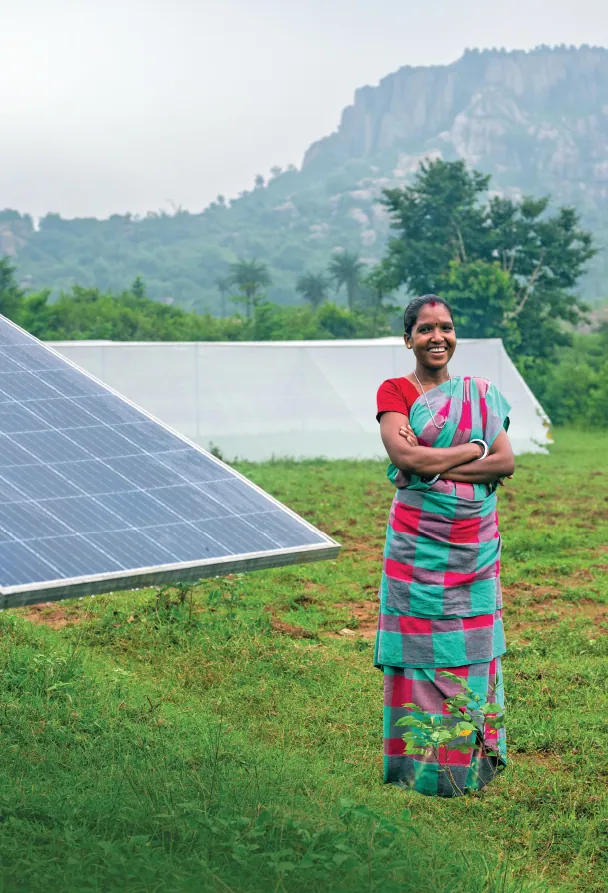
Nearly 62,500 farming households have benefitted from the Tata Trusts’ solar energy solutions, which have lit the way to improved livelihoods and a more sustainable future.
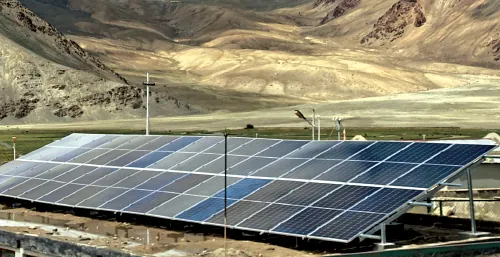
Till a few years ago, solar energy-based devices were huge contraptions. Their photovoltaic panels alone required a lot of space and were often ineffective on cloudy or rainy days. Much of that has changed thanks to technology, especially nanotechnology. Solar panels can now be mounted on a single pole, they are easy to transport and more powerful than ever. Perhaps best of all, these panels work even in the absence of sunlight.
With the Indian government pushing to generate almost 300 gigawatts of solar energy by 2030 through the Jawaharlal Nehru National Solar Mission, solar is rapidly becoming the cleanest and most efficient source of alternative energy in the country. The Tata Trusts are staying in step with the Mission, the best example being an initiative to support marginalised tribal communities in securing sustainable livelihoods through the adoption of ‘distributed renewable energy’ (DRE), mainly solar.
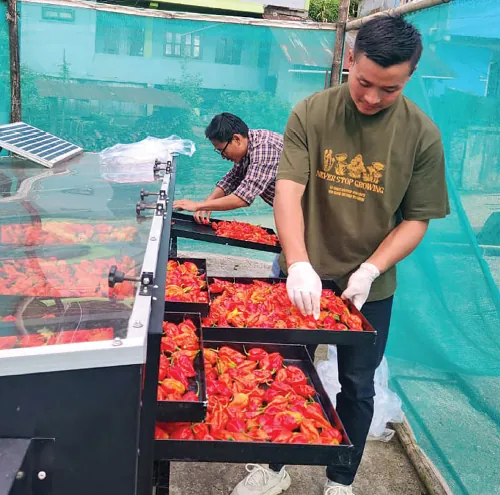
The Trusts and their associate organisations like Coastal Salinity Prevention Cell (CSPC), Collectives for Integrated Livelihoods (CInI), Himmothan Society (HMS), North East Initiative Development Agency (NEIDA), and Kalike, have operationalised the DRE programme in nine states and one union territory, offering a host of solar-based solutions and prototypes for use in the farming ecosystem.
Widespread usage
These range from irrigation systems, animal husbandry and pest-control aids to cold-storage facilities, household amenities and projects that have spawned ‘solar entrepreneurs’. The states where these solar solutions have been adopted are Jharkhand, Gujarat, Rajasthan, Maharashtra, Odisha, Uttarakhand, Karnataka, Madhya Pradesh, Nagaland and the union territory of Ladakh.
India has abundant sun power. Large parts of the country receive 5,000 trillion kWh (kilowatt-hour) or more of solar radiation a year, with about 200 clear-sky days that deliver between 4.5 and 5.5 kWh/sqm of sunlight a day. Since 2014-15, when the first solar components were introduced in farming, Tata Trusts-backed DRE solutions have reached nearly 62,500 rural households.
“Our programme aims to introduce innovative renewable-energy solutions tailored to the needs of smallholder tribal farmers,” says Ravinderjit Singh, head of rural upliftment at the Trusts. “By harnessing solar power, we seek to not only provide a reliable source of energy but also to create sustainable livelihood opportunities for local farmer communities.”
These solar-based solutions for irrigation are effective, affordable and environmentally sustainable. They can help increase productivity and incomes, ensure food security and, importantly, reduce the dependence on water pumps that run on diesel or electricity.
“Diesel is getting costlier and electricity supply is either erratic or absent in remote areas,” says Amitanshu Choudhary, programme manager, rural livelihoods, at the Trusts and chief executive of the Coastal Salinity Prevention Cell (CSPC), an associate organisation of the Tata Trusts. “However, many farmers in rural India still use diesel pumps due to a lack of knowledge and access to renewable sources of energy.
“We need to enable the shift to renewable sources of energy, and solar is one of the best options. With improvements in technology over the years, the cost of manufacturing and maintenance of solar panels has become substantially low. Also, there is a fair amount of government subsidies available to promote solar systems in an extensive way to benefit the rural poor.”
Solar-based systems require relatively low maintenance and are scalable, particularly when adopted by a ‘production cluster’ (a group of farmers who share the facility as well as overall costs and the management of equipment).
Previously, cultivators in the programme areas used to rely on rain-fed farming for a single staple crop — paddy, wheat or maize — during the kharif (monsoon) season, then migrate to the nearest urban centre for work during the rest of the year. This led to abysmal levels of poverty and disruptions in families, with education, healthcare and the rest.
Making matters worse was the shortage of water, which forced these farmers to be mono-croppers. Also, land holdings are typically small and fragmented in India’s tribal belts (the average per capita operational size of land holdings in India is 1.33 hectares, well below the global average of 3.7 hectares).
For these and other reasons, small and marginal farmers prefer to go with the single staple crop and, if possible, use a small portion of their plot to grow vegetables for home consumption. Commercial-scale agriculture was out of the question.
High-value shift
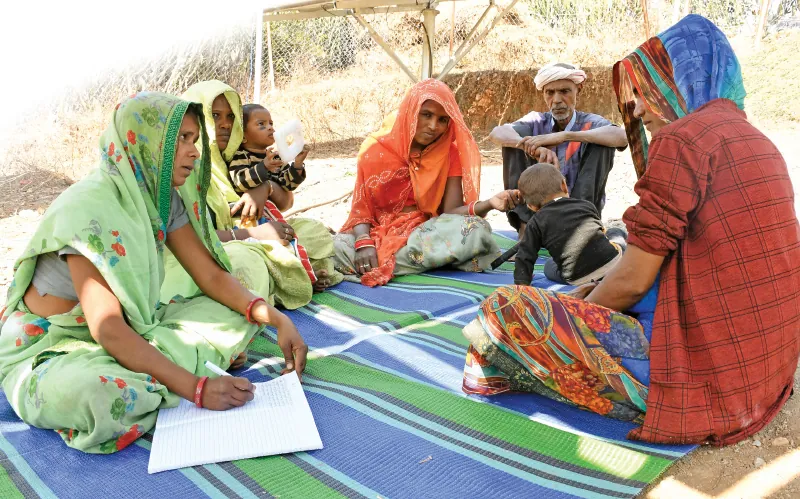
“Productivity enhancements of tribal farmlands can happen only with a change in current cropping patterns,” says Sirshendu Paul, executive director, Collectives for Integrated Livelihood Initiatives (CInI), an associate entity of the Trusts. “While we urge marginal farmers to opt for multi-cropping and grow high-value vegetables alongside their staple, this can be possible only through solar irrigation systems that ensure water for cultivation all year round.”
Solutions that shine
- Micro lift irrigation — Uses solar energy to ‘lift’ water from existing sources and channel it into agricultural fields. Often combined with solar-powered drip lines and mulching technology.
- Poultry hatcheries and brooders — Solar-powered lighting in hatcheries provides consistent light and heat, regulates the circadian rhythms of poultry, improves feed conversion rates and reduces stress levels among chicks. This leads to higher hatch rates and healthier poultry.
- Insect traps — These emit ultraviolet light to attract airborne insects that get stuck on a glued surface or drop-tray. Automated to turn on and off for optimal management. Reduces dependence on pesticides.
- Hydroponics units — Enable year-round cultivation of high-value fodder crops using minimal land and water. Enhances fodder security for smallholder farmers.
- Flour and spice mills — Grinding machines that, coupled with dryers, help produce flour or spice powders. Eliminates the drudgery of doing this by hand.
- Biodigesters — These systems transform organic waste (like dung) into clean biogas for cooking and heating, lowering household energy costs. The by-product, a nutrient-rich slurry, enhances soil fertility for crops and kitchen gardens.
- Sprayers — With small photovoltaic panels mounted on a device with wheels, the sprayers can be used to spray pesticides, fertilisers and water across farming fields.
With more water for their land, farmers in the programme have two or even three cropping seasons. They grow tomatoes, cabbage, cauliflower, brinjal, okra, chillies and other vegetables, as well as, in some cases, fruits and spices.
“Income enhancements also come from converting those in the initiative from subsistence farmers to producers of cash crops in larger, commercially viable quantities,” adds Amit Wajpe, team leader (Gujarat), CInI. Farming clusters have enabled this: with one solar-powered lift irrigation system used to water contiguous plots, cultivators can grow similar crops to collectively earn more money.
Smallholder farmers can, additionally, employ solar solutions for their cattle and poultry businesses. Solar-powered hydroponic units have helped ensure fodder security for livestock, while consistent lighting and warmth in hatcheries and brooders have aided in the production of eggs and chicks.
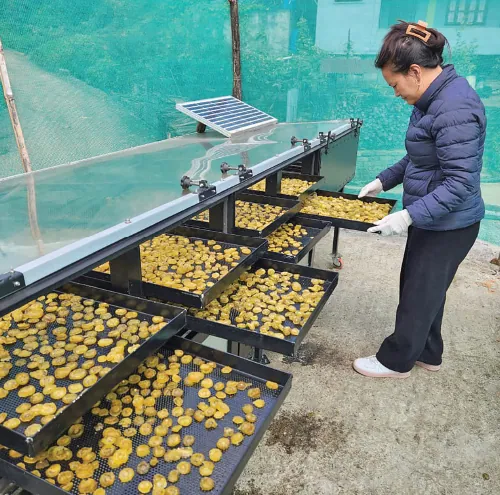
Solar-run flour mills and spice grinders have made entrepreneurs of some farmers. In Gujarat’s Halol district, for instance, farmers from 15 villages have come together to grow turmeric over 25 acres. After washing and cleaning, the spice is dried and ground using solar-powered machines and turned into a high-value powder.
“The smallholder value chain has received a big boost, not just in terms of crop diversity but also entrepreneurship because of these solar solutions,” says Mr Wajpe, “especially when a collective of farmers works together to produce the same commodity.”
Babudiya Vanraj, a smallholder farmer from Dalpura village in Gujarat’s Banaskantha district, transformed his farming system when he made two changes. First, he adopted a solar-powered irrigation system and, second, he became part of a production cluster.
Earlier, Mr Vanraj would grow fennel and wheat on his 1.6-acre plot using traditional cropping methods. But cultivation in summer was constrained due to unreliable and costly irrigation arrangements. He would have to buy water, which was expensive, the supply was irregular and needed intensive labour to be channelled into the fields.
Despite growing multiple crops, Mr Vanraj’s annual income remained low and vulnerable to water-related risks. “In open farming, we depend completely on the weather,” he says. “Many a time, crops get damaged due to unseasonal rains or pests, resulting in uncertainty with incomes. I wanted a way of farming where my efforts could give assured results.”
Mr Vanraj’s fortunes changed when he joined a collective that shares a 10-horsepower solar lift irrigation system, complemented by distribution pipelines, drip irrigation and mulching for individual plots. With timely and adequate water supply, he adopted a diversified, climate-resilient cropping pattern, growing vegetables such as tomato and brinjal alongside wheat and fennel.
Now Mr Vanraj can even add a summer cropping season, which has led to a considerable bump in his income. At the same time, the shift to solar-powered systems has contributed to improved water-use efficiency, reduced carbon emissions and better long-term resilience.
Shared costs
To foster ownership, farmers are expected to chip in with about 30% of the overall costs. When shared by multiple cultivators, overheads and management expenses are considerably reduced as well.
Decentralisation of energy and technology enables essential services to reach remote communities while handing them operational control, choice and improved income opportunities.
“Our DRE projects underscore the importance of community engagement, capacity building and knowledge sharing as fundamental pillars of sustainable development,” says Mr Singh. “We work closely with tribal villages to ensure their active participation at every stage of the programme, from planning and implementation to monitoring and evaluation.
“Together, we strive to create a future where renewable energy can bring positive change, uplift the lives of the marginalised communities and help pave the way to a more sustainable world.”