
The Tata Trusts’ enduring commitment to creating and supporting high-quality institutions is finding newer forms of expression

COVER STORY
Countering the cost
Enabling the urban poor to become more climate change-resilient is the objective of impactful initiatives seeded by the Tata Trusts and their partners in seven Indian states
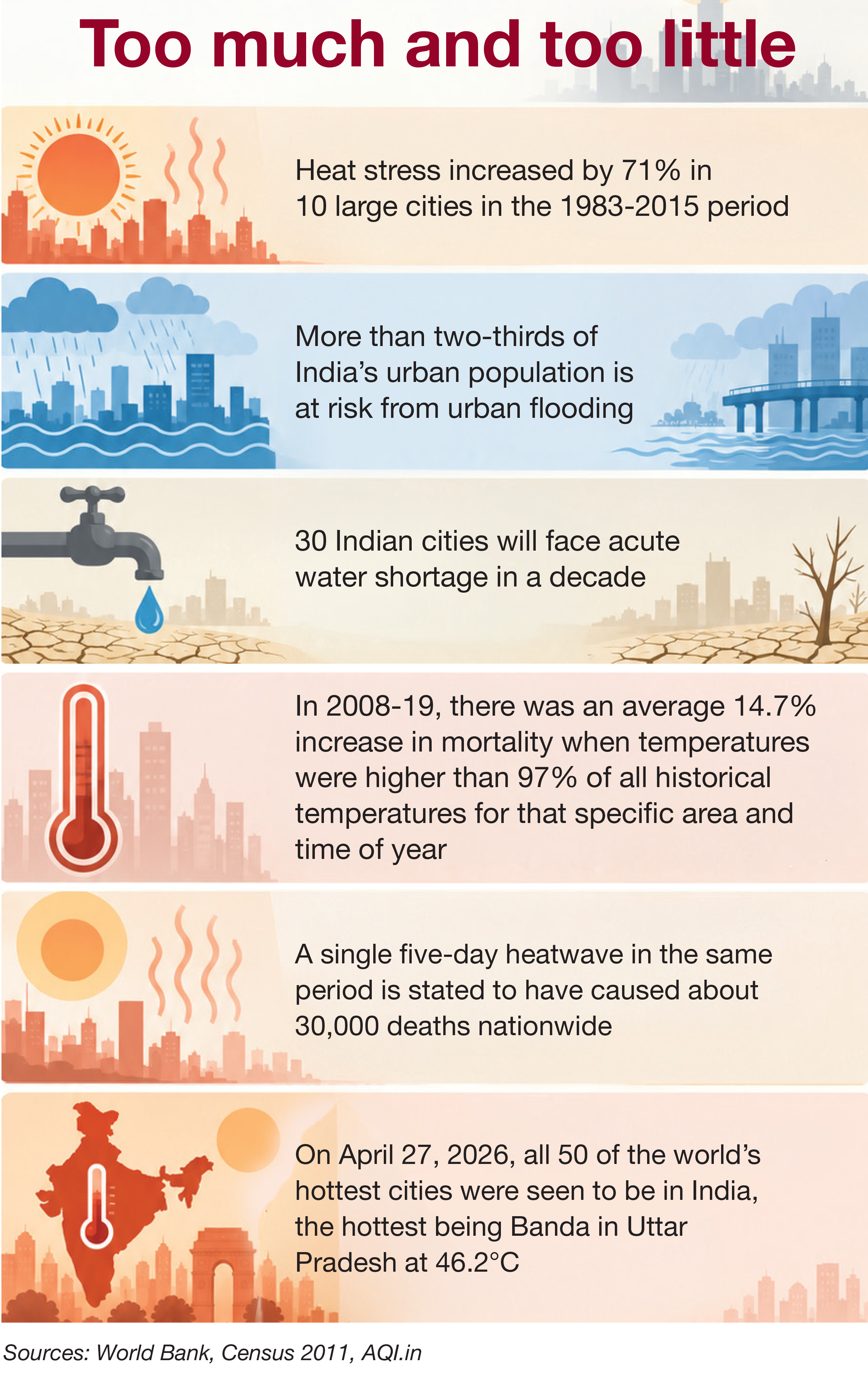
Rapid urbanisation, disappearing green cover and climate change are making urban India hotter by the day. This, in turn, is affecting people’s lives and livelihoods, increasing health risks, reducing productivity, disrupting businesses, and straining infrastructure.
A recently released World Bank report — titled ‘A Liveable Future: Tackling Extreme Heat for Jobs and Growth in South Asia’s Cities’ — warns that temperatures in the subcontinent’s urban centres will go up by 2-2.5°C every year.
According to the report, “The burden of extreme heat is also deeply unequal. It falls hardest on people whose homes offer little protection, whose work keeps them outdoors or in poorly cooled spaces, and whose access to reliable cooling, healthcare, and social protection is limited”.
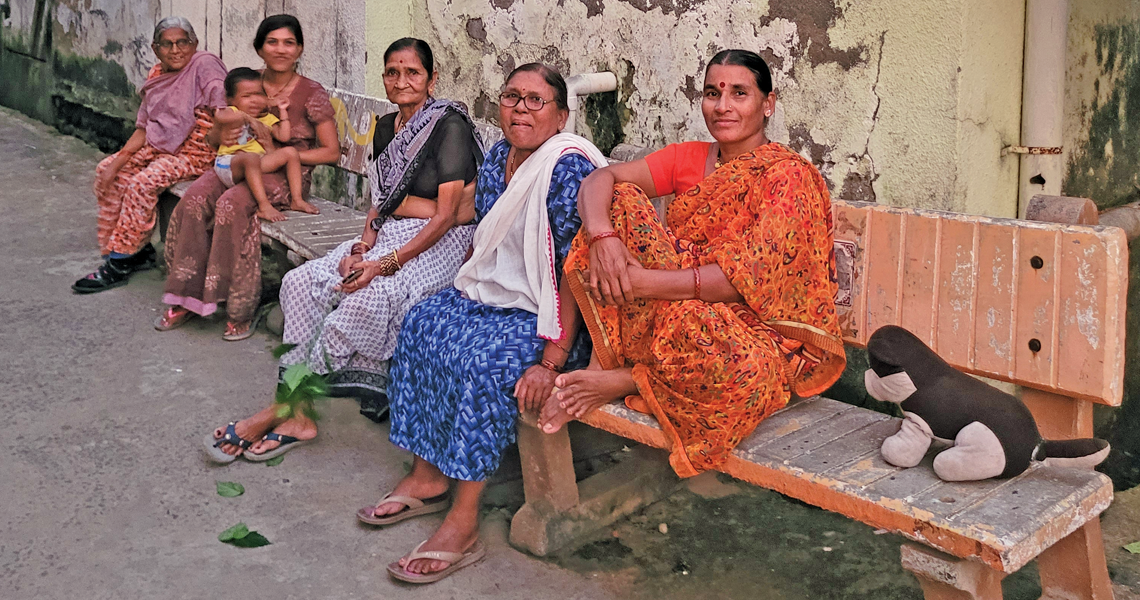
This is the story of millions of Indians living and working in informal settlements across the country, with no access to even the most basic facilities, who toil for hours in the open, where heat exposure is the most acute.
As the workforce in urban and semi-urban hubs expands with migration, towns and cities grow upward and outwards to accommodate the inflow. They end up not only encroaching on green spaces and undermining water bodies, but also using amenities and dwellings made from heat-trapping materials.
These materials absorb solar radiation during the day and release it at night, creating an urban heat island (UHI) effect on top of an already extreme baseline of hot weather.
In 2024, the Tata Trusts launched a programme to help the urban poor who have been rendered vulnerable by increasing heat and water scarcity, unplanned urbanisation and frequent flooding.
This four-year programme works with economically disadvantaged communities in 25 urban centres across seven states to make them more heat- and climate-resilient.
“Urban poverty in India is multidimensional, and it goes beyond the absence of income,” says Shikha Srivastava, who heads the urban poverty alleviation portfolio at the Tata Trusts. “The urban poor endure inadequate housing, limited access to water, sanitation and waste management problems, and exclusion from basic entitlements. These are compounded by challenges unique to urban settings: overcrowding, rising living costs and frequent disasters.”
Being engaged in the informal sector, the urban poor also don’t have access to the social protections accorded to those who work in the organised sector. As migrants, they often don’t have access to public food distribution systems, health schemes or other benefits provided by the government.
“We try to address two kinds of shocks that the urban poor face,” says Ms Srivastava. “External shocks, like one-off weather disasters, and regular seasonal events that impact their lives, such as heatwaves, flooding or periods of water stress. Since their work is usually out in the open and often involves long commutes and physical labour, they risk losing income, clientele and days of work to illness.
“We believe in strengthening households through interventions that address extreme weather events, and also by connecting them to government schemes. And we try to bring more women into the workforce by empowering them with care support and skilling opportunities.”
“This is critical since women are disproportionately affected by climate change,” says Sujata Menon, programme officer, urban poverty alleviation team, with the Trusts. “They are the ones who have to manage the family’s health, nutrition, water and eldercare needs.”
For instance, women may have to travel long distances to collect water and manage sanitation, tasks that are complicated by climate-induced water scarcities and contamination. In urban slums, their limited access to resources and educational opportunities leaves them ill-equipped to adapt.
With employment mainly in low-paying, informal jobs, women’s voices are often inevitably excluded from decision-making processes. The Trusts’ programmes try to mobilise them into self-help groups that can seek improvements in their living conditions from civic authorities.
According to the World Bank, the number of Indians residing in urban areas has increased sixfold over the last 60 years (1964-2024). Overcrowding is followed by the predictable collapse of infrastructure and services. Low-income households, already struggling with heat and water stress during the summers, now also have to contend with seasonal calamities like flooding during monsoons.
Helping hand for the needy
Some of the Tata Trusts’ urban poverty alleviation initiatives:
- Gujarat — Climate-smart urbanisation and setting pathways for inclusive and resilient urban growth in the district of Patan and Anjar
- Maharashtra — Integrated heat and flood mitigation with nature-based solutions for heat stress in Mira Bhayander, Chandrapur (in eastern Maharashtra) and in the districts of Akola, Nanded and Jalgaon; also, enhancing women’s livelihoods through an urban care ecosystem in Mumbai
- Bihar — Building climate resilience in small towns
- Uttar Pradesh — Strengthening urban planning systems in three small towns near the capital of Lucknow
- Odisha — Creating liveable habitats for the urban poor in partnership with 10 municipal corporations
As per the 2011 census, India has a total of 7,935 towns. Only 4,041 of these are ‘statutory towns’, governed by local bodies such as municipal corporations. The 3,894 ‘census towns’ and 1,456 ‘outgrowths’ associated with urban centres are governed as rural entities. And this is where rampant urbanisation is taking place.
“When people migrate from rural areas, they first come to the smallest town near their village, and that’s how these towns are growing,” says Ms Srivastava. “We need to help these towns set a roadmap while they are transitioning and evolving, so that they can grow in the right way.” In fact, the number of tier three and tier four towns is expected to be much more in the next census.
Homes ahoy
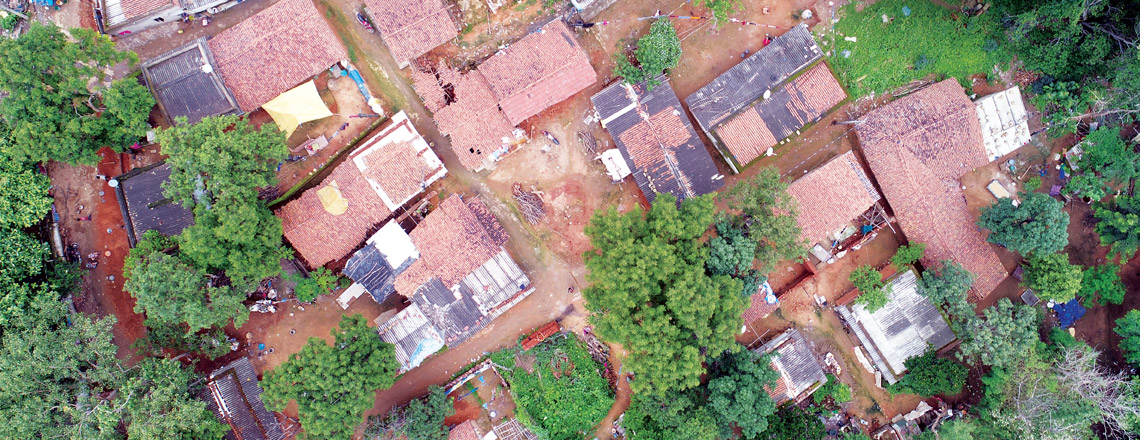
Drones are the unlikely allies in a programme that employs eye-in-the-sky technology to help provide land rights to 1 million slum dwellers in Odisha’s urban centres
READ MORE“Metros and bigger cities, with their large populations and well-entrenched infrastructure, offer much less opportunity for a do-over than a small town,” says Bharati Bhosale, senior programme manager with the Gujarat Mahila Housing Trust , a partner of the Trusts. “If systematic development is adopted, the effects of climate change will be more controlled and there will be fewer vulnerable groups in our cities.”
Whether it’s cooling solutions for homes and neighbourhoods, community empowerment against disasters or the inclusive development of new towns, the interconnectedness of various challenges demands integrated action. “You cannot focus on heat resilience and water scarcity without addressing poor waste management and loss of green cover,” says Ms Srivastava.
The government response to many of these challenges has, till now, been reactive: providing relief when there has been a need. “But these problems are no longer seasonal,” says Ms Srivastava. “These are long-term challenges that require integrated solutions. That’s what we will do, going forward.”
Related articles
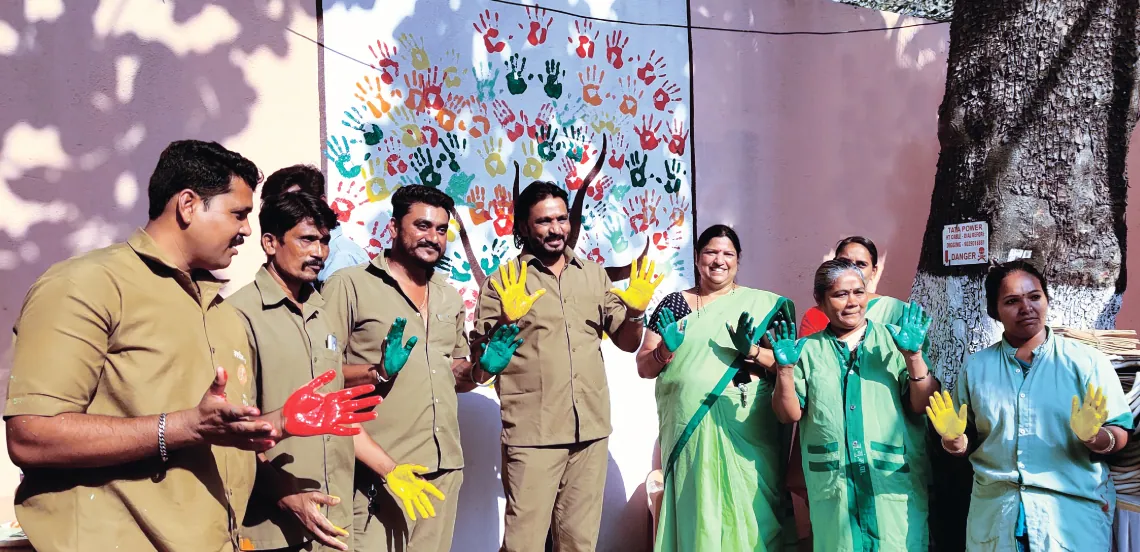
The well-being of Mumbai’s sanitation employees — an invisible workforce the city turns a blind eye to — is at the heart of Mission Garima

Mission Gaurav was a blessing for 1.37 million migrant families during the pandemic, but its true impact goes beyond the numbers and the immediate need

Bringing the children of migrant workers in Maharashtra's sugar belt back from the cold and into the formal education system has fetched encouraging results