Enabling rural communities to access shared natural resources is the objective of a remarkable endeavour that has reached 25 million people in 13 states

Centre Stage
Commons ground
A programme in Rajasthan has ushered in systemic change by restoring barren lands, empowering women and building collective stewardship
Thavaribai Garasiya, a tribal, is in her 50s, has eight children and is a grandmother. A resident of Kundlawas, a village of 180 households nestled beside a forest in Rajasthan’s Udaipur district, she would occasionally collect grass and tree seeds from the forest and trade them to a distant shop for petty amounts. Ms Garasiya was selling herself short.
Ms Garasiya’s knowledge of the forest was more valuable than she knew. With rain-fed farming and livestock being the chief livelihood sources in rural Rajasthan, native grasses play an important role in retaining groundwater, preventing soil erosion and providing fodder, besides helping maintain biodiversity and sequester carbon.
Three years ago, Ms Garasiya, along with a group of women from Kundlawas, began converting their traditional knowledge of local flora and fauna into a regular source of livelihood. That happened after they joined the ‘native grass seeds collection initiative’ based in Rajasthan’s Aravalli Range.
The initiative was steered by village communities from the Gogunda, Sayra, Jhadol and Phalasia subdivisions of Udaipur, with technical assistance from the Foundation for Ecological Security (FES), a nonprofit based in Anand (Gujarat) that is supported by the Tata Trusts.
The seeds collected are used to regenerate local pastures and to set up seed banks that can be tapped by other villages. Ms Garasiya has been able to use her steady earnings from selling grass seeds to start a plant nursery. “I am not only better off financially, but I have learned new skills,” she says. “This initiative has opened new doors for me.”
Click to enlarge
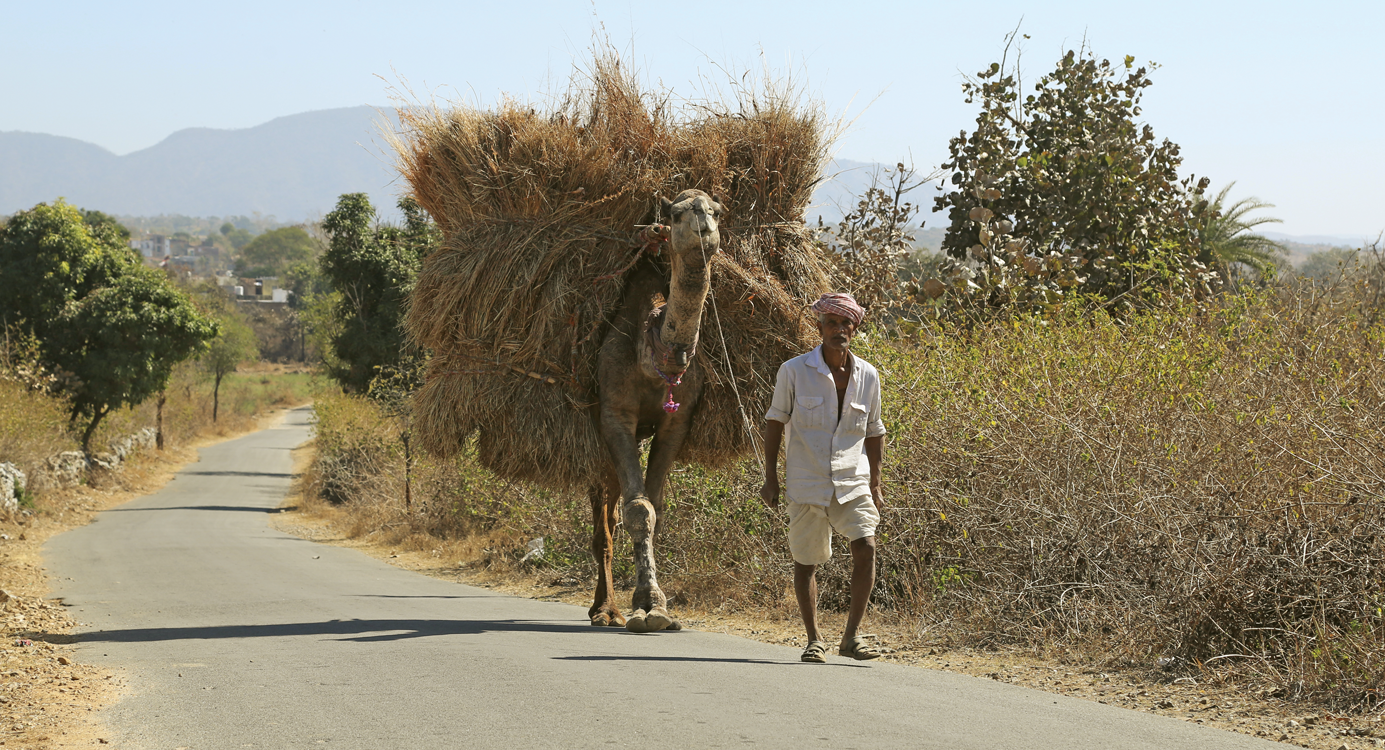
Fodder being transported on camel back near Kanji ka Gura village in Udaipur district
The grass seeds collection initiative is doing much more than empowering local women through livelihood opportunities. It is the foundation on which Ms Garasiya’s community is able to build ecological security, mainly by restoring grazing grounds through the replanting of local species.
The initiative puts stewardship of commons — a term used to describe shared natural and cultural resources — back in the hands of village communities. Crucially, it has engendered systemic policy change.
Launched in 2022-23 and covering 28 villages in Udaipur district, the initiative has led to the collection and storage of tens of thousands of kilos of seeds. The programme is an example of why preserving commons is important. It seeks to restore natural resources like forests, pastures and water bodies that have traditionally been held in ‘common ownership’ by local communities.
These resources, which are an important source of livelihoods, ecological security and community well-being, have declined steadily over time due to various factors.
To counter the degradation of commons, FES has been backing community institutions for more than two decades in some 70,000 villages across India. Rajasthan has 1.6 million hectares of commons — comprising around 30% of the land in each village — chiefly charagahs or shyamlat pastures, as they are locally called.
“This is a mainly grassland region and these grasslands are important to sustain village economies,” says Vinod Paliwal, district lead in Udaipur for FES.
The widespread degradation of the Aravallis in recent years has affected the grasslands as well. Native grasses like seran (Sehima nervosum) andkali lanp (Heteropogon contortus) have declined owing to long-term and unsustainable use, widespread invasion of non-native species like lantana, and natural factors like soil erosion and water scarcity.
Click to enlarge
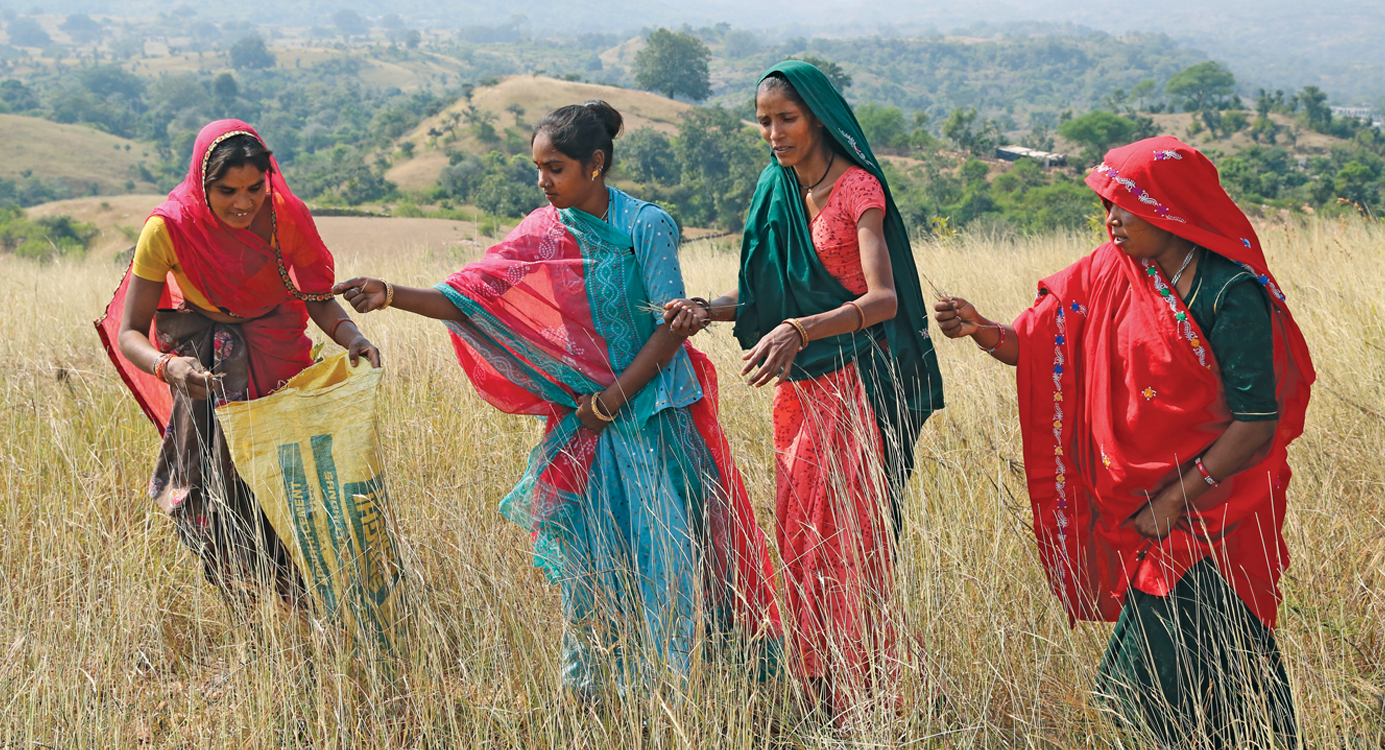
A group of women — they were trained for the task — collect grass seeds in Reechwara village in Udaipur district
“In landscape everything is connected and grasslands is one of the important parts for the holistic restoration of the larger landscape,” says Subrata Singh, executive director at FES. Supporting the interlinkages between grasslands, agriculture and livestock is crucial in the Rajasthan context.
Sourcing the seeds is an important aspect of the initiative. According to Mr Paliwal, around 5-6 kg of seeds are required to replant one hectare of grassland. However, two premier seed institutes — one in Jodhpur, Rajasthan, and another in Jhansi, Madhya Pradesh — had only around 500kg of grass seeds, just enough for a few pilot projects. Seeds available in local markets were of poor quality.
“When we started work here, native grass seeds, which are a primary requirement for restoring degraded commons land, were not available even with private vendors,” says Mr Paliwal.
These factors led to discussions about a community-based native grass seed collection and regeneration initiative in the Aravalli hills. The organisation spent nearly three years mobilising the community, strengthening their collective action and building linkages with local civic bodies, governments, nonprofits and market participants before launching the initiative.

Storing is saving
Water conservation is at the core of two projects that are benefitting farmers in four districts of Maharashtra
READ MOREFES facilitates the establishment of village institutions (VIs) by community members in villages and habitats, who set their own bylaws for ecological restoration. “Securing tenure of the commons is vital since it incentivises the communities to protect and invest for the long term in commons governance and restoration,” explains Mr Singh.
The FES team first initiated a dialogue with villages in the Gogunda, Sayra, Jhadol and Phalasia subdivisions of Udaipur district. “There was demand for grass seeds but it took time to convince the villagers to join the initiative,” recounts Mr Paliwal.
With support from FES, communities, especially women, mapped healthy commons to identify where native grass seeds could be collected, and degraded ones for restoration efforts.
“Initially, they were extremely sceptical about whether a market exists for native grass seeds. We convinced them to give it a try,” says Asha Cholaviya, deputy project officer at FES who works with these communities in Sayra, which includes Kundlawas. “We had to assure the locals they would get compensated at a rate equivalent to what the forest department offered.”
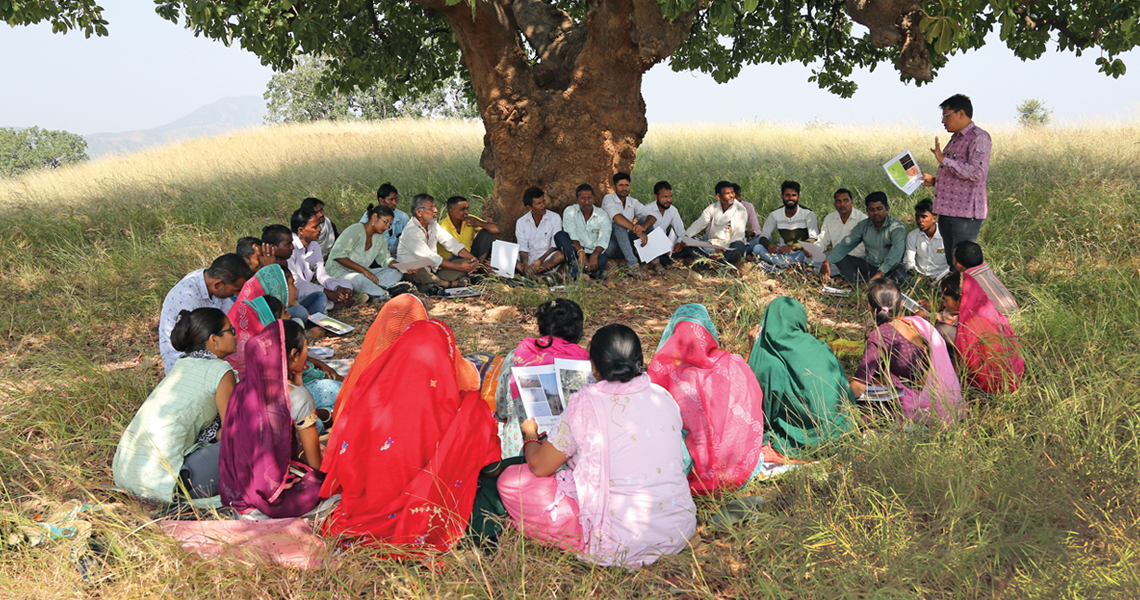
Another challenge was that many women did not know how to collect, clean and store the grass seeds. Extensive training programmes and field demonstrations, including publishing pictorial pamphlets and calendars on different seed varieties and their flowering months, helped the communities to take this ahead.
“When we first started collecting seeds, it was very difficult as the menfolk would mock us and discourage us, saying no one had sold seeds here previously,” says Indirabai Garasiya, now an active seed collector. Native grass seeds like kali lanp are thorny, so the women devised a protective clothing cover.
At a broader level, a need was felt to create an ecosystem for the holistic restoration of the landscape. This led to the formation of federations comprising VIs, local civic bodies, government representatives from the agriculture, irrigation and forest departments, other nonprofits, and researchers. “Anyone interested in the development of the landscape can contribute, but the community and community institutions have supremacy,” adds Mr Singh.
The initiative is now running smoothly. In Kundlawas, for instance, around 30 women collect seeds in two cycles, then clean and store them. The panchayat (village council) oversees the collection and sale of seeds, using them partially for local regeneration and selling the remaining to other panchayats, nonprofits and the state forest department.
In the first year, the initiative saw 2,500kg of seeds being collected. Then the momentum picked up. “After seeing the women earn money, more people started asking if they could join in,” says Mr Paliwal.
Initially, the initiative was supported by FES to buy the seeds. As the engagement grew, linkages were established between the community and zilla parishads (district councils), nonprofits and the forest department, all of whom needed the seeds.
Seed collection in Udaipur district increased to 8,000kg in 2023-24 and further to 11,000kg by 2024-25. More than 100 VIs, some 50 self-help groups and two federations are engaged in it today, covering 45,571 acres of commons and 7,223 households. Such success has inspired communities in other districts, Rajsamand and Bhilwara among them, to start grass seed collection initiatives.
The two brightest outcomes of the programme are the systemic change and the empowerment of women it has fostered.
The consistent engagements of communities and FES with local and state bodies led to the establishment of a multilateral task force by the Rajasthan government on commons development. In 2024-25, the government allocated ₹10 million to establish 150 seed banks across the state.
“Normally, seed banks are related to pulses and food crops,” explains Mr Paliwal. “This is the first government initiative for a vegetation seed bank that collects local grass and tree seeds and uses them to restore commons.”
The 150 seed banks are up and running, including 30 in Udaipur district. Each seed bank is managed by two seed experts, who work under the direction of the local panchayat, and monitored by the state’s watershed department.
In 2025, the Rajasthan government allocated ₹50,000 to each bank to cover training programmes and salaries of seed experts like Rekhabai Garasiya, who manages the Kundlawas seed bank. Her work includes maintaining records, weighing and storing the seeds, and monitoring for spoilage.
“I received four months’ training, during which time I learned about different grasses and seed collection,” says Ms Rekhabai. Adds Indirabai Garasiya, another seed expert: “Earlier I had to ask my husband for money. Now I earn my own and am able to save.”
Financial independence is not the only gain for these women. They get to visit other villages and participate in workshops and the like. “Where once they used to be hesitant, the women now handle everything on their own,” says Ms Cholaviya. “They want to learn new things and are constantly thinking about how to enhance their work and implement their ideas.”
The women also take pride that their work helps the local ecology. The Kundlawas seed bank is one of the 150 seed banks established and serves eight neighbouring villages and has helped restore once-barren commons in the region. “This is a classic case of bottom-up impact,” says Mr Singh, “of communities coming together to bring about systemic change.”
Related articles

The restoration of a once-parched Himalayan lake has been a blessing for the community and the ecosystem

Community-led springshed programmes with women at the helm are restoring water security in scores of villages in Himachal Pradesh and Uttarakhand

Springshed development projects in Nagaland and Mizoram are enabling villagers to get their fill of water and improve their daily lives