Enabling rural communities to access shared natural resources is the objective of a remarkable endeavour that has reached 25 million people in 13 states

CENTRE STAGE
‘Spaces of belonging, identity and dignity’
‘Commons’ is a term that refers to natural, cultural and other shared resources that belong to communities rather than individuals or the government. Among these shared resources are rivers and oceans, forests and fisheries, folk art and community spaces, and they are often critical sources of livelihoods, ecological health and overall well-being.
Foundation for Ecological Security (FES), a nonprofit based in Anand, Gujarat, and established in 2001, has championed the commons cause by restoring degraded ecosystems and conserving land, forest and water resources through collective action. FES, which is supported by the Tata Trusts in its collaborative ‘promise of commons’ initiative, has touched more than 45 million lives while restoring about 18 million acres of land across India.
Subrata Singh, executive director at FES, talks about how the organisation is seeding and nurturing systemic changes on the ground. Excerpts from the interview:
Why is it imperative to restore India’s commons?
Commons are among India’s most valuable yet least recognised national assets. They are much more than forests, pastures or water bodies; they are shared resources shaped by generations of community life, where people and nature have coexisted and evolved together for centuries.
Commons are not only a source of livelihoods and ecological health but also spaces for the poor, spaces of belonging, identity and dignity where communities can participate in decision-making and shape the future of their villages.
India has nearly 205 million acres of commons that support the lives and livelihoods of more than 350 million rural people. The ecosystem services provided by these commons are estimated to have an average economic value of ₹6.6 trillion, the equivalent of around 3.6% of India’s GDP. Yet this contribution remains largely unaccounted for. Forests are particularly critical for tribal communities and their livelihoods, with 40–60% of their annual income coming from forest produce.
These shared resources have steadily declined due to elite capture, land diversion — such as for industrial projects — and the erosion of customary institutions. The consequences of this decline are visible across rural India.
Degraded commons mean poor water security, poorer soils, reduced biodiversity, greater vulnerability to climate extremes and shrinking livelihood opportunities, particularly for women and other marginalised groups. Healthy commons offer one of India’s most powerful pathways to address the interconnected challenges of poverty, equity and climate change.
What does it take to restore these commons?
Restoring commons is not simply about planting trees or constructing water-harvesting structures. It is equally about restoring the voice and agency of local communities, as also village institutions, community rights and ecological understanding.
The challenges are largely systemic. Commons often fall across multiple government departments, resulting in fragmented responsibilities. Public investments are not always aligned with community priorities, while weak accountability constrains the implementation of policies. Underlying these challenges is the persistent perception that communities are incapable of governing their own commons.
The ‘promise of commons’ programme was designed precisely to address these barriers. It strengthens collaboration among communities, governments, civil society organisations, researchers and other stakeholders through multi-actor platforms and coalitions. It invests in capacity building, digital public infrastructure, evidence generation and narrative building while working closely with governments to strengthen policies, programme architectures and implementation systems.
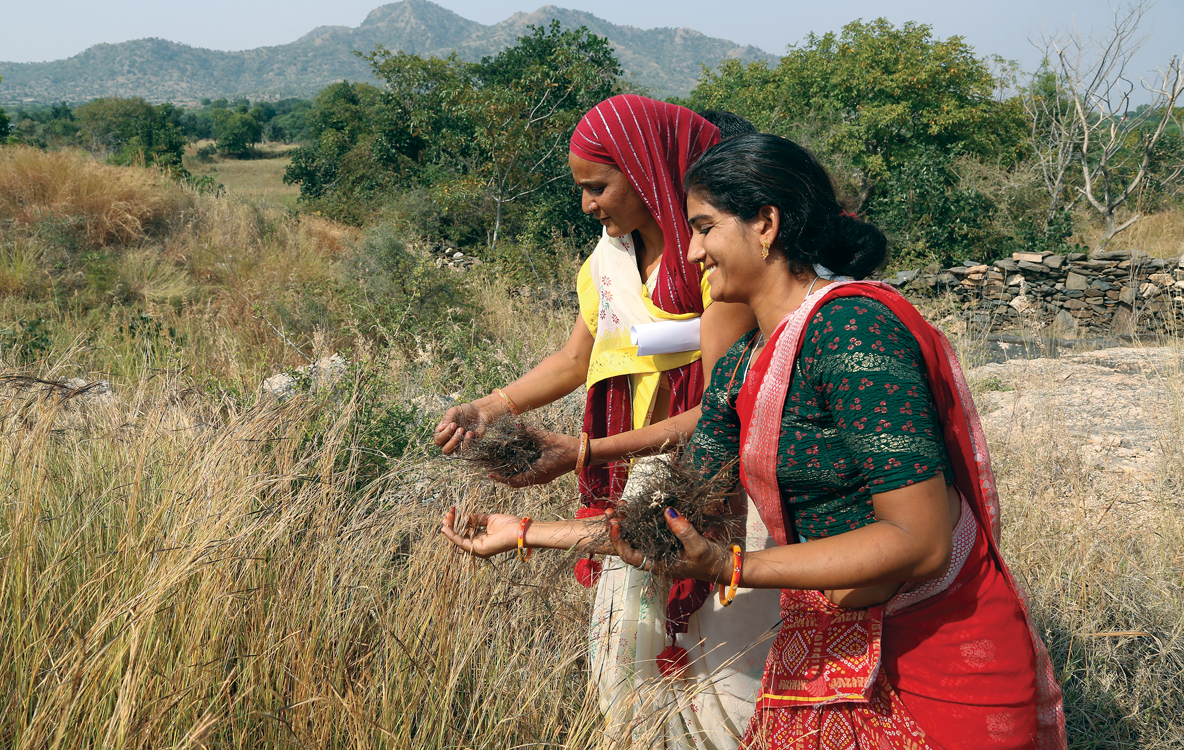
The seed-collection initiative in Rajasthan is an example. The community demonstrated the power of collective action and local stewardship by collecting and reviving native grass species, making seed balls and using them for the restoration of village commons.
This evidence influenced the state government to scale the programme to a few more districts, eventually leading to a dedicated state programme, backed by institutional and capacity-building mechanisms, financial resources and implementation support for the restoration of grasslands.

Click to enlarge
Women collecting grass seeds from pasture land in Solankiyon ka Gurha village in Rajasthan’s Rajsamand district
How is FES strengthening the links between agriculture, livestock and commons?
Agriculture, livestock and commons are inseparable components of India’s rural production systems. They have co-evolved over centuries as an integrated socioecological system, with each sustaining and reinforcing the other. Promise of commons adopts a landscape approach rather than treating forests, farms, grazing lands and water bodies as separate entities.
We facilitate the formation of multi-actor platforms to collectively address landscape issues, ensuring coordination and convergence. Communities are supported to understand their landscapes, prepare participatory conservation plans and strengthen institutions at various levels to collectively govern their shared resources.
When generational knowledge and an appreciation of the interlinkages involved are combined with scientific data and tools, communities are able to make informed decisions that enable commons, agriculture and livestock to thrive together. We are seeing encouraging examples of this, like in Rajasthan, where restored village pastures have strengthened agriculture and livestock-based livelihoods.
What changes has promise of commons brought about?
One of the most encouraging changes is that commons are gradually moving from the margins to the mainstream of public discourse and policy. Increasingly, they are being recognised as critical to addressing the interconnected challenges of climate change, social justice and equity, and rural poverty.
One significant development is the recommendation in the latest Economic Survey of India to recognise commons as a distinct land category. This will pave the way for systematic mapping and recording of commons and, eventually, their restoration.

Storing is saving
Water conservation is at the core of two projects that are benefitting farmers in four districts of Maharashtra
READ MOREThe institutional architecture for the governance of commons has also evolved in states such as Rajasthan, Karnataka and Andhra Pradesh. Commons are finding place in state government programmes and guidelines, and there is a higher allocation of financial resources and capacity-building architecture. There’s also a recognition of the need for data-enabled decision-making systems in the governance and restoration of commons.
Collaboration between community institutions, nonprofits, academic and research institutions, and the media has also evolved, both at the landscape and regional levels, to collectively work on commons and interconnected issues such as agriculture, livestock, wildlife and nutrients. Moreover, academic institutions have integrated, specialised courses and curriculum modules on commons.
Click to enlarge
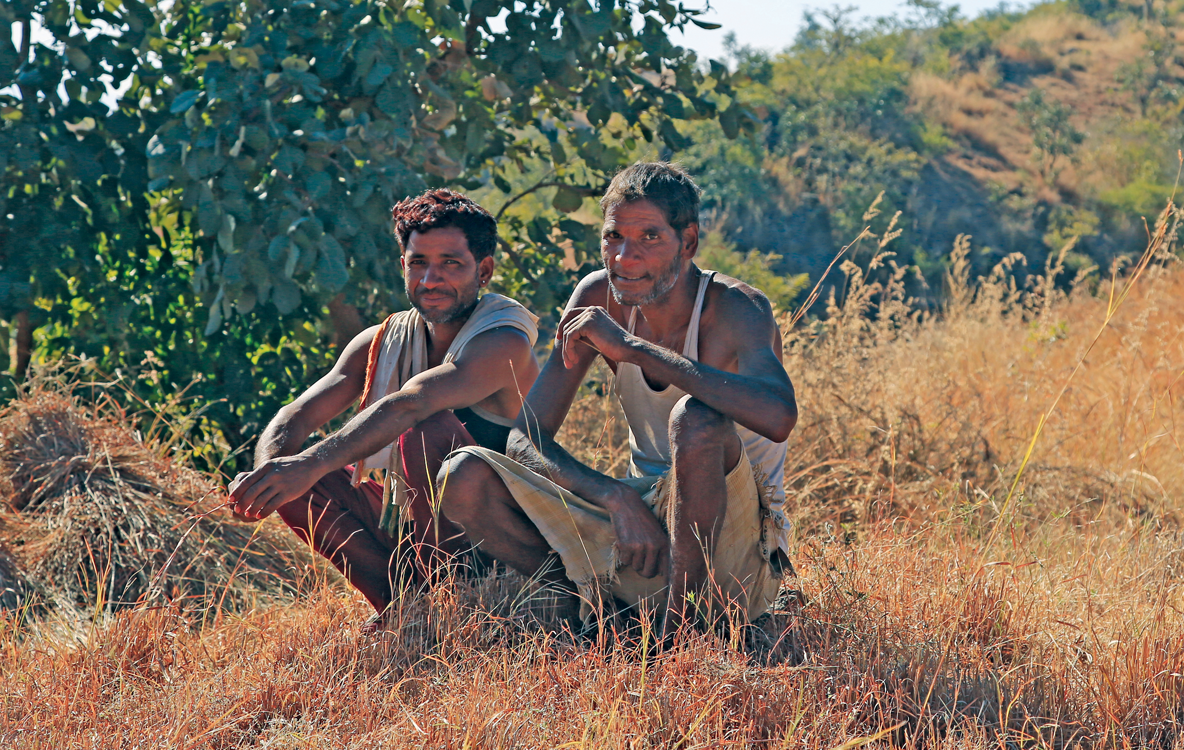
Two villagers from Khakhrakhuna in Udaipur district with their harvested grass
On the ground, communities across different regions are regaining voice, agency and power as custodians of commons. They are securing rights and restoring their commons, strengthening local institutions, evolving locally agreed rules, and preparing and implementing restoration plans. These efforts are translating into healthier ecosystems, and women are increasingly emerging as leaders in these processes.
Perhaps the most important change is in the mindset. Communities are increasingly being recognised not as beneficiaries of commons conservation but as their primary stewards. Gram panchayats [village councils] and local institutions are seen not only as governing bodies but also as custodians of commons.
Since everything is interconnected, the real impact lies in how these changes at multiple levels reinforce one another to create lasting and system-level impact.