For the sake of water
The ecosystem approach to water management that the Tata Trusts
have adopted enables village communities to protect, conserve and secure the most valuable of nature’s resources
By Labonita Ghosh
Water is our planet’s most precious resource, yet only a tiny fraction of it is accessible and safe for human use. Much of the blame for this rests with our collective inability to manage existing sources of water wisely. Throw in factors such as climate change, population explosion and inadequate infrastructure and this crisis begins to seem like a catastrophe in the making.
UNICEF estimates that about 700 million people could be displaced due to acute water scarcities by 2030. This has critical implications for global health, the environment and the economies of affected countries.
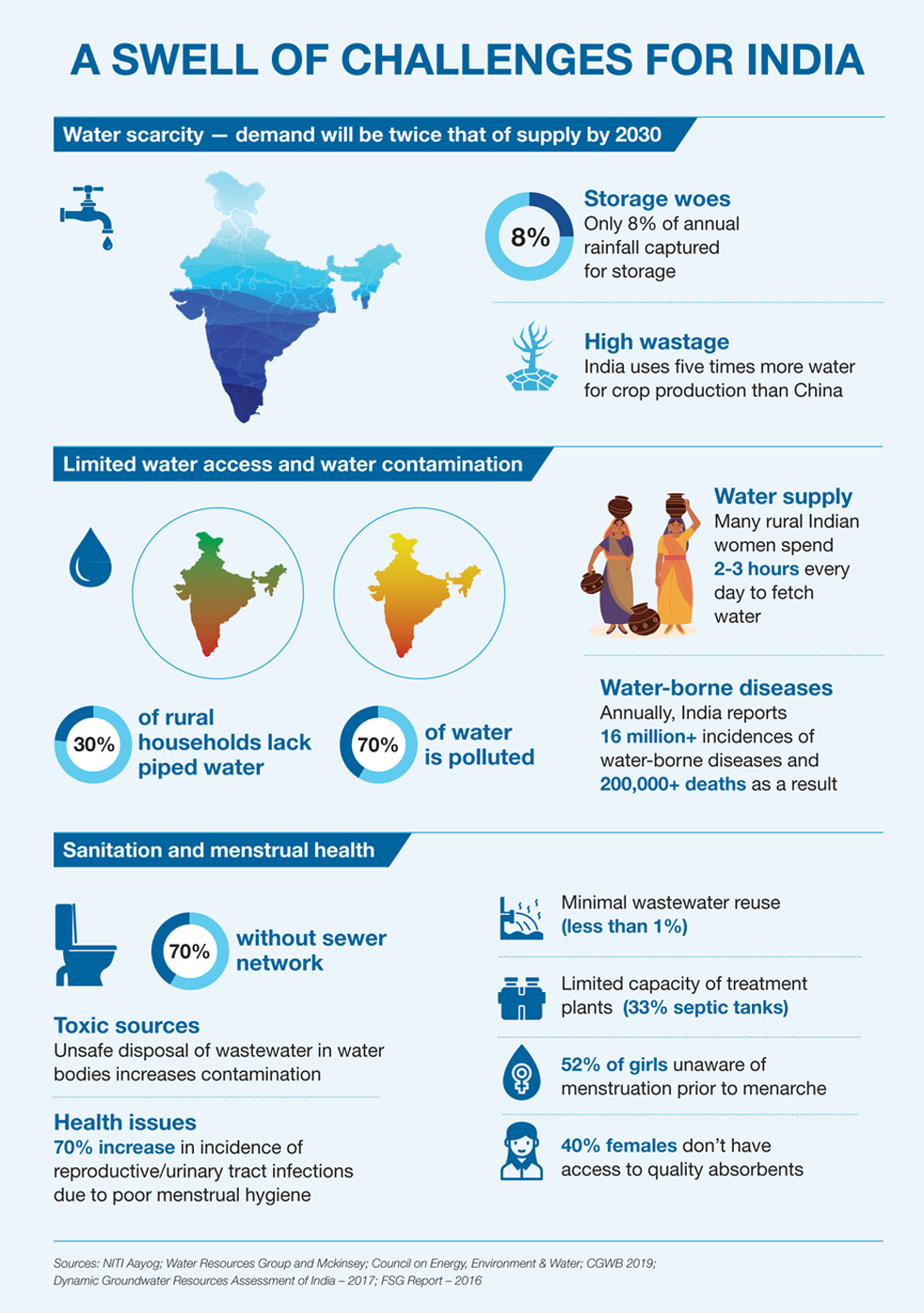
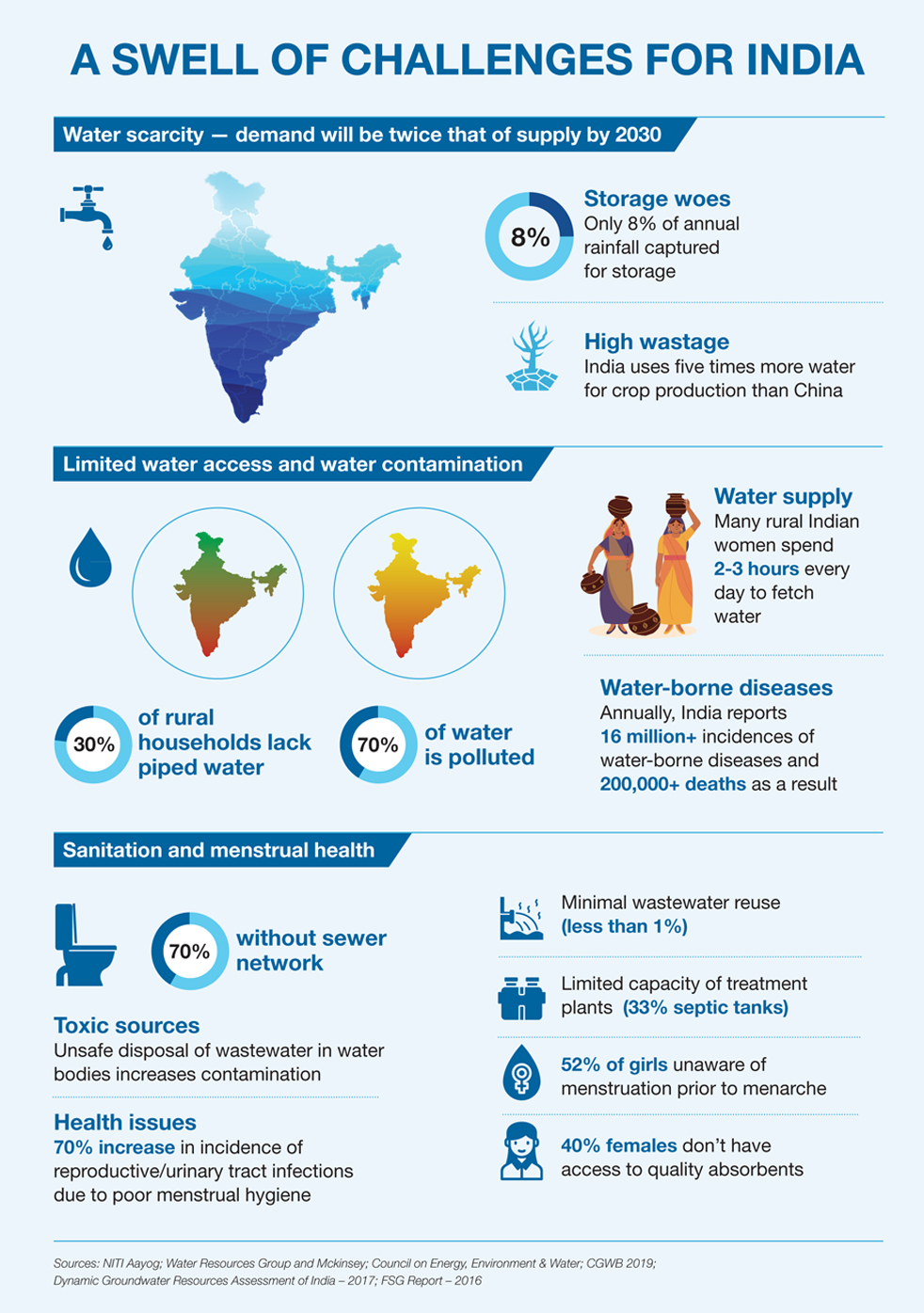
India has its own water woes. The estimated per capita water availability in the country is currently 1,500 cubic metres. By 2030, India’s water demand is projected to be twice the available supply. That means we have an emergency on our hands.
A NITI Aayog report states that nearly 600 million people are facing high-to-extreme water stress in India. And the situation will only get worse given the continuing depletion of groundwater levels across the country.
The Tata Trusts have taken an ecosystem approach towards water management to help India cope with the crisis. The Tata Trusts’ water, sanitation, and hygiene (WaSH) programme — which flows from a strategic framework called ‘One Water’ — takes a wide-angle view with its endeavours to protect, conserve and secure water for vulnerable rural communities across the country.
The programme has extended its reach to more than 320,000 households across 42 districts in 13 states, improving the lives of nearly 1.5 million people — particularly those in underserved and marginalised communities.
The Trusts’ approach to WaSH is designed to address systemic issues through integrated, inclusive and scalable models. The plan pursues a decentralised, demand-responsive and community-managed approach to achieve goals. It also aims to promote innovative technological and economically sustainable solutions. Keeping rural communities at its heart, the programme encompasses three broad categories: water security, water access and quality, and sanitation and hygiene.
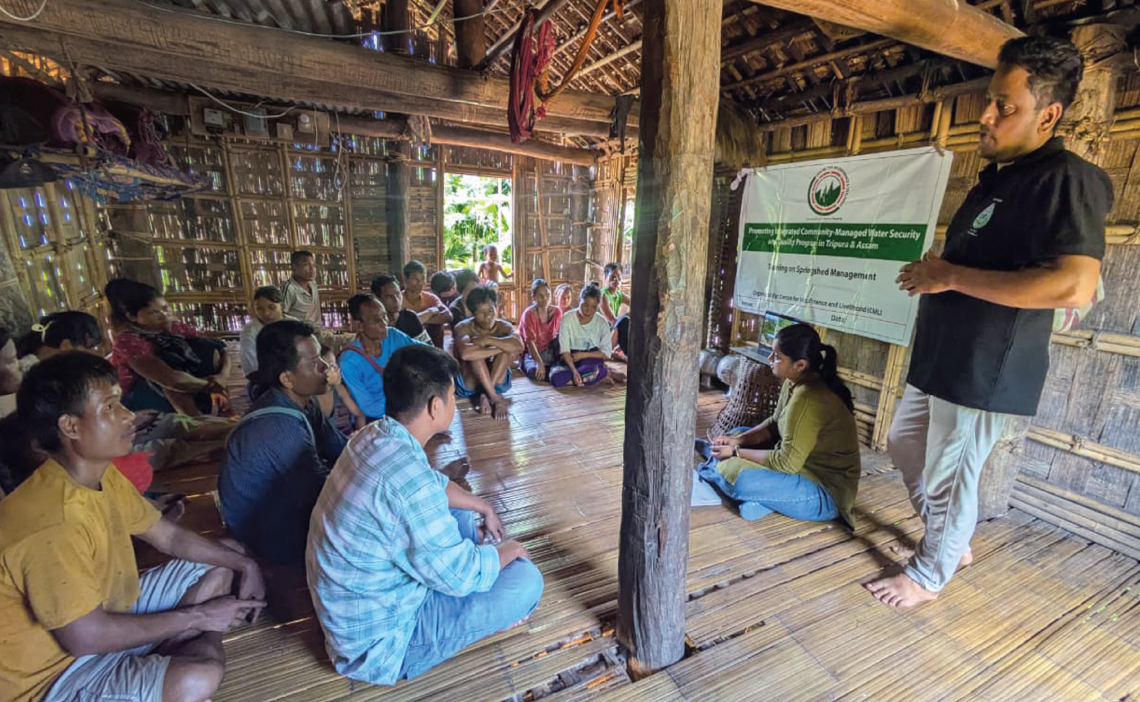
The Trusts’ water interventions have resulted in the creation of water-secure communities in different parts of India. In the six states of the Indian Himalayan Region, villagers have taken charge of a springshed programme that tries to rejuvenate springs. In the water-stressed states of Rajasthan, Andhra Pradesh and Karnataka, local communities are driving participatory groundwater management initiatives, taking collective responsibility for protecting and sustaining their water resources.
Contamination combat
In coastal Gujarat, efforts are centred on combating seawater ingress and reducing salinity in drinking water sources, while in Assam, technology-driven solutions are being deployed to tackle arsenic contamination and ensure safer access to potable water.
Efforts in sanitation and hygiene have led to nature-based solutions for greywater treatment in Andhra Pradesh and a robotic system to improve the lives of conservancy workers in Maharashtra.
The social behaviour change campaign, operational in seven states, tackles the deep-rooted myths and taboos surrounding menstruation, encourages women and adolescent girls to adopt healthier practices, and frames menstrual health as a shared responsibility and an essential societal agenda.
In our cover package, we highlight three of these initiatives: a water contamination testing and treatment programme in the arsenic and fluoride-affected states of Assam and Tripura; a greywater treatment intervention in Andhra Pradesh; and a menstrual health management initiative in Jharkhand.
Turning the tide
The Tata Trusts’ WaSH programme has…
- Benefitted 320,000+ households
- Covers 42 districts across 13 Indian states
- Touched 1.5 million+ people, mostly from underserved communities
- Strengthened capacity of more than 2,000 villages and water sanitation committees
- Impacted 150,000 women and girls through menstrual health management projects