Protecting the precious
Tackling deadly contaminants and rejuvenating natural sources — that’s the two-pronged thrust of the water initiatives in Assam and Tripura
Nobody liked to mention the word ‘arsenic’ in Balitara village in Assam’s Nalbari district. People here would speak in hushed tones about a neighbour who had a mysterious illness, or another who struggled with stomach problems, or a third who had raindrop-like markings on his hands. They would worry about their family’s health but never actually come out and discuss how arsenic in their sources of water was slowly poisoning them.
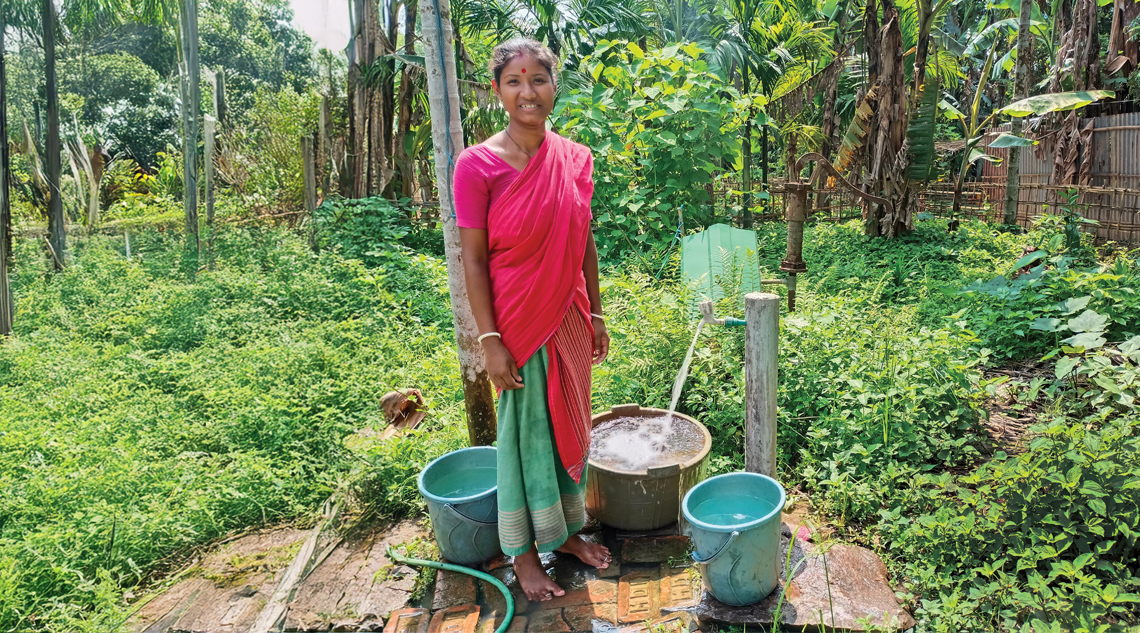
In Balitara, there were reminders of the toxic everywhere: 76 of the 80 tubewells in the village had been painted a dark red — following a government survey conducted decades ago — indicating that the water was not safe to drink.
This was the situation before 2017, when the Tata Trusts and their associate organisation, Centre for Microfinance and Livelihood (CML), embarked on a programme to tackle arsenic and fluoride contamination in Nalbari and Kamrup districts in Assam. This was extended in 2021 to negate iron contamination in the Dhalai district of Tripura.
CML’s ‘integrated community-managed water security and quality management programme’ aims to ensure the long-term viability and sustainability of local water sources, while also trying to rid them of microbiological and chemical contaminants (such as arsenic). The idea is to provide safe and adequate drinking water to communities in the project areas of the two Northeast states.
Arsenic contamination is responsible for a range of conditions, from skin problems (arsenicosis) and neurological issues to various types of cancers. “We collected water samples from Nalbari and sent them for testing,” says Rituparno Chanda, program coordinator at CML. “The arsenic level was found to be 40 or 50 parts per billion (PPB), way beyond the permissible level of 10 PPB.”
Outstanding outcomes
- 5,000 — Number of households in Assam (water contamination mitigation) and Tripura (water security interventions) that have benefited
- 230 — Total number of villages covered in both states
- 50% — Reduction in water-borne diseases
- 30% — Average increase of water in treated springs
Arsenic in the rice
Studies by the Assam Agricultural University confirmed that arsenic was also being ingested through the staple, rice, because contaminated water was being used for farming and flooding paddy fields. Awareness about this problem increased when the area reported a rash of gall bladder cancer cases, and further with the setting up of a hospital at Nalbari by the Tata Trusts’ Assam Cancer Care Foundation (this serves as a satellite centre to the primary hospital in Guwahati).
Initially left to themselves, residents were desperate for solutions. In Majibari village in Assam, people would buy bottled water for drinking and cooking. “There are some 300 households here and about 70% of them purchased bottled drinking water, spending ₹4,000-5,000 every year,” says Mr Chanda. “When your annual income is ₹50,000 on average, this creates a big dent in your household budget.”
If Nalbari was struggling with arsenic, in Kamrup district fluoride contamination was the scourge. Fluoride in the water can cause, among other things, skeletal sclerosis (an abnormal hardening of the bones) and dental fluorosis (a tooth enamel defect).
“Nutrition plays a key role in fluoride mitigation,” says Mr Chanda. “You can increase the intake of calcium to offset the excess amount of fluoride entering your body in different ways. We work with the District Health Mission and frontline workers to add more calcium and antioxidant-rich vegetables in the meals provided in Kamrup’s schools.” Water filtration systems have also been set up in the schools to treat fluoride contamination.
Apart from arsenic, fluoride and iron, bacteriological pollutants are an additional concern in both Assam and Tripura, where a substantial portion of the drinking water is from sub-surface sources. Contaminated water is a major cause of diarrhoea, the third leading cause of childhood mortality in India. And, as per the 2019 National Health Profile, Assam reported the highest number of deaths due to diarrhoea in the country.
The Tata Trusts and CML began in 2017 by installing arsenic- and fluoride-treatment units in 10 villages in Assam, an initiative that benefits more than 7,000 households today. These units, which employ the ‘inline chlorination’ (ILC) system, complement the existing infrastructure installed through the central government’s Jal Jeevan Mission, an initiative that the Trusts contribute to at the state and national levels.
The units improve the quality of water and make it safe for drinking. Residents can purchase this purified water at a subsidised price of ₹7 per 20 litres, a fraction of what they had to pay earlier when buying bottled water.
To address the issue of bacteriological contamination, CML has tied up with the Indian Institute of Technology, Guwahati (IIT-G), to treat the local water through the ILC process. IIT-G has helped CML scale up the technology to cover 35 districts in Assam.
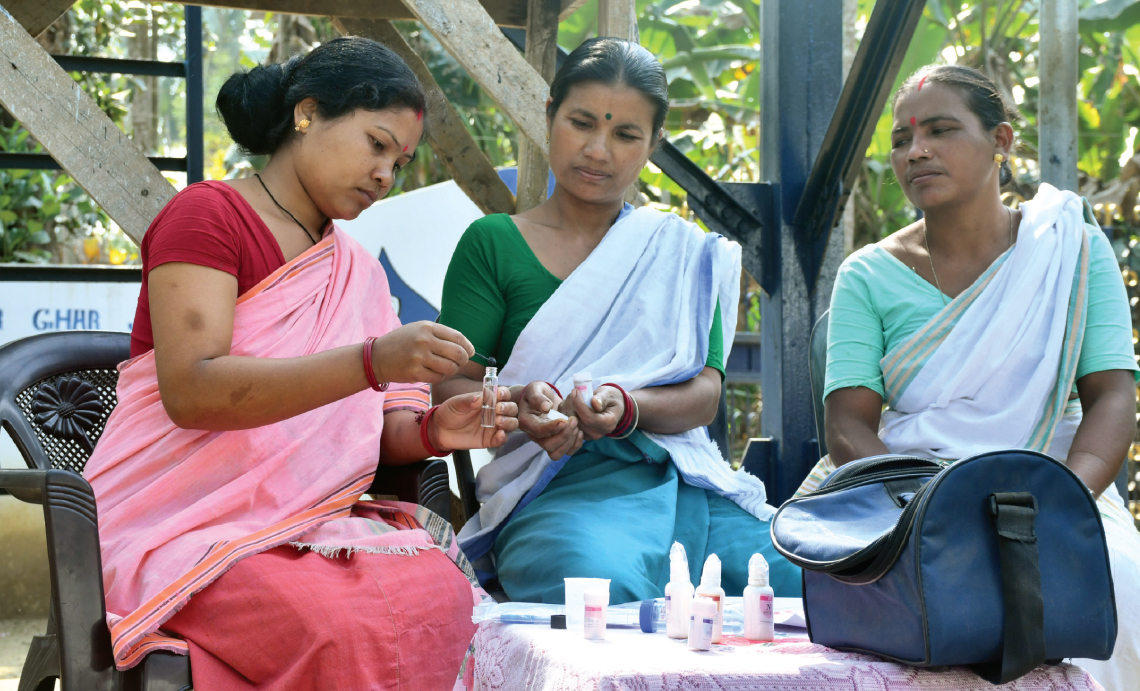
It’s not enough to set up systems; they need to be run and maintained as well. CML has trained 2,200-plus residents as ‘water user committee’ (WUC) members, teaching them how to periodically test water quality and also create awareness in the community about the importance of safe drinking water and its impact on health.
About 150 village-level water committees have been formed for the sustainable operation and maintenance of the drinking water supply schemes and for deciding the water tariff. Says Minati Devi, a member of the Balitara WUC: “We now know how water can carry diseases. We are drinking safe water and we feel confident that the system will keep working because we are taking care of it ourselves.”
In Tripura, while iron contamination is an issue, a bigger problem in the elevated reaches of the state is water availability. Government-supplied water often doesn’t reach the intended recipients due to hilly terrains and undulating slopes. Identification, care and management of sustainable sources becomes, in the context, an imperative, alongside restoring and replenishing existing outlets.
“In the hilly terrain of Tripura, springs are the only pristine source of water,” says P Kasee Sreenivas, senior programme manager with the water, sanitation and hygiene (WaSH) vertical of the Tata Trusts. “But, over the years, many of these have dried up and need to be revived.”
That starts with creating catchment areas along the path of the spring. “Many of these springs are located deep in reserved forest areas,” says Mr Chanda. “To rejuvenate them we have to find nature-based solutions such as brushwood check dams, percolation tanks or recharge ponds.”
This ‘springshed management programme’ covers eight subdistricts of the Dhalai and North Tripura districts, and serves 45 villages. More than 130 springs have been identified and 45 revived, with a recharge area that is spread over 150 hectares, benefiting close to 2,200 households.
Shortage in the hills
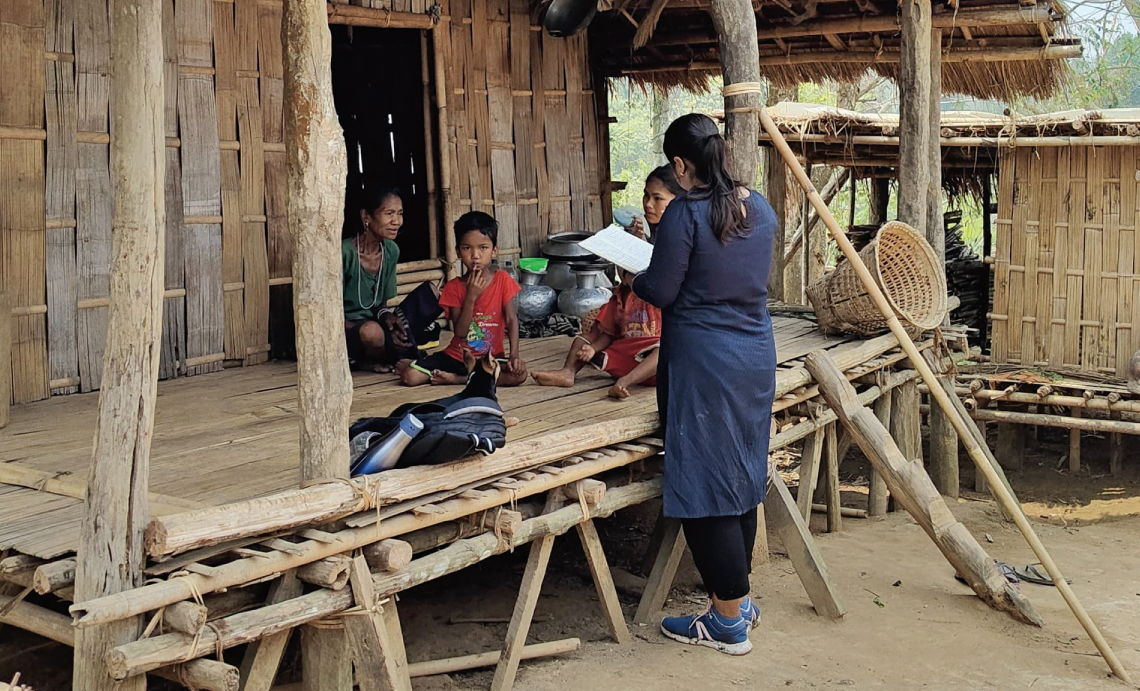
That would be households like Mr Lallungawia’s in Behlianchhip village in North Tripura district. “Since we live in the hills, water shortage is a constant,” says the 42-year-old farmer. “The government’s piped water supply rarely works and many villagers had to buy water from private tankers. Also, about one-third of our village depended on spring water, which they had to carry home in large utensils over great distances.”
Things have improved vastly since the springshed management programme was started. Rejuvenation sites sometimes require 2-3.5 hectares of land. For the local communities — primarily engaged in the jhum (slash and burn) way of agriculture — to give up large tracts of cultivable land is a livelihood sacrifice. But in Tripura they are doing so willingly.
“The people here are entirely dependent on springs for water; they want to protect these natural resources,” says Ankush Bhattacharjee, the CML state lead in Tripura for the WaSH initiative. “Earlier, they didn’t have the know-how or the technology to do so. After we started working here, we began training them in the rejuvenation process.”

Spring water user committees were formed from village clusters to undertake regular cleaning of the rejuvenation sites. This includes desilting them before and after the monsoons to make sure water flow is not impeded.
“The trenches that we dig or the percolation tanks we create for reviving the springs get clogged with silt from the runoff after rainfall,” explains Mr Bhattacharjee. “The trenches need to be of a specific depth to hold a desired amount of water, but siltation reduces this and affects the discharge value of a spring. Regular and thorough cleaning is a necessity.”
The Trusts are looking to stretch this natural resource further. The public works department of Tripura is currently working on a ‘spring census’ for the state and CML is supporting it by mapping and providing data on springs in the eight project districts. Perhaps new springs will be identified or forgotten ones brought to life. Either way, this will benefit local communities.
That is good news for people like Mr Lallungawia. “The springs may still be far away, and we might still have to travel over long distances,” he says. “But at least we will always have water.”