Taboo busting
A menstrual hygiene programme in Jharkhand is promoting better healthcare while dismantling generations-old myths and misconceptions
Menstruation is often referred to as ‘chandu rog’ in rural Jharkhand. This roughly translates to ‘moon illness’ and is so called because of its monthly occurrence, much like the lunar waxing and waning. However, the word ‘rog’, even though used loosely, could lead people to believe that menstruation was being equated with an illness, which is slightly more problematic.
After decades of being shrouded in shame and secrecy, it is extremely challenging to make countless Indians — even women among them — understand that menstruation is a physiological phenomenon, that hiding and neglecting it can be harmful.
The wide-ranging menstrual health and hygiene management (MHM) programme of the Tata Trusts has been addressing these issues and more since 2018. In 2022, the initiative was extended to three districts of Jharkhand: Deoghar, Khunti and East Singhbhum.
Long way to go
Findings from on-ground surveys in Jharkhand show that…
- 59% of women are not aware of menstruation before experiencing their first period
- 61% consider menstrual blood to be impure, reflecting deep-rooted social stigma and cultural taboos
- 45% hide menstrual absorbents while drying them due to a sense of shame
Operating under the aegis of the Tata Water Mission, the MHM programme promotes safe menstrual practices and aims to build a sociocultural environment that enables women and girls to manage menstruation with dignity.
“When you describe something as an illness, you would be reluctant to talk about it,” says Shaheen Naz, senior executive with Collectives for Integrated Livelihood Initiatives (CInI), the Tata Trusts associate organisation implementing the MHM programme in Jharkhand. “We have come across women in their 30s and 40s who would rather hide their menstruation than discuss it.”
Keeping it under wraps
Married women fear bringing shame to their husbands’ families if they talk openly about menstruation, and many mothers don’t discuss it with their adolescent daughters, adds Ms Naz, because of generations of conditioning. On-ground surveys in Jharkhand have shown that more than two-thirds of menstruating-age women had inadequate knowledge about periods before reaching menarche.
“We want to replace the concept of impurity, strongly associated with periods, with the idea that menstruation can also be a health indicator,” says Tanvi Aher, MHM lead in the Water, Sanitation and Hygiene (WaSH) portfolio at the Tata Trusts. Irregular periods can be a sign of a host of serious ailments, including cervical cancer. Not talking about it puts women at risk.
“We have found that infection rates were high here,” adds Ms Aher. “Some of these were caused by early marriage, when boys and girls are not properly aware of their anatomy. Others were due to poor water availability, especially during the dry seasons, which led to unhygienic practices, which then led to infections.”
Lately, another problem has emerged: the use of improper menstrual absorbents and their disposal. The three programme districts are dominated by the Santhal and Munda tribes. Living in the interiors of the state in discrete clusters, tribal women often don’t have access to proper absorbents.
“For years they have used rags, shreds of old clothing or towels, basically anything they could get their hands on,” says Ms Aher. “Most of this was for one-time use and discarded thereafter in bushes, in rivers and ponds, or even in agricultural land.” This kind of disposal was clogging water bodies and spreading further infections. Some absorbents were buried in shallow pits and would inevitably get unearthed during the monsoons or by strong winds.
Also, if the cloth was to be reused, it would be washed but not hung out to dry in sunlight, which could kill bacteria. The women would put it on a line and cover it with another cloth, or conceal it on their person, hoping to dry it with body heat. This meant the cloth usually remained damp and caused infections on reuse.
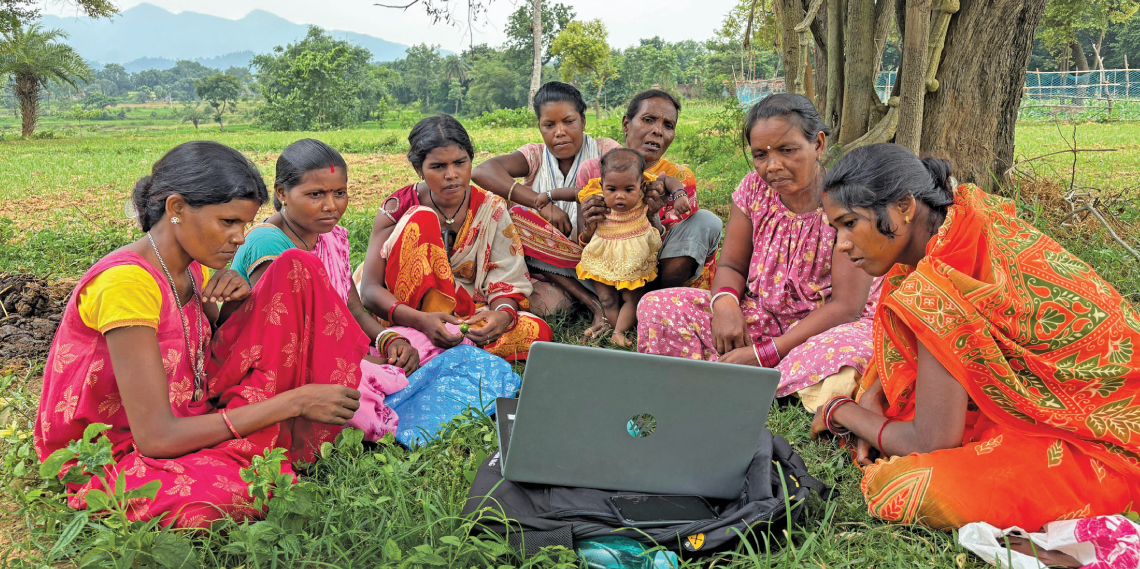
Sunita Tudu from Junboni village, in East Singhbhum district, admits to such behaviour in the past. “I didn’t know anything about menstruation till the didis [sisters] from the organisation came to our village and started providing training,” she says. “During these sessions they showed us various menstrual hygiene products and explained each one in detail, including their benefits and drawbacks.”
Burn or bury
The 28-year-old Ms Tudu now disposes of her cloth pads by burning them in a clay pot incinerator, as the CInI trainers have taught her. The pots are widely available in every village and require only a small area to be set up. For those who still prefer to bury their pads, the trainers have taught them to dig a hole at least half a foot deep for disposal.
With government schools in the area providing adolescent girls with free packs of sanitary napkins, information about disposal is critical. The girls receive wash-and-wear pads that can be reused, with proper care, for up to a year.
Conducted over the course of a month, CInI’s training module for women and adolescent girls comprises four sessions of between 60 to 90 minutes each. The first session is about breaking the myths and taboos around menstruation; the second delves into anatomical changes; the third discusses proper disposal of absorbents; and the fourth is a revision of the previous sessions.
The sessions are conducted by community-level frontline workers and schoolteachers, who use various aids — cards, charts, drawings, etc — to drive the menstruation message home. “By the fourth session, we typically build up enough trust in the community for the women to drop their inhibitions and talk more freely,” says Ms Naz.
There are also specially designed modules for couples and adolescent boys. With the boys, the training modules address the puberty-related issues they face as well. “Whatever social development programmes there are for boys and men usually have to do with livelihoods, agriculture or banking,” says Ms Aher. “They are typically left out of the health infrastructure, including mental health. We speak to them about puberty, their biology, their challenges and peer interactions, and then about menstruation and what girls go through.”
For the Trusts and CInI, couples are a priority because of the high incidence of infections among them as well. “Many women have requested us to include their husbands in the sessions,” adds Ms Aher. “They feel they can speak to them more freely and are likely to get more support if they have an infection or a difficult period.”
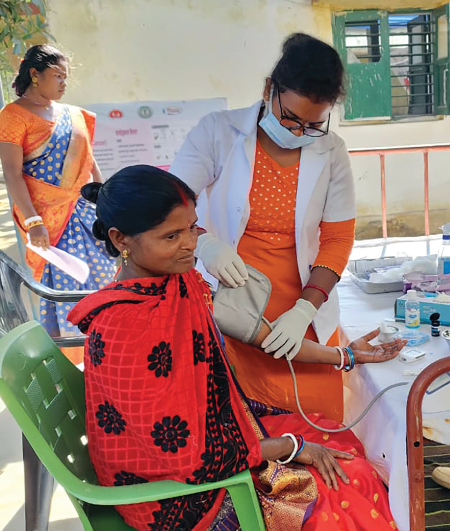
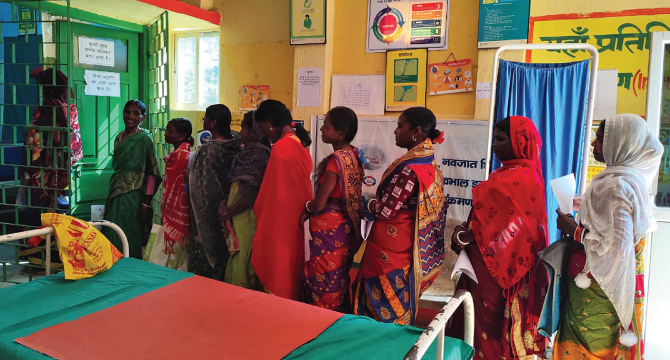
Since men, more often than not, control the family finances, getting them on board is necessary to ensure that women can buy the safer (though slightly more expensive) absorbents. Timely checkups for reproductive and urinary tract infections, and for cervical cancer, are also conducted as part of the programme.
Husbands being involved in the initiative is a benefit, as it has been for 22-year-old Suchitra Mahato, a villager from Raghunathdih in East Singhbhum district.
“In our community, we believed that menstrual blood is impure, and because of that we considered ourselves ‘unclean’,” says Ms Mahato. “We could not cook or fetch water during our periods, participate in certain activities, or even touch anything in the garden or in the fields for fear that the plants would die at our impure touch.”
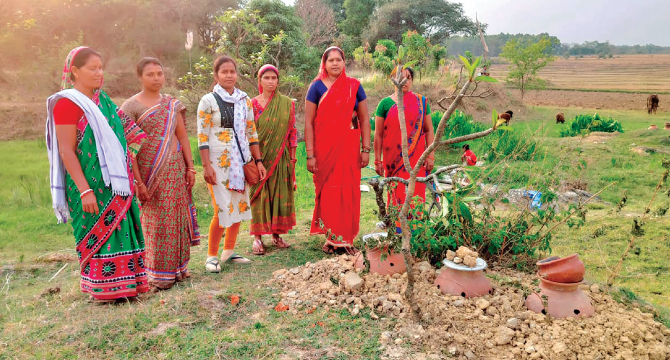
Following her training programme, when Ms Mahato learned that menstrual blood is actually preparation for a new life, she shared what she had learned with her husband. “Let’s try it out and see what happens,” he said of the impurity hoax. The couple planted a sapling together while Ms Mahato was having her period. The plant gradually grew and started bearing fruit.
“That’s when both of us realised that these were just baseless superstitions,” says Ms Mahato. “Now, I cook food and do all my usual work during my periods — something I never used to before.”