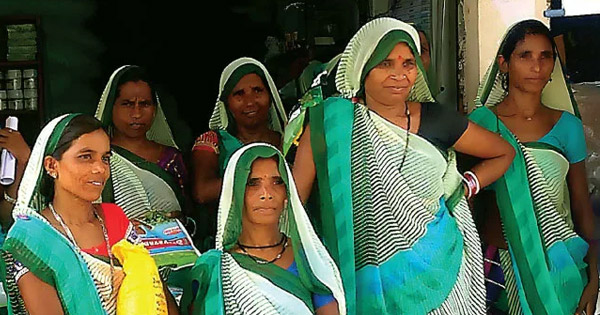
Women’s collectives supported by the Tata Trusts are fostering their members in multiple ways, from facilitating financial security to enabling recognition in the community
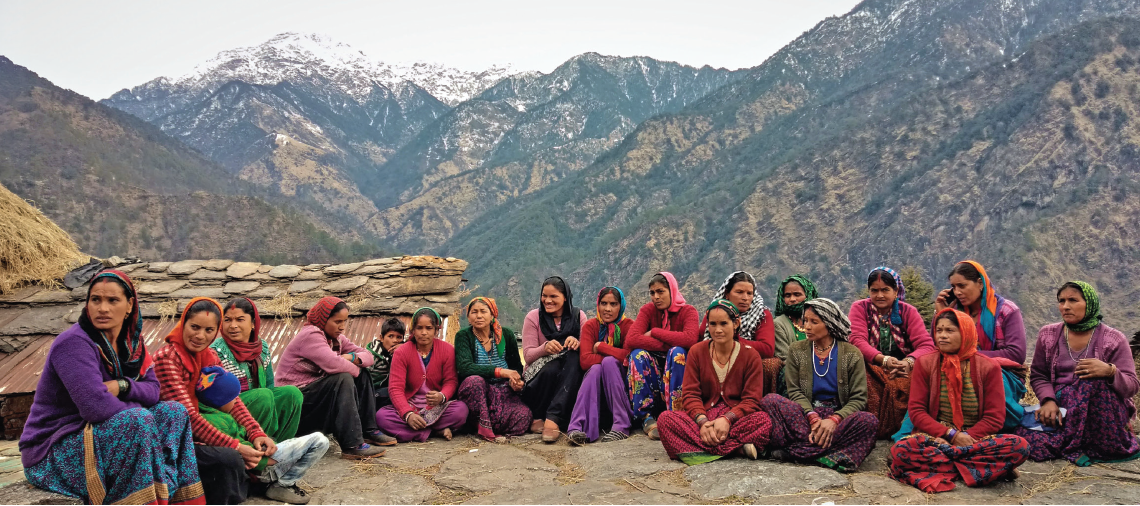

PHOTO FEATURE
Animal charm
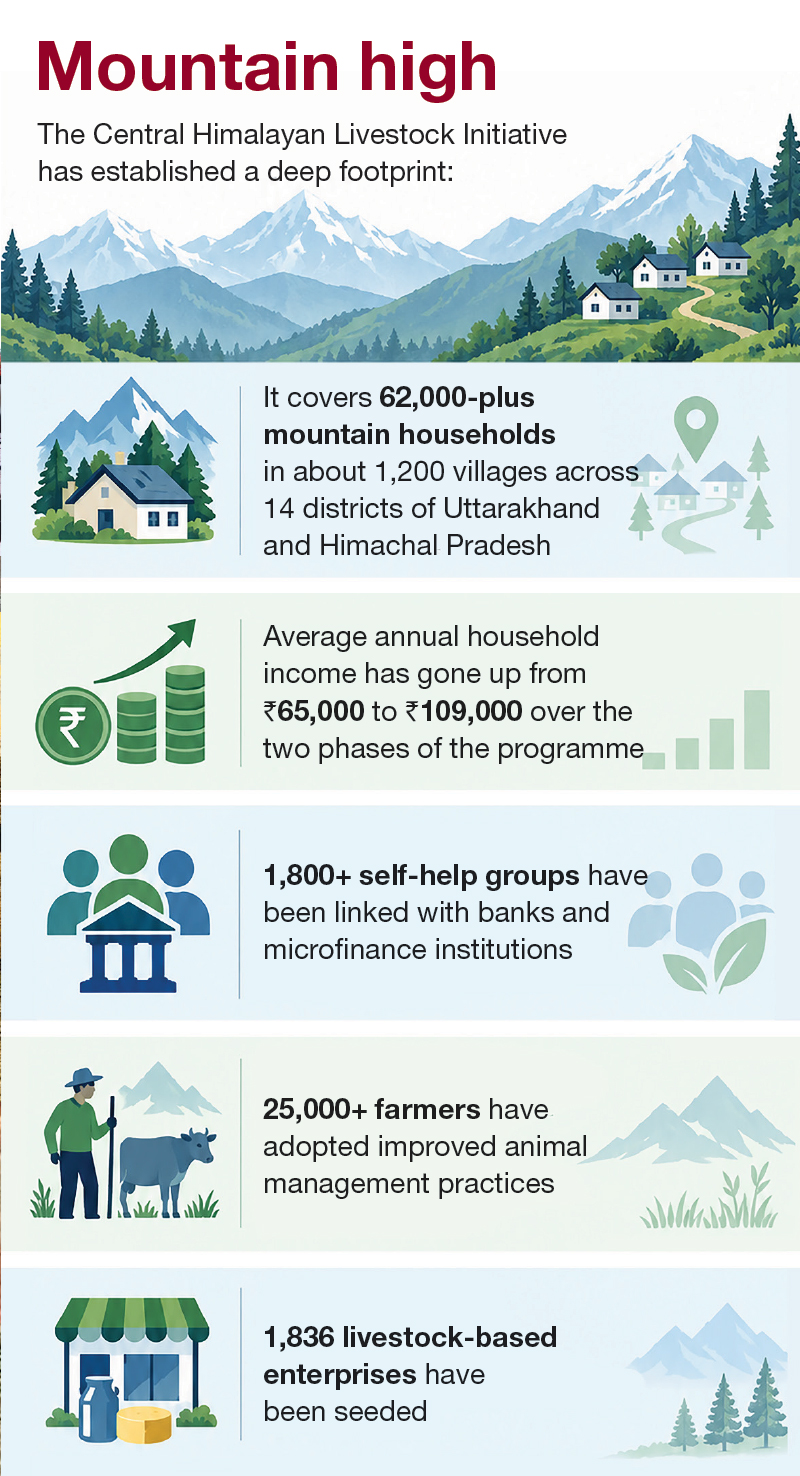
Dairy, goats, and poultry have provided a pathway to financial well-being for more than 62,000 mountain households in Uttarakhand and Himachal Pradesh
Chickens saved Bala Devi and her family from destitution. When the 2013 rains caused intense flooding in large parts of Uttarakhand, the livelihoods of Ms Bala’s family and many others were severely disrupted across the state. Seeking to rebuild her life and support her family, she joined a poultry programme supported by Himmotthan Society, an associate organisation of the Tata Trusts. It was a decision that changed her circumstances.
Ms Bala, who hails from Dangala village in the Tehri Garhwal district, began by raising some 450 chickens (in three batches through the year) in her backyard. That fetched her about ₹45,000 a year through the sale of eggs and meat. There has been no looking back for Ms Bala since.
Tehri Garhwal is a region that has been rendered increasingly vulnerable to climate volatility. The topography of the district and its rugged terrain are no help, farm holdings are typically small, and market connectivity is poor. Understanding that communities needed livelihood programmes suited to local conditions, Himmotthan launched the ‘Central Himalayan Livestock Initiative’ (CHLI) in 2015.

Click to enlarge
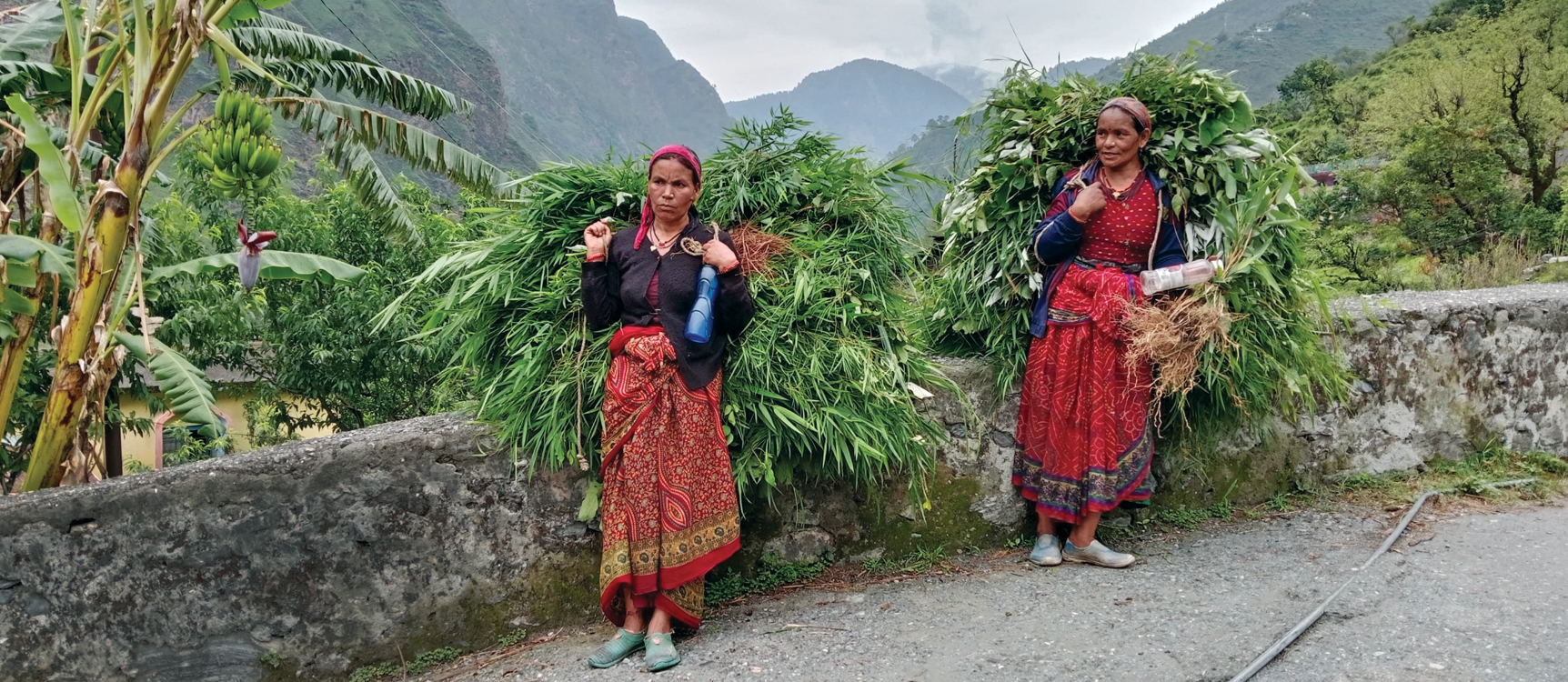
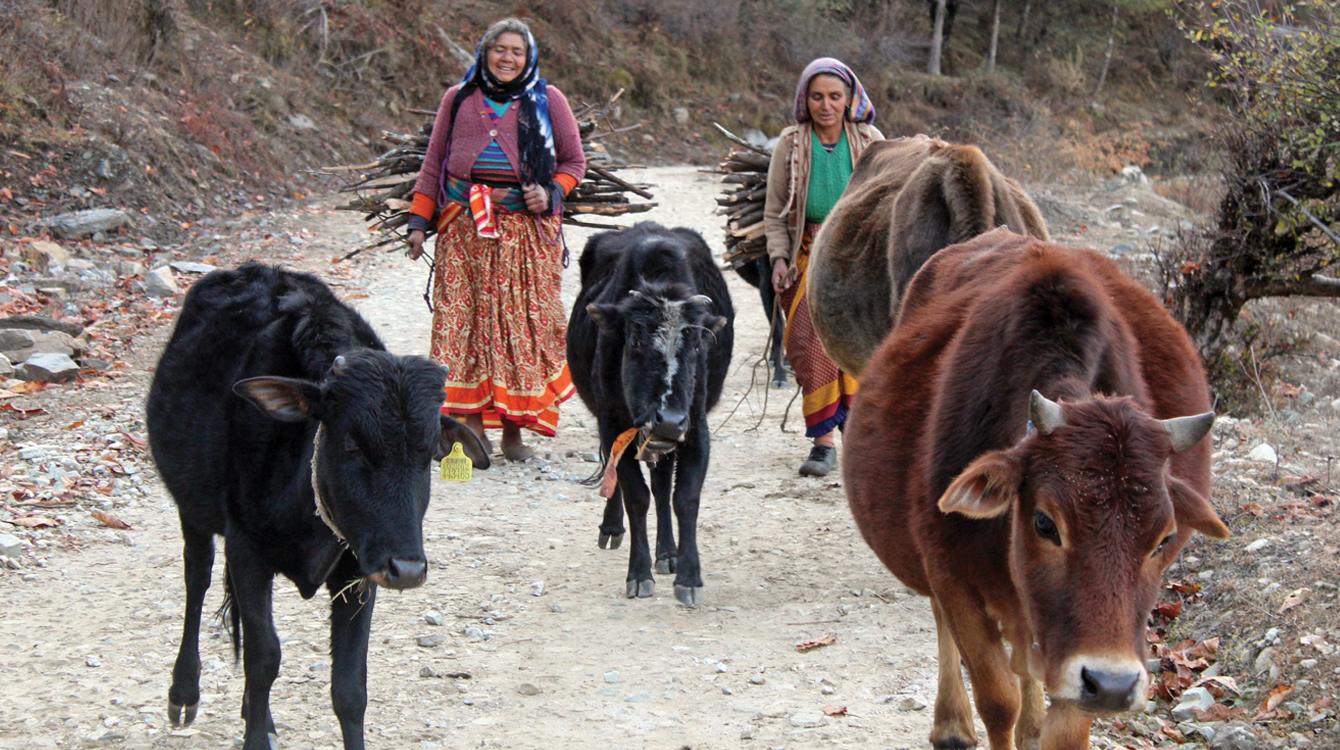
Two women from Nijmula village in Uttarakhand’s Chamoli district with fodder for their dairy animals
The programme, which has grown to cover 1,200 villages in 14 districts of Uttarakhand and Himachal Pradesh, enables local communities to make a living and enhance their earnings by rearing dairy cattle, goats and poultry.
By providing support — through artificial insemination for breed improvement, access to better feed, and funding to construct animal sheds — CHLI has made all the difference in the lives of some 62,000 mountain households like Ms Bala’s.
“CHLI has been able to build sustainable, climate-resilient, women-led livestock livelihoods in some of India’s most geographically challenging terrain,” says Shashi Bhushan Uniyal, theme lead for livestock initiatives at Himmotthan.
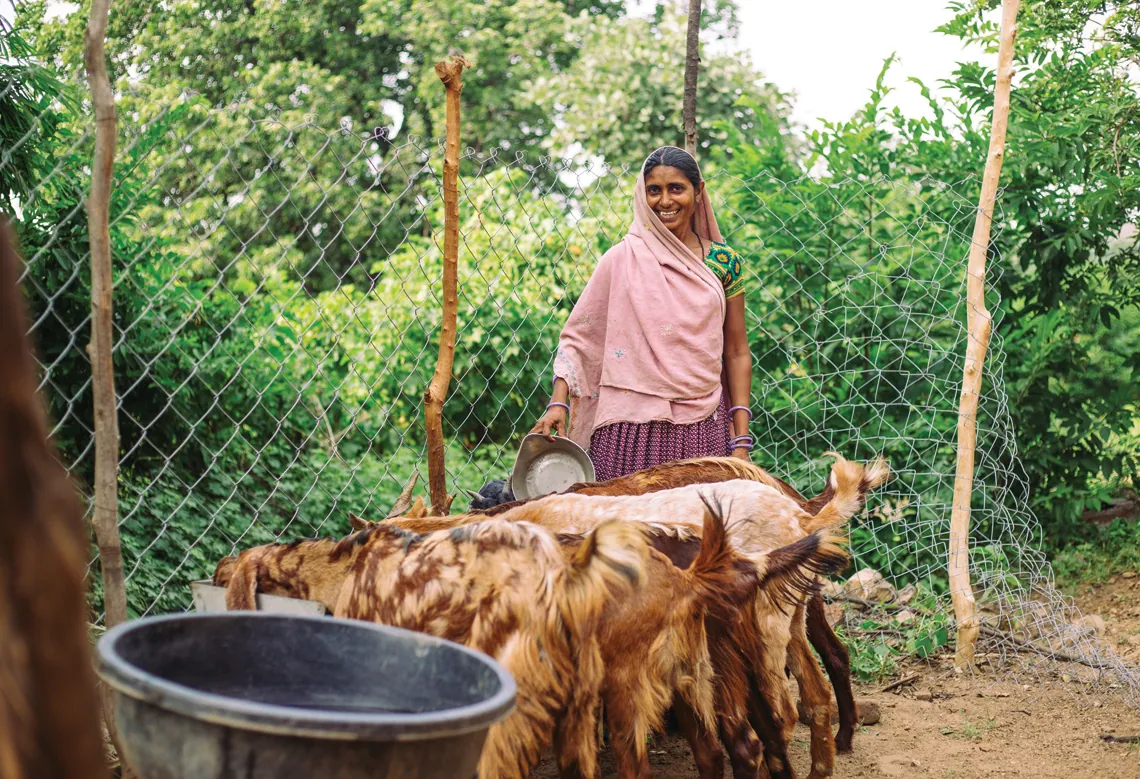
Herd start
Infusing science and technology into sheep and goat breeding is helping rural communities in three states improve the quality of their livestock and their incomes
READ MOREPhase one of the CHLI initiative, which ended in 2021, touched more than 35,000 rural households. Crucially, it helped craft community institutions such as women-led self-help groups (SHGs) and a network of farmer producer organisations (FPOs).
Beneficiaries were encouraged to start local enterprises: micro-dairies, poultry hatcheries and feedstock supply units. In the five years of phase two, which ended in June 2026, Himmotthan expanded the programme by bringing 27,000 more households into its fold.
Dairy has been a focal point for the programme. Take Sanju Devi, whose family lives in Churerdhar village in Tehri Garhwal. Ms Sanju rears a buffalo that she purchased with financial support from Himmotthan. When her husband lost his job after the Covid outbreak, the buffalo’s daily milk output brought in a much-needed regular income.
The Himmotthan team has worked to convince the community to improve its cattle breeds through artificial insemination. It has also encouraged farmers to come together under FPOs to better market their milk and milk products.
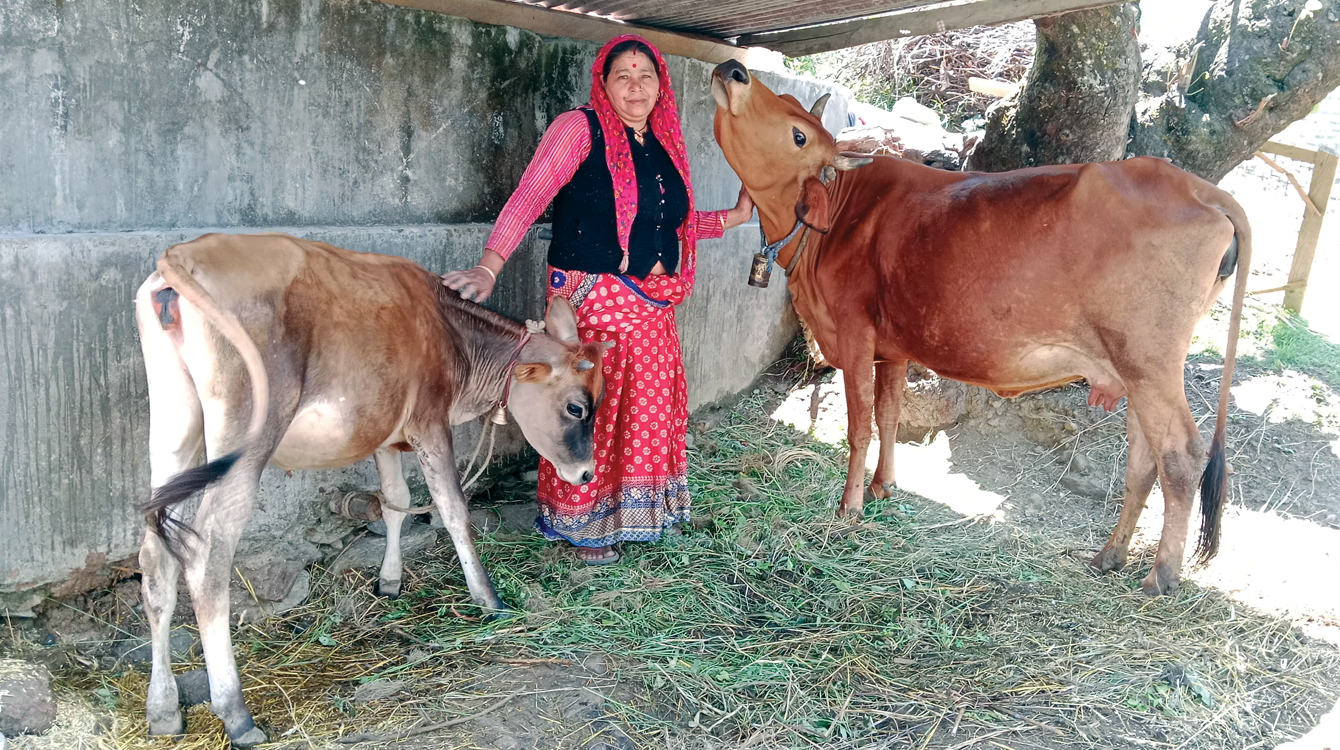
Click to enlarge
Deepa Devi from Rangtoli village in Chamoli district has learned to care for her cattle thanks to CHLI
A recurring challenge in rearing cattle is the labour-intensive task of collecting fodder. “The main load of looking after livestock falls on women, who spend hours every day gathering fodder for their cattle,” says Vinod Kothari, Himmotthan’s executive director.
To ease this drudgery, CHLI has encouraged fodder cultivation on land near villages. As a result, the average area under fodder cultivation per household has more than doubled. With better fodder availability, a majority of women in the programme have benefitted. “Much of the hard labour associated with dairy rearing has been reduced,” adds Mr Kothari.
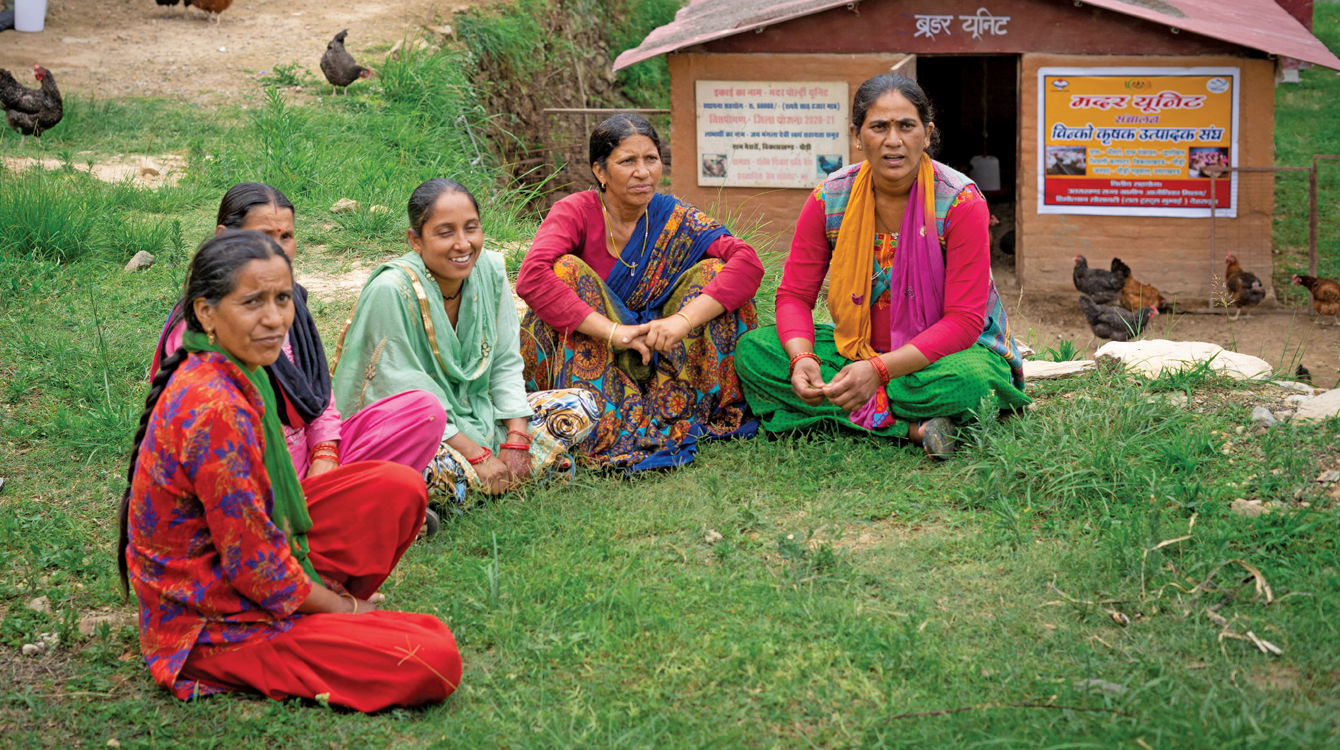
Click to enlarge
Backyard poultries offer a year-round source of income for these women farmers from Bhainsro village in Uttarakhand’s Pauri Garhwal district
While dairy is the strongest vertical in CHLI, Himmotthan has also established goat-rearing as a secondary source of livelihood. This has been a boon for Sarojini Devi’s family, who own about an acre of difficult-to-cultivate land in Dangala village. Himmotthan backed Ms Sarojini in buying a herd of goats and setting up a goat shed (a goat can be sold for ₹7,000-12,000).
Another change is the shift to semi-intensive goat-rearing, which involves more stall feeding. “Households were made aware of the benefits of restricting open grazing and giving feed such as concentrates and mineral mixes,” says Shashank Bisht, a veterinarian on the Himmotthan team. “This helps increase the weight of the goats in a shorter time and families are able to earn more.”
Click to enlarge
In villages close to Joshimath town in Chamoli district, women dairy farmers rear Badri cattle, a breed indigenous to the Himalayan region
Poultry, the third component of the livestock intervention, has had its own successes. Most of the poultry-rearing households in the programme have chicken poultry sheds and healthy breeds, which has led to egg productivity doubling in the last five years.
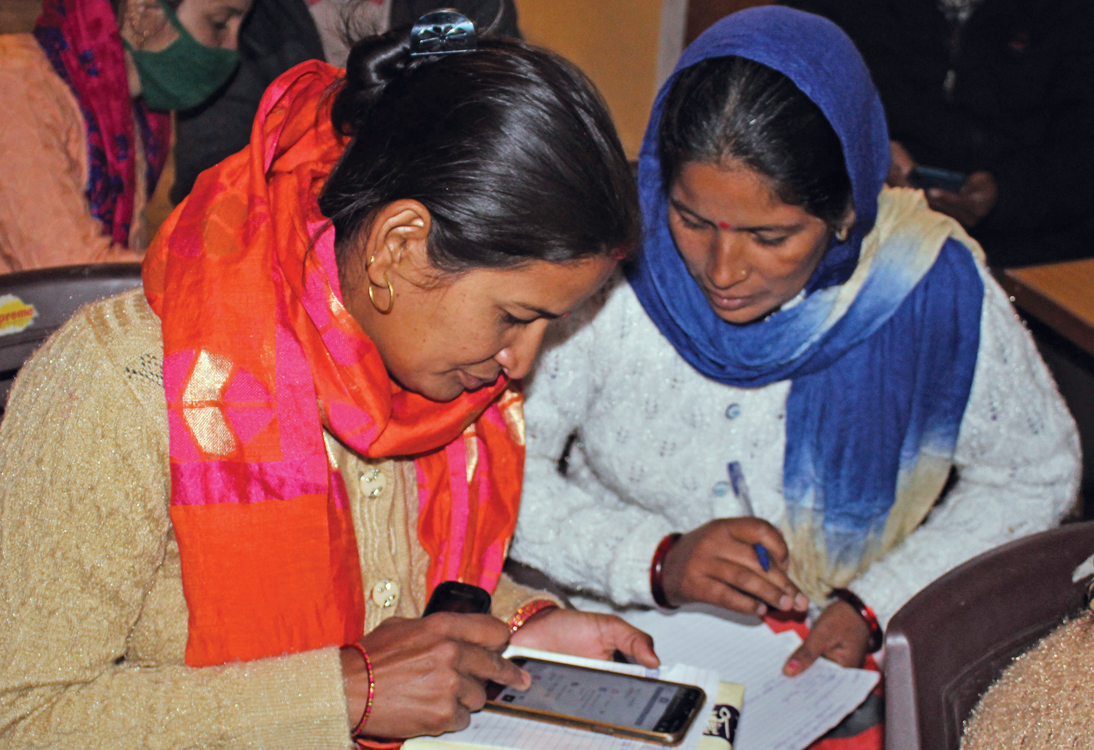
Click to enlarge
Community resource persons from CHLI know how to access online resources through smartphones
It has not all been smooth sailing, though. “Our biggest challenge with poultry is to reduce the high mortality of day-old chicks during transport from the limited number of hatcheries in the plain areas. We established small hatcheries in the village clusters so that we can distribute more day-old chicks to beneficiary families,” explains Rajendra Singh Koshiyari, head of rural upliftment at Himmotthan.
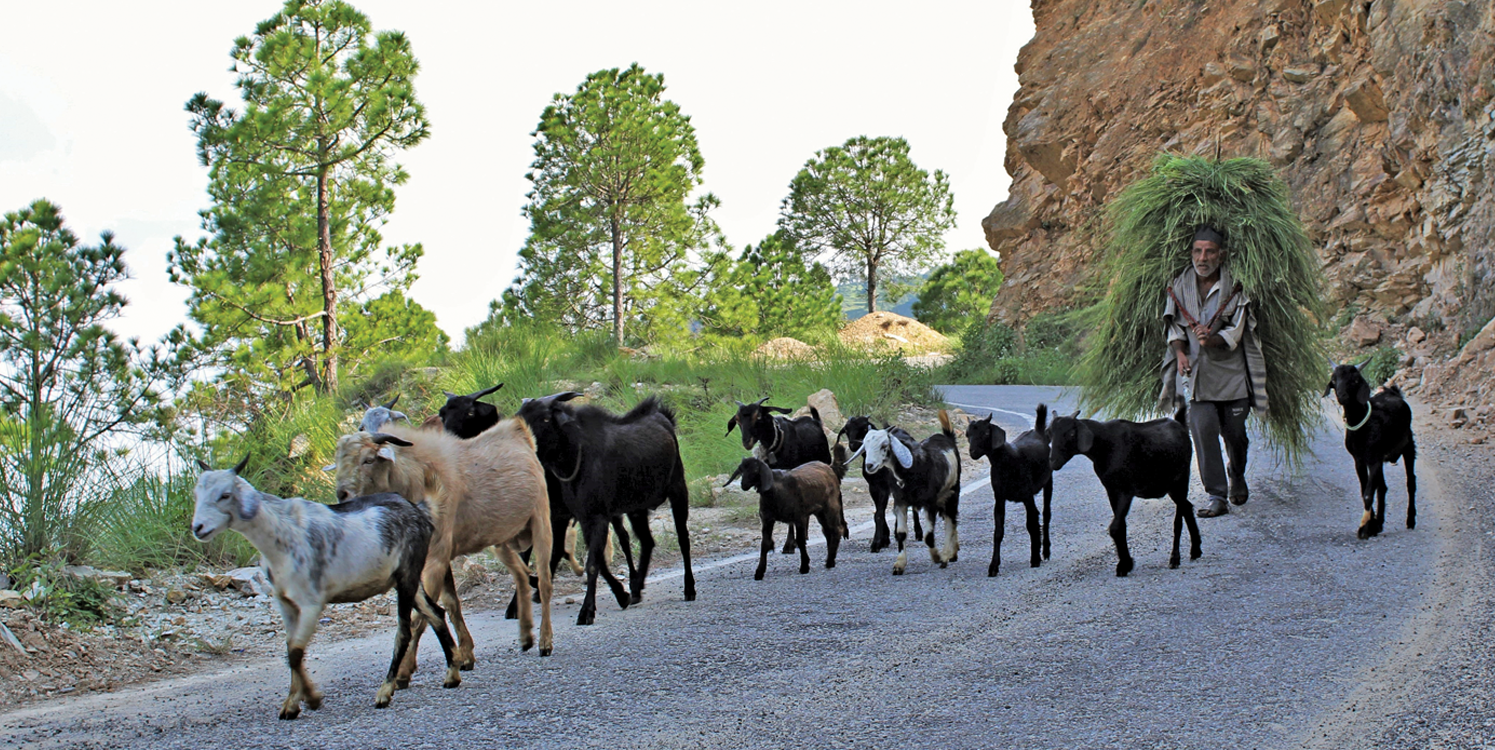
Click to enlarge
Breed improvement and better feeding practices have helped farmers improve herd health and their income from goat rearing
There are commonalities in the livestock interventions. For one, the initiative works to improve overall animal health through breed management, feed practices, weight monitoring and para-veterinary services. The project has developed a cadre of community resource persons — 38 artificial insemination technicians and 21 livestock resource persons — who provide much-needed doorstep services to villagers.
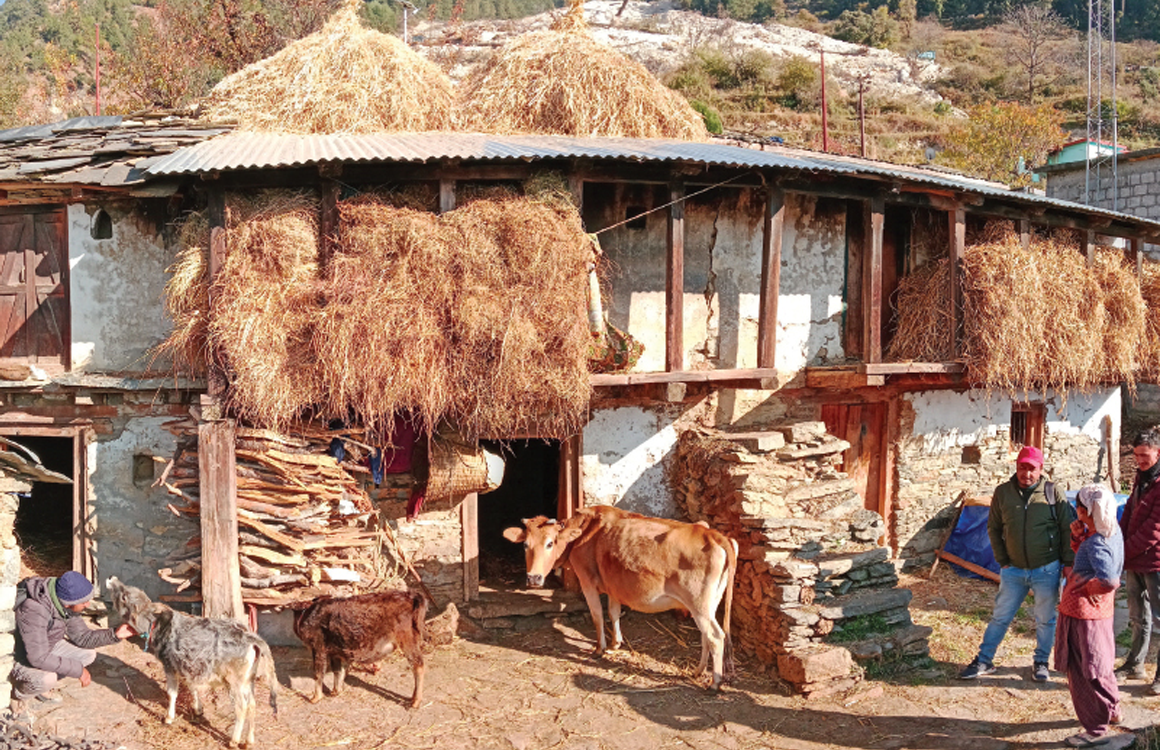
Click to enlarge
A traditional structure in Joshimath to shelter livestock and store fodder (these come in handy during harsh winters)
Another thread that runs through the programme is ecological impact. Himmotthan has ensured that more than 5,000 acres of land in the fragile Himalayan ecosystem now has a green cover (through the planting of fodder and high-value crops).
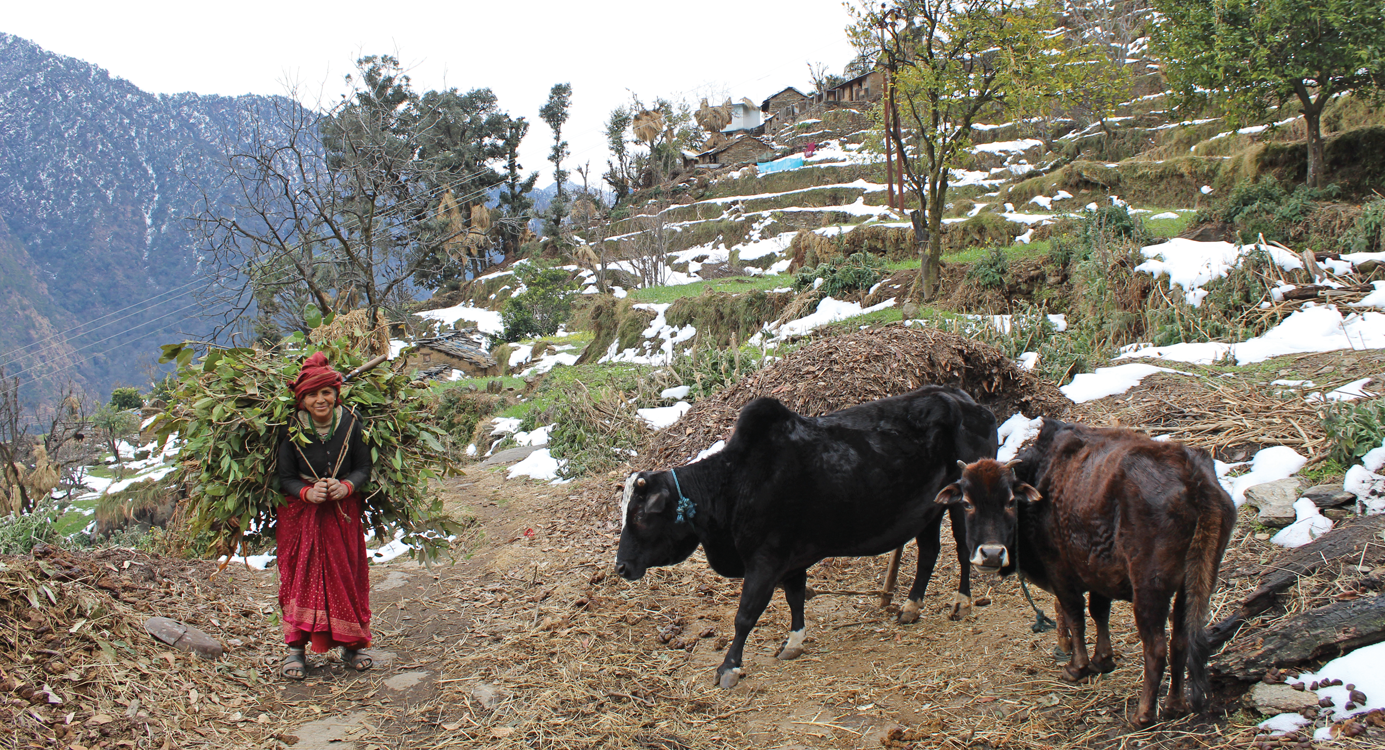
Click to enlarge
The slopes of Ukhimath in Uttarakhand’s Rudraprayag district show why open grazing means hours of labour for women farmers
The programme’s biggest impact has been in sustaining livelihoods and boosting the financial inclusion of women. Through CHLI, some 1,800 SHGs have been linked with banks and microfinance institutions. More importantly, annual household income has increased from an average of about ₹65,000 in 2015 to ₹109,000 today.
Click to enlarge
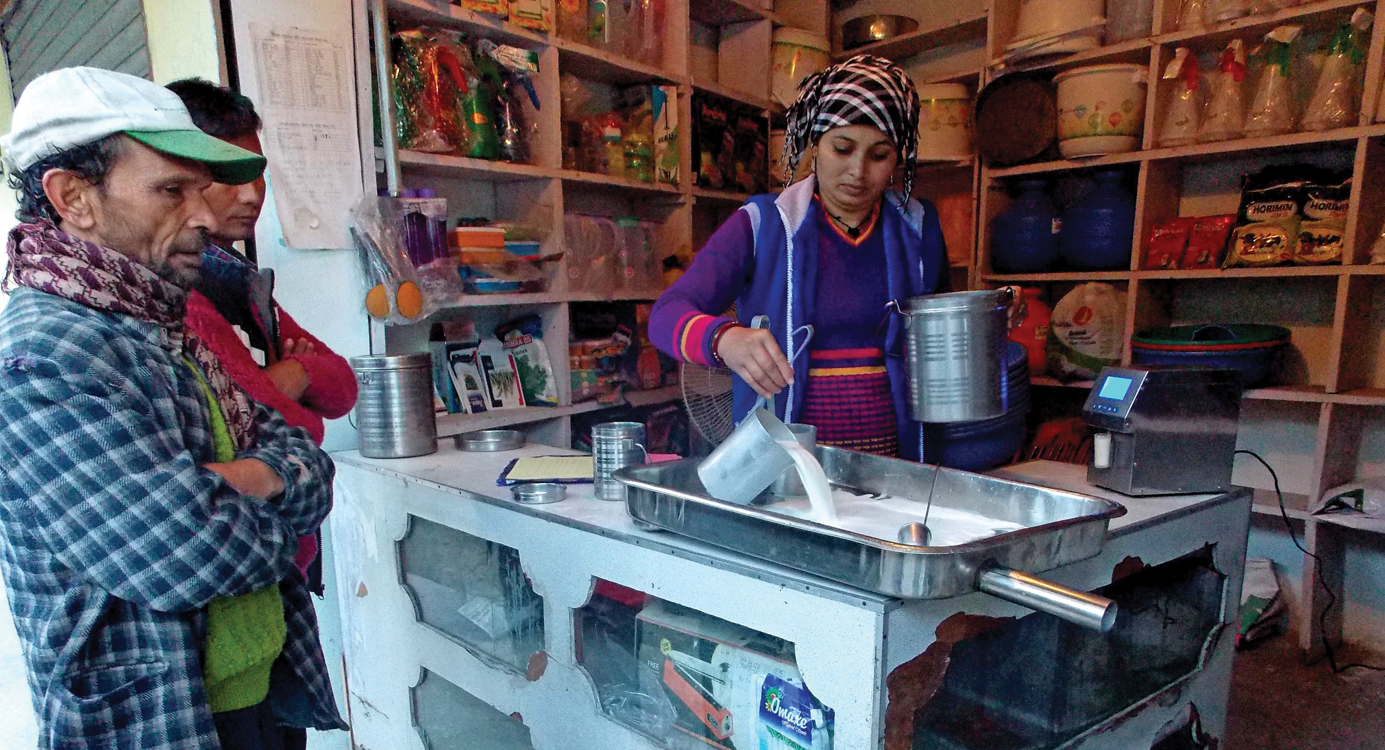
Milk being collected at a centre of the women-run Self Reliant Cooperative in Dharchula in Uttarakhand’s Pithoragarh district
With measurable outcomes achieved so far, the next phase of the initiative will focus on increasing the average income of livestock-rearers by a further 30%. Community collectives such as small enterprises and FPOs will also be strengthened. All said, the future looks set to deliver more for Ms Bala and her fellow villagers.
Click to enlarge
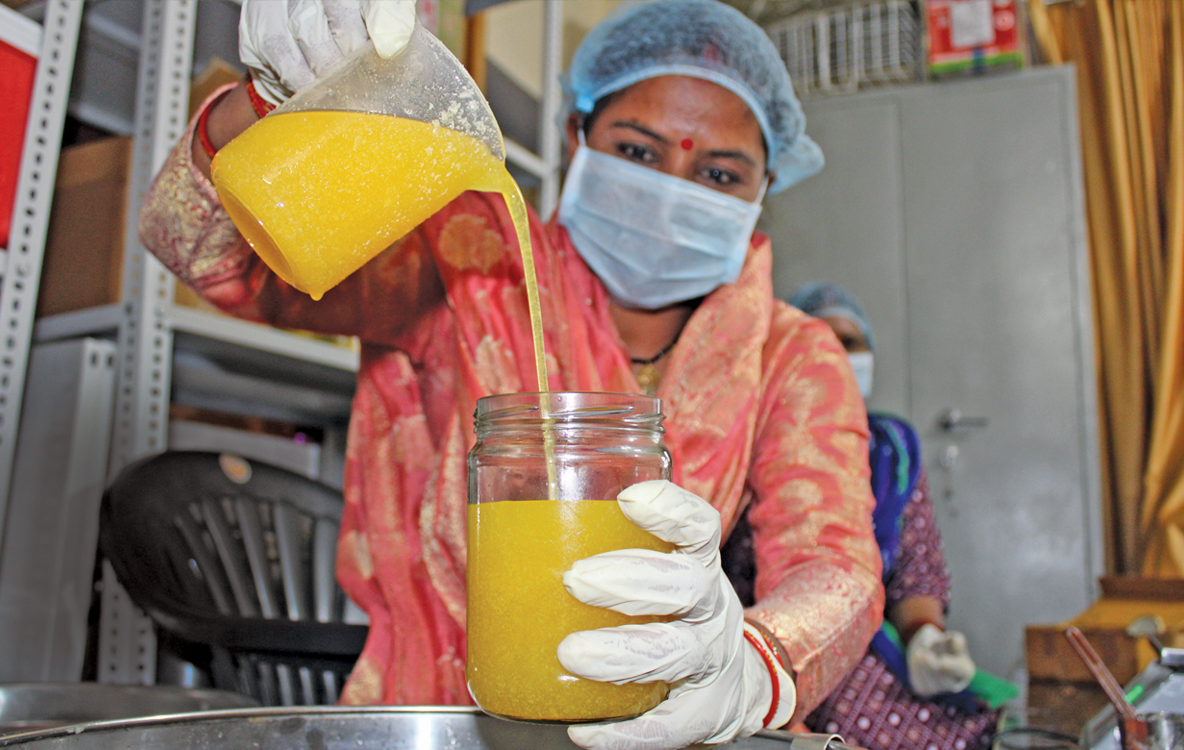
A member of the Kalpganga farmer producer organisation in Paini village near Joshimath packing the A2 ghee for sale
The going is good with ghee
Joshimath lies about 40km from the temple town of Badrinath in Uttarakhand’s Chamoli district. Here, Himmotthan has brought together 250 women farmers from 30 villages under the umbrella of a farmer producer organisation (FPO) called Kalpganga.
The women churn milk at home to make butter and send it to a central processing unit where the butter is converted to ghee — and substantial revenues.
The earnings of the women farmers are based on the quantity of butter they can produce. “The Kalpganga FPO collects butter from my doorstep and pays directly into my bank account,” says Damyanti Devi, a Joshimath resident. The shift from selling milk to selling butter has two key advantages: butter does not spoil as quickly as milk and is easier to transport.
Kalpganga was launched in 2022 with corporate social responsibility funding and other support from HDFC Bank. A key move was to train women to adopt best practices in animal health and management, and to learn standardised processes for making and collecting butter.
In 2023, Himmotthan set up a lab in Joshimath for testing butter quality. A year later, Kalpganga achieved a milestone when the KisaanSay food brand, which sources directly from farmers, came on board. It became the first major partner to buy the FPO’s ghee (labelled as Himalayan A2 Badri Cow Ghee).
Since its inception, Kalpganga has collected 4,400kg of butter, sold 2,880kg of ghee, and earned about ₹3.4 million. Of this, it has paid out ₹1.9 million as profit to its women members. “Kalpganga FPO has increased my household income. And it has given me an identity as an entrepreneur,” says
Ms Damyanti.
Related articles
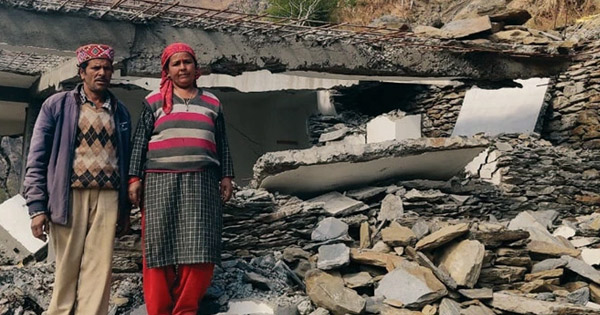
Families left homeless by the cloudburst that devastated Himachal Pradesh in 2023 now have a roof over their heads — thanks to innovative and reusable disaster shelters
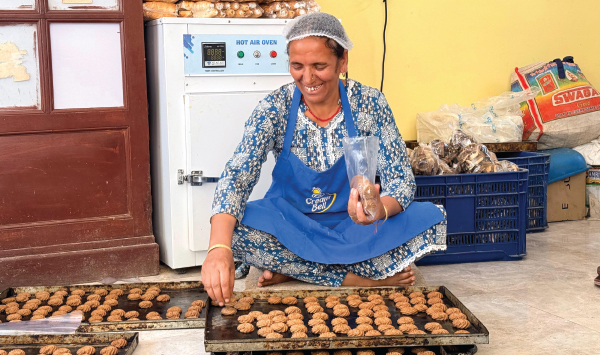
A bakery and a café in Uttarakhand deliver a tasty example of women-led enterprises securing success with ingredients blended to order
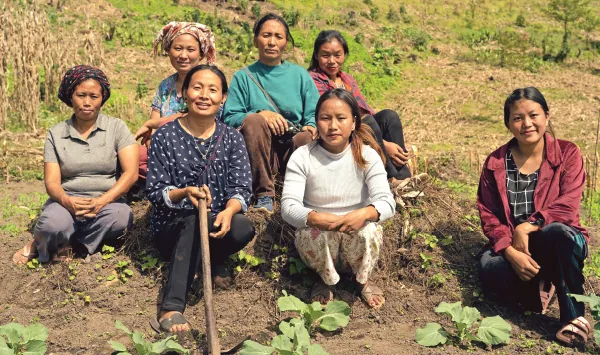
Four success stories from Nagaland, covering four livelihood streams, highlight the difference a programme focused on rural folks has been making