
A long-running collaborative programme has been a boon and a balm for inmates in Maharashtra’s prison system

feature Story
Building bridges to justice and more
The Samvidhaan Fellowship has gone far in enabling vulnerable women and children in Bihar and Karnataka to secure legal rights and access government schemes
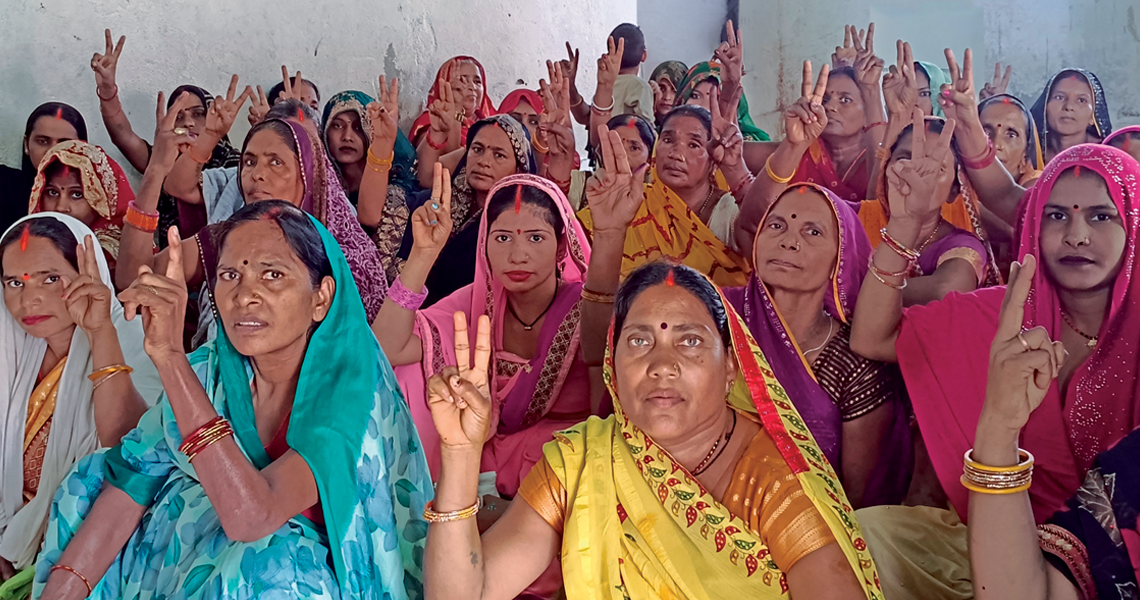
For as long as memory stretches, Bihar’s Musahar community has struggled to build lives of dignity while battling deep-rooted social prejudice and endemic poverty. Listed as a scheduled caste group and recognised by the state as part of the Mahadalit category, the community is entitled to targeted support through government welfare schemes — to little avail.
For 19 families in Phulwari Sharif, a town in Patna district, the promise of land under the government’s Bhumihin Yojana remained trapped in official records. In 2023, they received legal allotments but no measured plots, no demarcated boundaries and no physical possession to turn a paper entitlement into homes, livelihoods or a sense of security.
These Musahars — the word comes from mus (rat) and ahars (eaters) in the Bhojpuri language — were not fighting the law; they were caught in the yawning gap between governmental assurance and reality on the ground. With limited knowledge of revenue procedures, they could not claim what was rightfully theirs.
In February 2026, the 19 families received help from Nyaaya, an initiative of the Vidhi Centre for Legal Policy, a think tank and policy research organisation. With support from the Tata Trusts, Nyaaya launched the Samvidhaan Fellowship in Bihar in 2024 to offer legal aid for women and children. Two years on, the Musahars of Phulwari Sharif became a focus point of the effort.
Backing from the Trusts helps enable the Samvidhaan fellows, who are practising lawyers with a keen interest in social justice. Cynthia Mathew is one such fellow and she, along with local NGO partner Manthan, took up the cause of the affected families and pursued the matter with government officials.
After much back and forth, the allotted land was measured and demarcated, enabling authorities to complete the process of handing over possession. “The outcome was that the families could finally move beyond official files,” says Ms Mathew. “They were formally given possession of the land and a long-pending government entitlement came to fruition.”
The Samvidhaan Fellowship has been a boon for many others in need. Basawa Prasad, a fellow since February 2026, has become a trusted legal resource in Bengaluru for women facing domestic violence. Working with partner NGOs, he helps these women, who cannot afford legal fees and have nowhere else to turn.
Says Mr Prasad: “Often, these women are under immense pressure from their families to not act against their abusive husbands. We support and guide them. If and when they are ready to take legal action, we provide pro bono services.”
There are 26 Samvidhaan fellows in total, and they operate in Bihar and Karnataka, helping people navigate the legal system, follow its complex procedures, and claim what is supposedly guaranteed. At its heart, the Fellowship is built on the idea that access to justice is not only about courts or lawyers, but also about trust, proximity and practical guidance.
The Fellowship functions under Nyaaya, which has built a public-facing ecosystem with an open-access platform that has reached more than 30 million people thus far through digital and in-person activities. The ‘Ask Nyaaya’ helpline gets about 100 questions every month and Nyaaya’s online repository offers more than 3,000 legal explainers and guides in English, Hindi and Kannada.
The fellowship trail
Nyaaya selects talented lawyers for its Samvidhaan Fellowship programme through a wide-ranging outreach effort that includes local newspapers, regional publications, bar associations and community networks.
Beyond legal aptitude, candidates are assessed on their ability to engage with communities, navigate complex real-world problems, exercise ethical judgement, communicate to diverse audiences, and demonstrate initiative and long-term commitment to public-interest law.
“We recognise that lived experience, community trust, and commitment to public service are as valuable as academic credentials,” says Anisha Gopi, the programme lead for the Fellowship.
The candidates are expected to meet key criteria to be accepted into the Fellowship: they need knowledge of working at the community level; have at least three years of litigation experience; have expertise in gender rights, child rights, human rights or labour laws; be conversant with social protection schemes and rights; understand grievance-redressal processes; and be proficient in the local language.
The Fellowship has been designed to plug the gap between need and access. Says Nyaaya’s team lead Anisha Gopi: “People may know that a right exists and may still not be able to claim it. They may not know which office to approach, what application to file, how to follow up, or whether a court case is worth the risk. India’s justice system assumes literacy, English fluency, proximity to courts and familiarity with procedure. That leaves most citizens unable to claim their rights.”

Click to enlarge
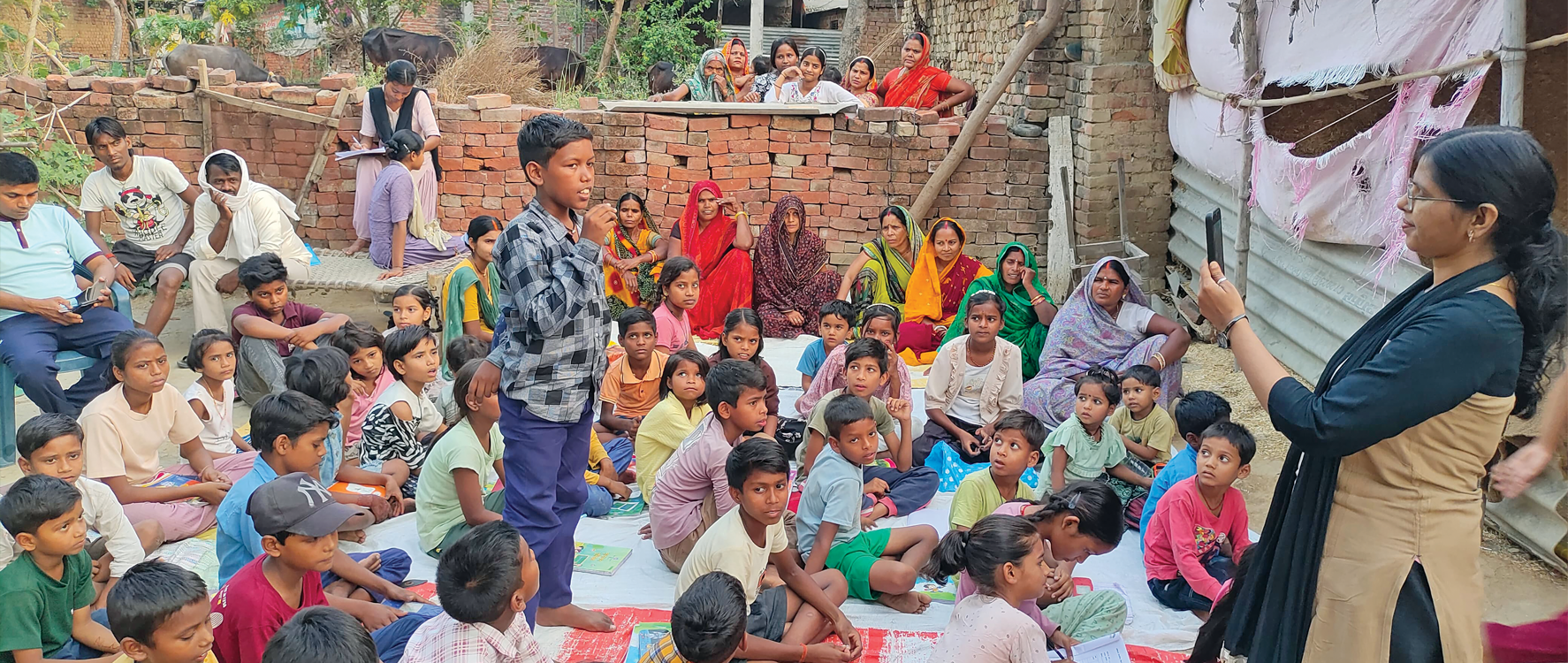
A community legal awareness session on child rights in Buxar in Bihar
The numbers in India’s convoluted legal landscape are stark. Nearly 80% of Indians qualify for free legal aid, but barely 1% have access to it (the figure is 7.9% for undertrials). Unaware of options, many poor families end up paying for private counsel or not taking legal action at all.
For women and children, adds Ms Gopi, the barriers are more daunting still: stigma, patriarchy, financial dependency and a support system so fragmented that even those who know their rights can fall through the cracks.
This is where the Fellowship comes in. Nyaaya selects practising district-level lawyers as fellows after screening by a panel of experts. The fellows work with partner organisations to support communities that face challenges in accessing the legal system. Through on-ground engagement, structured mentorship, and expert-led training, the programme has built a cadre of legal professionals equipped to enable those in need to access and get justice.
The Fellowship typically runs for one year, with high performers invited to continue for a second year. The fellows receive a fixed monthly stipend and reimbursement for out-of-pocket expenses, including litigation-related costs. “The Fellowship supports us so that we can help those who require legal support but don’t have the financial means for it,” says Mukesh Paswan, a Patna-based fellow.
The fellows cover a gamut of legal provisions: constitutional law, gender rights, labour rights, land disputes, children’s rights, disability-related issues, caste-based cases and others that disproportionately affect vulnerable communities. They are trained in relevant laws, procedures, client counselling and grievance redressal, and they build awareness among communities about rights and entitlements established under law and government schemes.
Click to enlarge
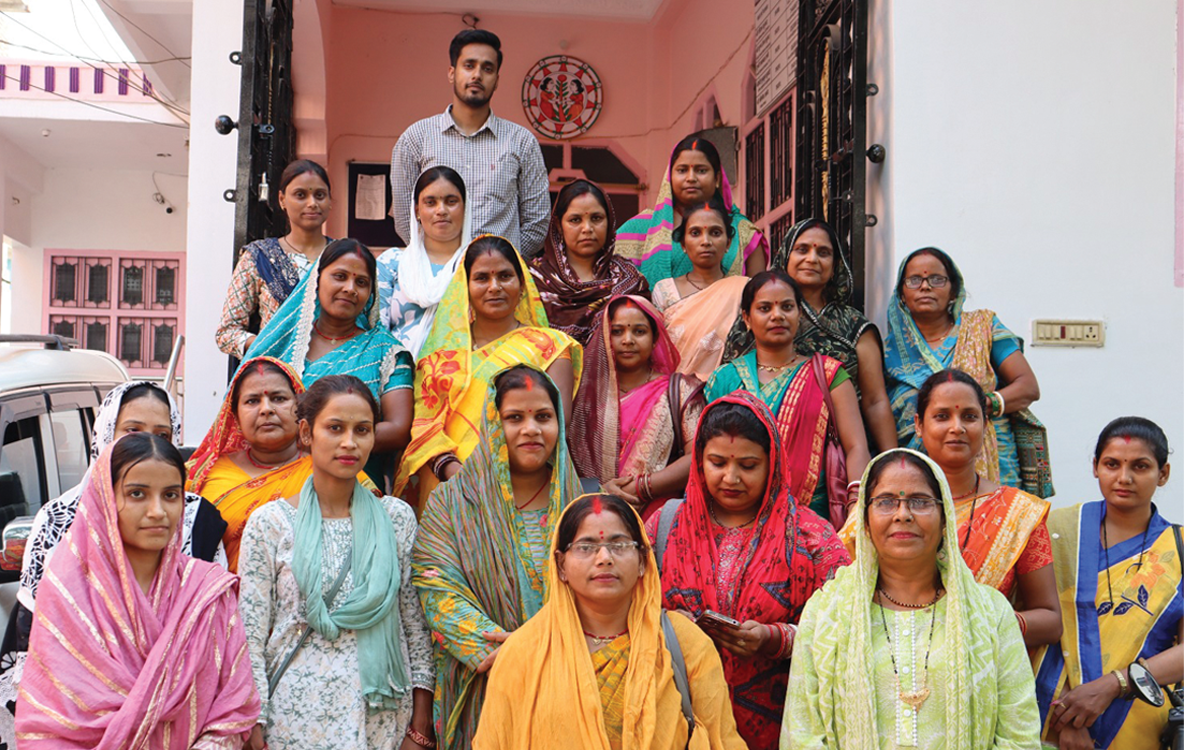
A group of women at a session on dowry prohibition in Motihari in Bihar
Fellows also conduct regular awareness camps to get people to understand their legal options. “This builds trust, making it easier for people to approach us when they need legal aid,” says Mr Paswan. “For many families, this makes the justice system less distant and frightening.”
Local partnerships with government bodies and NGOs play a key role. Fellows are available through legal helpdesks at public places such as hospitals, universities, and neighbourhoods. In Bihar, for instance, Nyaaya has collaborated with the Bihar Rural Livelihoods Project (BRLP), locally known as Jeevika, to build legal capacity among coordinators who work with 12 million women across the state.
A voice for victims
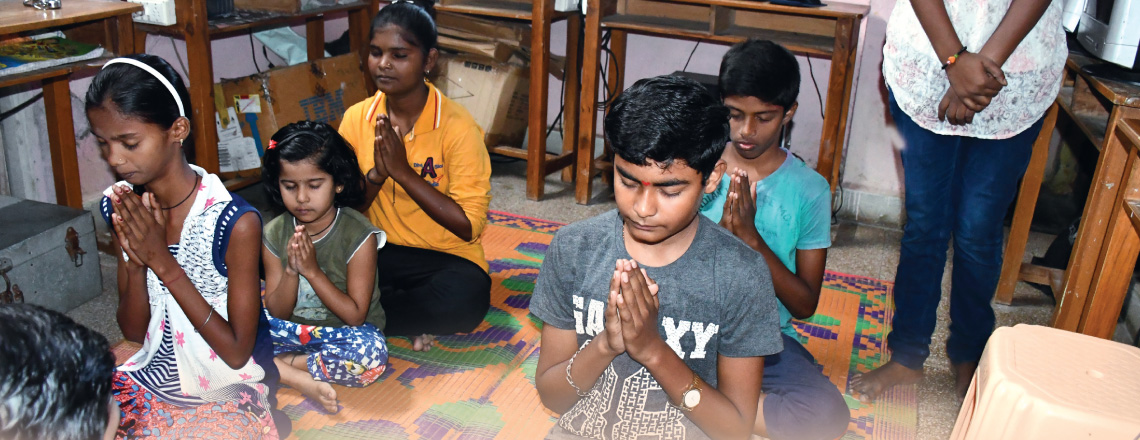
Disha works with victims of violence and crimes to help ease their path to justice, rehabilitation and compensation
READ MOREIn Karnataka, the fellows are present in trusted local spaces such as hospitals and partner NGO centres, which often deal with domestic violence cases. These partner organisations provide an avenue for legal support to women through the fellows.
The Tata Trusts provide more than just financial backing to Nyaaya. “The Trusts’ role has gone well past a funding arrangement,” says Ms Gopi. “This is a partnership that has enabled Nyaaya to move from a promising idea to a programme with the credibility, systems and stakeholder relationships needed to expand into new states with confidence.”
For the Trusts, the partnership fits right in with wider goals on equity, inclusion and access to justice. “The Trusts have, through partner organisations, been engaged for many years in the justice sector to improve outcomes for undertrials, prisoners, victims of crime and marginalised communities,” says Anirudh Menon, programme manager, institutions, at the Trusts. “We are committed to strengthening the justice system and supporting reforms aimed at making it more efficient and equitable.”
The Fellowship’s scale is still modest, but its reach is growing. There are 10 fellows in five districts of Bihar and 16 fellows in 10 districts of Karnataka. In less than two years, the fellows have reached out to more than 22,000 women and children, conducted hundreds of legal awareness sessions, counselled clients, supported court cases through pro bono litigation, and worked with community organisations to take justice beyond courtrooms.
With the Trusts’ support, Nyaaya is now working to further its work with marginalised children, piloting a village adoption model, strengthening juvenile justice processes, expanding legal access points, improving case tracking and formalising partnerships with state legal aid institutions and government departments.
At its heart, the Samvidhaan Fellowship underlines a simple but urgent truth: justice cannot remain confined to courtrooms; it must be accessible to everybody, particularly those on the margins.
Related articles
The Consumer Justice Report 2026 is a reminder that justice is not confined to criminal law or the constitutional rights of citizens — it also exists in the ordinary transactions that govern our existence

With its evidence-based approach and incisive analyses, the India Justice Report 2025 is a landmark endeavour that pleads the case for a more equitable justice system in the country

Social workers are the agents of reconciliation and change in a path-breaking pilot project aimed at making Maharashtra’s prisons a more humane place
