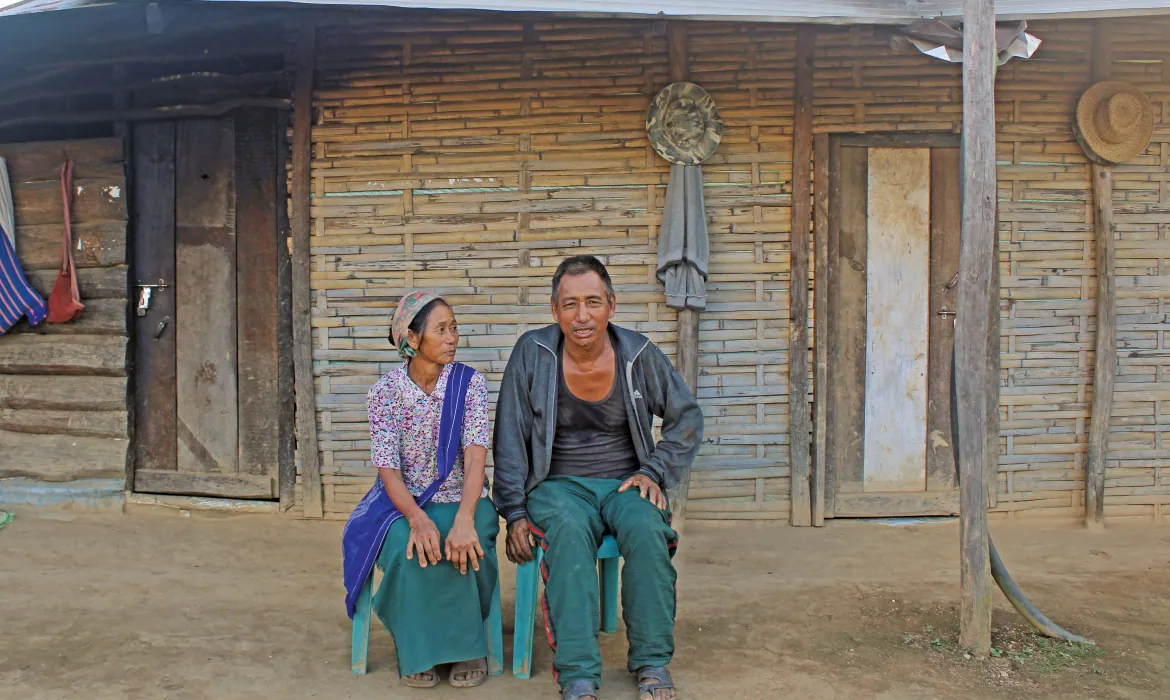
Hotoi, 60, and his wife Vongtsushe, 55, who hail from Pungro village in Nagaland’s Kiphire district, have spent four decades working side by side on their two-acre farm while raising seven children. For most of these years, farming was their only livelihood, providing less than enough despite plenty of hard work.
Like many others in their village, Mr Hotoi and his wife grew traditional crops, mainly for their own consumption, with little knowledge of scientific agricultural practices or access to markets. “It was mostly subsistence farming,” says Mr Hotoi. “Whatever little surplus we had did not generate much income, which made it difficult to manage household expenses and our children’s education.”
Then, in 2023, Mr Hotoi became part of the ‘integrated livelihoods programme’ introduced by the North East Initiative Development Agency (NEIDA) in their village. There was no hesitation on his part. “We wanted to learn modern farming techniques and become part of a group where we could grow and support one another.”
Before the programme was introduced, farming in Pungro was mostly traditional and subsistence-based. Farmers primarily cultivated landrace crops, low in yield and grown for household consumption rather than sale. There was little awareness of, and exposure to, modern farming techniques.
Three years down the line, the scenario has been transformed, as have the lives of Mr Hotoi and his family. The shift to diversified farming and a market-oriented approach has enabled Mr Hotoi and Ms Vongtsushe to grow a range of vegetables and fruits. An enhanced income aside, they can have their fill of nutritious, home-grown food.
“Our three years in the programme have resulted in a major improvement in our livelihood and in our overall financial stability,” says Mr Hotoi, who now earns around ₹200,000 a year from farming. This steady income has helped him with his children’s education and his family’s other needs. The constant worrying about money has disappeared.
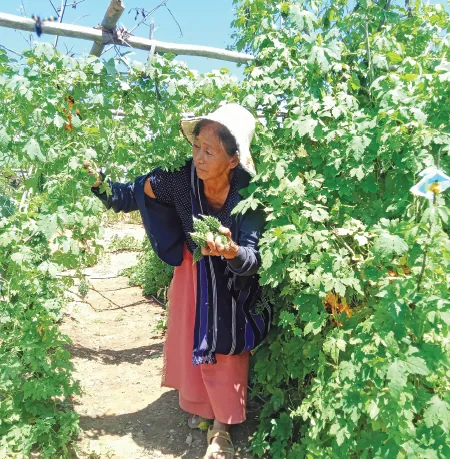
Mr Hotoi and Ms Vongtsushe have received awards for their efforts, but beyond the honours and the improved income, they credit the programme with changing how they see themselves and their work. “I now see farming as a business rather than a means of survival,” says Mr Hotoi. “I am more confident, more aware and more connected to the outside world.”
