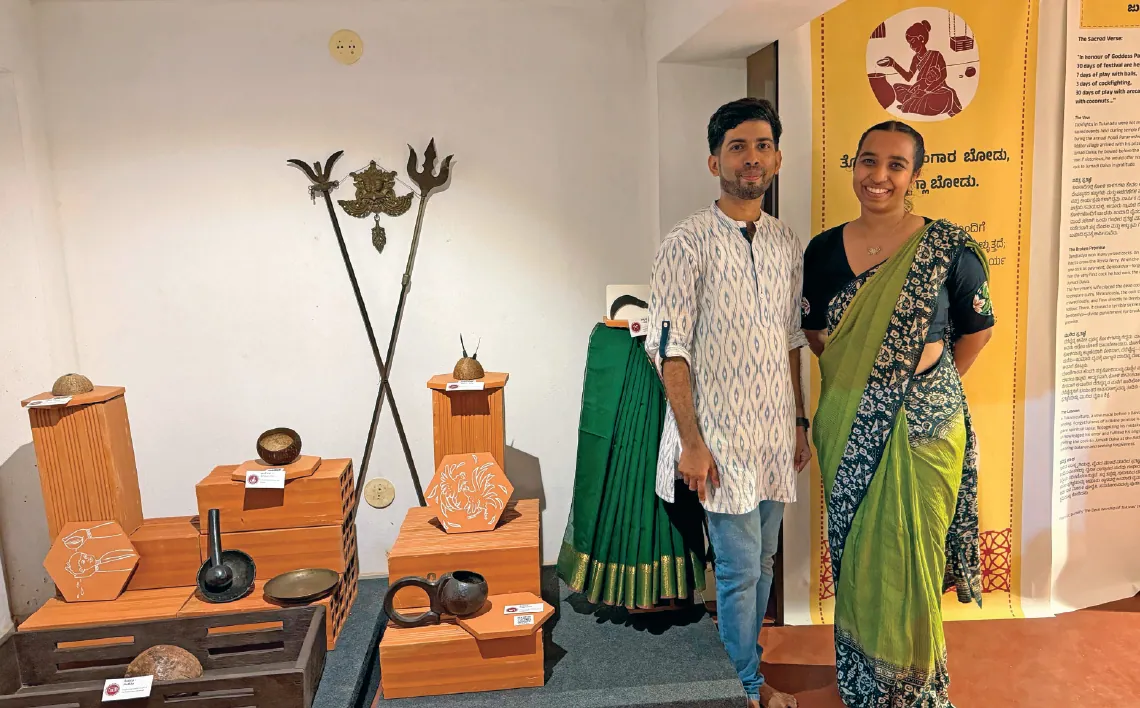
Design with a difference
Madhushree Kamak, together with Brian Dsouza — both are designers — is working on a project (‘Beneath the Green Canopy’) that involves creating an exhibition and an interactive web experience with artefacts from the collection of the Rani Abbakka Tulu Nadu Museum in Bantwal, Karnataka. Research, guided tours and public programmes for local educators are components of the project.
What was your reaction to being selected under the IFA’s archives and museums programme? What has the experience been like?
This is a rare opportunity to do the kind of slow, careful work that rarely gets funded. Over the past year, it has been deeply fulfilling to watch a concept go from a framework on paper to an exhibition that people are walking through and recognising their own lives in.
What were the considerations for you and Mr Dsouza while executing this project?
The first question we kept coming back to was: who are we actually making this for? The local community was always at the centre. We wanted to capture and give back their stories, provoke curiosity about local histories, and make the museum feel like an exciting, living space rather than a repository of old things.
For the Museum itself, we were thinking about longevity: how do you revitalise a collection, bring in new audiences, and ensure these stories survive beyond any single curator’s memory?
Tell us about your interactions with the Museum and IFA.
It’s genuinely collaborative. We go in with open minds and expect to be changed by the process. Working with the Museum team has been like accessing a deep well of local customs, oral traditions and the philosophical underpinnings of everyday objects. This is knowledge that no amount of desk research can replicate.
What do you have to keep in mind when ‘the public’, in all its forms, is the audience, as it is with this project?
There’s no single, right way to engage with cultural heritage; people come with different backgrounds, knowledge and expectations. The exhibition works as a sensory experience: you can read, listen, watch, do and participate. We have developed content in Tulu, Kannada and English, consciously varying the complexity of language to work across age groups.
Working with an anthropology museum for the first time has shifted how we think about design entirely. A small museum in a low-resource setting forces you to think about sustainability and modularity from day one. We also had to translate living, conversational knowledge into formats that could stand on their own without a human guide. That’s a different kind of design challenge.
This is a project that reminds you why the work we do matters. Smaller museums often hold the most specific, the most irreplaceable stories, the ones that don’t make it into national narratives. We hope 'Beneath the Green Canopy' becomes part of a larger argument for investing in such spaces, and for giving practitioners the time and trust to do this kind of work properly.