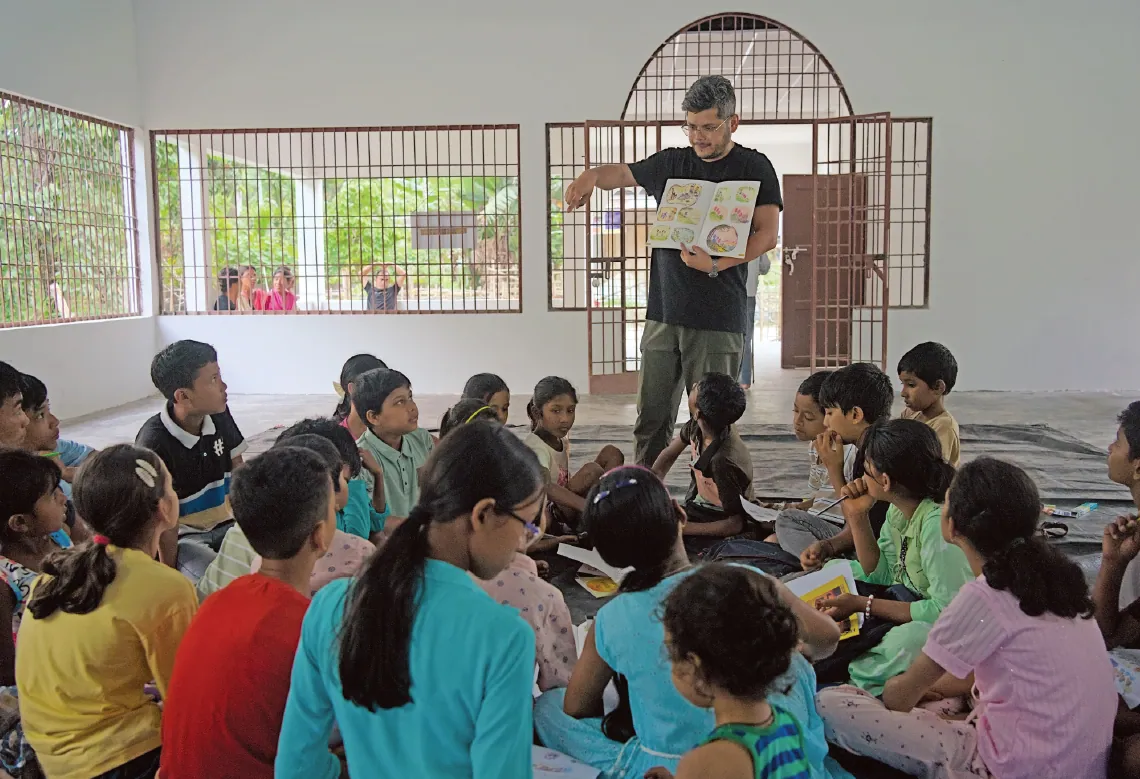
All in for art
Enabling an environment that can better connect artists and art practices with a wider public — India Foundation for the Arts is about that and plenty more
The canvas — books, cinema, performances, exhibitions, research, archives and more — is as sizeable as the objective: widening access to and stimulating broader participation in the many worlds of art and culture for a diverse audience. It’s an endeavour India Foundation for the Arts (IFA) has engaged with in full measure for more than three decades.
Artists and art practices are central to the IFA approach, which aims to help fashion an environment that enables both to find a footing and to flourish. “We are committed to supporting [art and artists] across contexts, languages and regions, to strengthen the ecosystem for art and the conversations around it,” says Menaka Rodriguez, the Bengaluru-based nonprofit’s executive director.
Founded in 1993 as a public charitable trust, IFA has spread its wings to respond better to the changing realities of India’s art and culture milieu. It has more than 950 projects across various programmes under its belt, encompassing practice, research and education in the arts, and embedded in the public domain through seminars, screenings, exhibitions and festivals.
“Our programmes have evolved and expanded in new directions; they are rooted in — and responsive to — the aspirations of the field,” adds Ms Rodriguez. “We are attuned to the ever-changing sociopolitical and economic changes that impact the arts community, and our possibilities as a philanthropy. We want to keep building networks, connections and solidarities in the art and culture space.”
Securing the financial wherewithal to bring all of this together is a complicated task, especially so in some circumstances. “One of the Foundation’s key impulses is to fill the funding gap in the arts,” adds Ms Rodriguez. “That’s what drives us to seek work in spaces, disciplines and research that would not typically receive backing and visibility.”
The Tata Trusts were an early patron of IFA’s initiatives and they continue to be. Beginning in 2024, the Trusts have been supporting two of the organisation’s five principal programmes: arts practice productions (APP) and archives and museums (AMP).
Mix and match
Recast in 2021, APP implements projects that cover performative, aural, visual, digital, literary and interdisciplinary work. Under this rubric are explorations of nascent ideas, productions of an artistic work, creation of spaces for exchange and dialogue (seminars, residencies and workshops), and the fostering of art and culture platforms.
Project coordinators contracted by IFA are at the heart of these efforts, which are crafted to encourage work in Indian languages other than English, artist practitioners from non-metro centres, and collaborations within and across practices. Included in the programme’s fold are performing artists, visual artists, curators and writers.
“Our primary challenge is managing the large number of proposals we receive — there were 421 in 2025 — from across creative disciplines,” says Mridupankhi Rajkumari, IFA’s programme officer for APP. “Ensuring that each proposal is evaluated fairly and ethically requires time and attention. Rejecting proposals is often the most difficult part of the process.”
IFA supports its project coordinators through the 18-month time period of the programme. “These are projects with solid artistic outcomes, be they in theatre, dance, music, films, exhibitions or books and manuscripts,” adds Ms Rajkumari. “We at IFA have to keep up with current discourses and interventions in the art and culture arena to address different artistic forms and disciplines.”
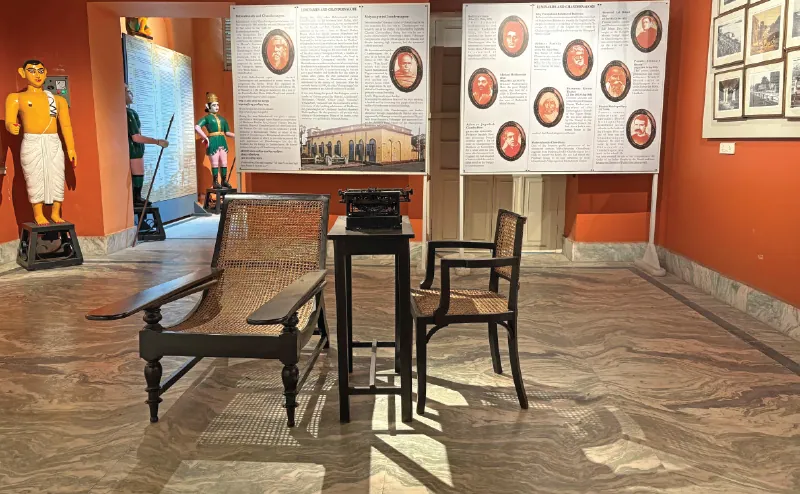
The AMP component in the Foundation’s initiatives is about collaborations with archives and museums to establish platforms for dialogue and discourse, and to generate critical and creative approaches to engage the wider public. That means bringing institutions and individuals together to become co-producers of knowledge and expertise.
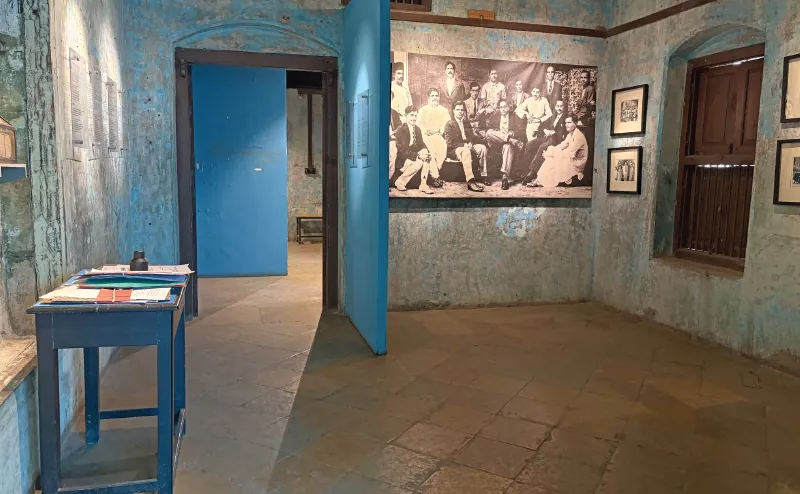
Support from the Trusts, which previously backed AMP’s fellowships initiative (from 2014 to 2019), has benefitted projects involving partnerships with a variety of institutions, among them the archives of the Marg Foundation, Mumbai; the archives of the National Centre for Biological Sciences, Bengaluru; the Rani Abbakka Tulu Nadu Museum, Bantwal (Karnataka); and the Conflictorium Museum in Ahmedabad.
“Our intent is to nurture public-facing projects that speak to a larger audience,” says Ritwika Misra, AMP’s programme officer. “For example, archives in India can be opened up to people in new forms, telling stories that would otherwise remain hidden.” The collaborative nature of the venture is its essence. “IFA, our project coordinators and the institutions function as a triad, and our outcomes here have resulted in films, books, workshops, exhibitions, museum walks, etc.”
Art and culture may be in a state of perpetual revolution, forever buffeted by the swells of changing times, the proliferation of celebrity practitioners and the surrender of creativity at the altar of money. Within this maelstrom, IFA has managed to carve out a corner where discovery and the visual reward for those moved by art and culture are paramount. Having the Tata Trusts on its side has been an advantage for IFA in this quest.
“The Foundation plays a crucial role in the arts sector in India,” says Paroma Sadhana, programme manager, arts and culture, with the Tata Trusts. “It encourages innovative work and documents these to create a living archive of the palimpsest that is Indian art practice.”
“There are very few organisations that support art and culture in meaningful ways in India; the Tata Trusts are among the few that do,” says Ms Rodriguez. “They value creativity, innovation and a deeper engagement with communities. They are sensitive to the complexities of the arts and culture landscape. Such support provides institutions and artists with the resources and opportunities needed to spawn new and creative approaches that connect with the public.”
Read interviews with four art practitioners who have benefitted from support extended by India Foundation for the Arts.