Portrait of a community
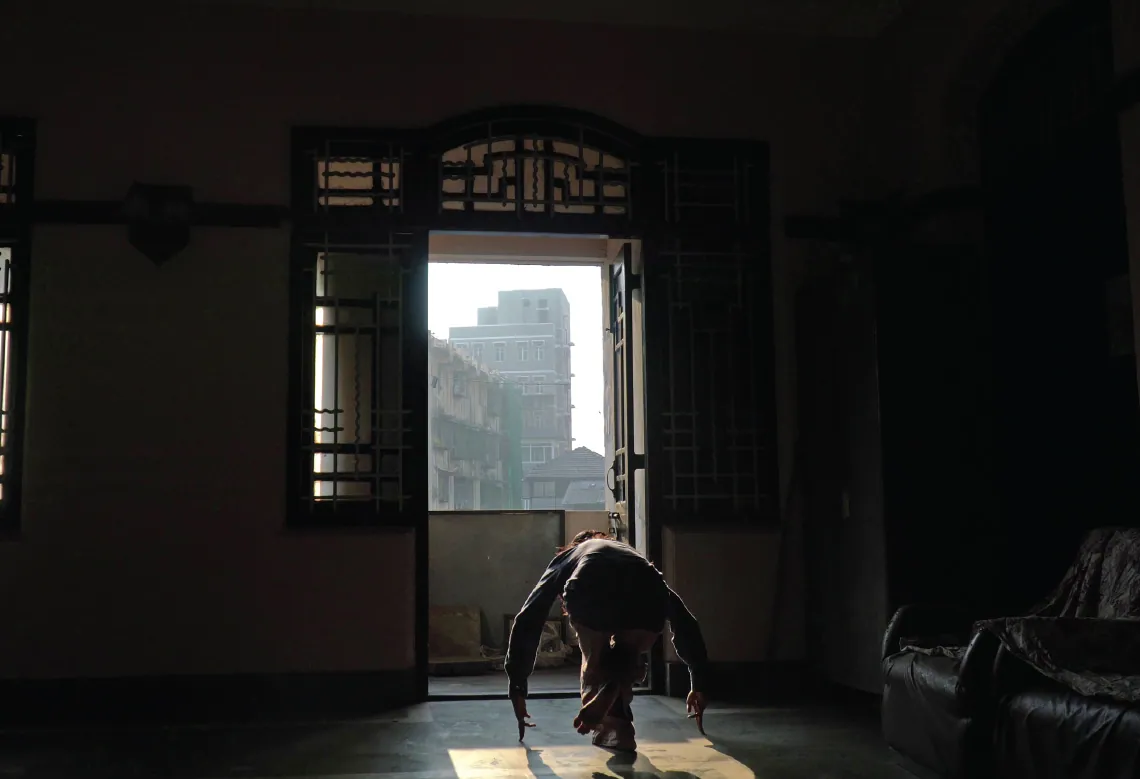
Elroy Pinto’s project is a documentary film that blends dance, archival research and fictionalised scenes to present a multidimensional portrait of the history, identity and culture of Mumbai’s Koli fishing community. With protagonist and collaborator Aishwarya Raut, a contemporary dancer, Mr Pinto — a filmmaker who has also trained in music — is using the language of cinema to reinterpret the 19th-century folk ballad ‘Governor and Koli: A Fisherman’s Legend’.
How much of the history and the struggles of the Koli community have been recorded or documented? How will your film help in the context?
The Kolis have to be seen not as a monolithic entity but as a series of discrete particulars that can be defined by their relationship to their geographical, historical and material conditions. There were several forms of agitation undertaken by them in the decades after independence and, before that, during the colonial era.
My film is about Aishwarya’s exploration of her identity. With the ballad at the heart of the film, song and dance were but natural aspects to build the work into.
Blending social documentation and fiction, as you are attempting to do, is a delicate task. What do you have to guard against in an undertaking of this kind?
I think the primary contradiction in any film is that it feels, at times, to be trapped in a modernist binary of universal-particular, men-women, classical-folk and whatnot. A film must take place between these two opposites. Similarly, working with docu-fiction involves freedom in where one can take the viewer, but there is responsibility attached to it: the possibility to imagine a moment that is truly explosive and revolutionary.
How much space is left in the India of today for artists, more so filmmakers, to engage with subjects of their choice, be they controversial, contentious or merely nuanced?
It has shrunk and funding structures have undergone tremendous change. If education and healthcare are gutted, you can be sure the arts are too. What remains are scraps and we have to compete for that with other disciplines. Artists have been self-censoring themselves out of fear. What we need is a revitalisation, and spaces that continue to provide progressive artists with opportunities.
Your film has been shown at a centre in Mumbai and presented online. That seems limiting.
My film was shown at a community-led cultural centre called Nirmik, which sits between two of Mumbai’s largest slums. It was a two-day affair and we had people from all age groups in attendance. The aim was to take the film to the community with whom we worked, and we want to broaden its appeal through a gradual build-up of screenings. We are particularly interested in not keeping this within the Koli community; it must travel to everyone who is marginalised.