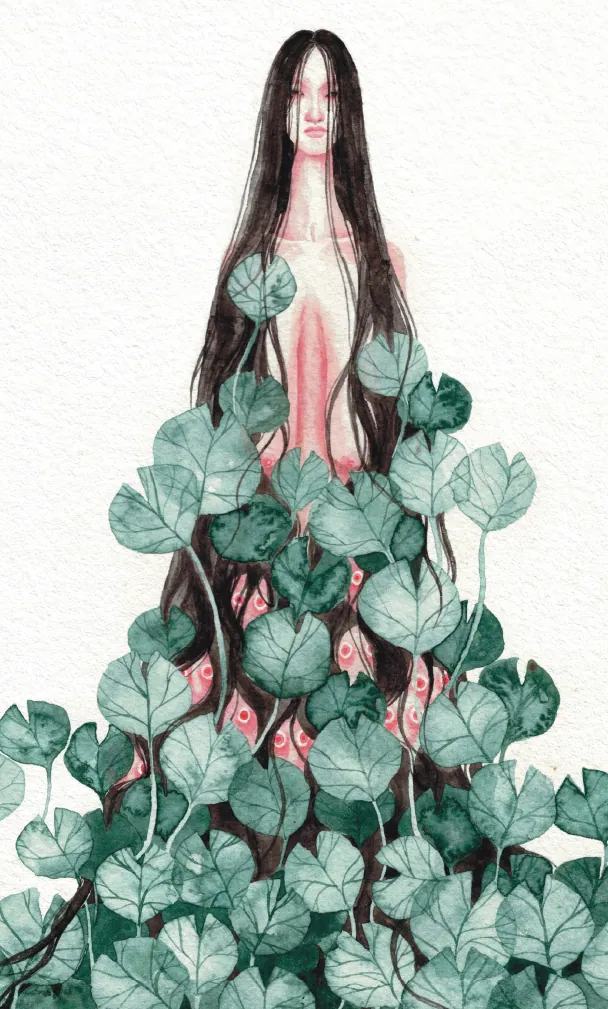
The tangible and the imagined
Ogin Nayam, a native of Arunachal Pradesh, is an Itanagar-based visual artist and children’s book illustrator who works primarily with watercolours. A multiple award winner, his project is an illustrated art book — ‘In the Land I was Born’ — that takes readers through a voyage shaped by memory, folklore and landscape. The written word acts as an accompaniment to the illustrations in the book, which is informed by oral histories and archival work.
Arunachal Pradesh, its stories and traditions are at the heart of your illustrated book. Why this subject and why this medium?
Arunachal Pradesh has always felt to me like a living archive of stories, a place where landscape, memory, folklore and everyday life are inseparable. Many of these stories continue to survive through ritual, songs and oral traditions rather than through written records.
I was drawn to the idea of creating an illustrated book because it allows me to hold together the tangible and the imagined at once. A drawing can carry atmosphere, silence and emotion in ways that documentation alone sometimes cannot. There is also a certain freedom in visualising these stories and interpreting what is remembered, imagined or only partially told — while still holding onto their emotional truth.
The brief for your project says the book will be “a voyage shaped by memory, folklore and landscape’’. Why, from your inside perspective, is a rendering of this voyage vital?
In Arunachal Pradesh, memory is deeply connected to the land. Rivers, forests and mountains are not just backdrops but active parts of the stories. Myths here often emerge from lived relationships with the natural world. Now, as oral traditions slowly fade, there is a risk of losing not only the stories, but also the ways of seeing the world they carry. Through this book I hope to preserve these landscapes of memory as living and evolving experiences rather than static records.
Your book is about turning these stories from Arunachal into artworks on paper. What are the challenges involved here, especially in the gathering and choosing of the stories?
The challenge lies in interpretation. Oral stories are fluid and communal, with no single, fixed version; translating them into images requires careful listening and sensitivity. Another challenge is selection; not every story fits the art book format, so finding stories that can be translated into visually compelling artworks becomes difficult.
How do you see this project furthering your progress as an artist in terms of craftsmanship and recognition?
This project is pushing me to work more patiently and deeply as a storyteller and as a visual artist. It requires research, listening, field observation and experimentation with visual language, all of which are expanding my practice.